
 •
Rating:
•
Rating:
THE REVIEW
Not many days ago I was talking with my friends about the songs that in some way marked our childhood. As we mentioned various artists like Britney Spears, Spice Girls, Aqua, Cristina D'Avena, all the way down to the dramatic experiences in church choirs, an uncontrollable embarrassment crept up due to the revealing of said secrets. Stuff you'd find in an alcoholics anonymous circle. Then it was my turn. With a childlike innocence fueled by the unfolding of such truthful and compromising confessions, I mentioned that the first song (that I remember) which truly struck me (after "Imagine" by Lennon sung during my first school performance-wow-) was "Labyrinth" (which, for those who don't know, have forgotten, or are pretending to be ignorant, is the second single from Elisa's first album "Pipes and Flowers", 1997). They’re still mocking me and I don’t know why. The fact is, from nine to sixteen years old, I completely forgot who Elisa was. They told me, "But how come?! The one who won Sanremo this year "incidentally" because they still do Sanremo?"; "Caterina Caselli’s discovery is indeed interesting"; "What? Were you also obsessed with Gazosa?"; "The cover of "Almeno tu nell’universo" is beautiful…"; "Indeed, beautiful lament (It was truly a dirge)". Then, I don’t remember why, where, or when, wandering among the shelves of the only record store in my town, I saw "Then Comes the Sun". The owner, counting on the fact that when I enter that wretched hole, I don't leave without buying at least a single, was pestering me with records that wouldn’t sell, from Alabina to Grazia Guerra (it was a lean period), so to escape from that torment, I grabbed the album (the one I should be reviewing if I stop being overly verbose) and dragged it to the checkout (maybe I vaguely remembered something about Elisa, otherwise I wouldn't have bought anything). Despite my recklessness, I do not regret it.
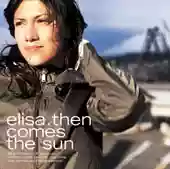
"Then Comes the Sun" was released in 2001, and the title might appear to be a homage to a famous Beatles song, "Here Comes the Sun", although it isn’t (a display of erudition). The record opens with a nice trio: "Rainbow" tackles the theme of loss with an apparent delicacy that conceals a strong message about the inseparability of true, spontaneous ties. "Heaven Out of Hell" is dedicated to her mother, but it assumes a character of generality without losing itself in risks or simplicities: its course is the cult of the search for an individual freedom that does not trample on others' freedoms, a sensitive search that abandons during its course the cult of inner strength to appeal, paradoxically, to vulnerability. "Dancing" is a piece of great impact where Elisa's purely feminine sensitivity bursts out completely.
The album continues with "Fever", a track that seems to suspend the ethereal and subtle atmospheres of the beginning to give ample space to an outburst against the world's diseases, an implicit anthem to peace, but also an exaltation of the relationship between man and nature (I was walking when I saw a bird in the sky/ I followed its flight with my eyes/ and it felt like I could fly there/ and it made me smile inside), which nowadays would seem to anticipate the times, given the various "LiveAid", "Ecological Day", "Organic Waste Feast", etc. …"Fairy Girl" represents, along with "The Window" and "Simplicity", one of the most essential moments of the album and seems impossible to completely describe the emotional baggage they convey, the images they evoke, the sensations of clarity, lightness, depth they carry. "Rock Your Soul" reiterates the identification between man and nature's forces, and manages to convey to the listener that sense of maternal warmth that the most sensitive perceive from the earth (Although personally, I consider the version present in "Lotus" to be far superior). The only flaw of the album appears to be "Time" which seems to undermine the homogeneity of the album.
In conclusion, "Then Comes the Sun" is a more than pleasant album, to be listened to with attention but also to be lived, dedicated to those who need to rejoice and be moved, to those who seek to draw a vein of optimism from negative experience; an album that admits no definitions or limits, just like the skies of California, the state that hosted the recording of the album itself.
Quick, meditated, deep.
Loading comments slowly
Summary by Bot
The review reflects on Elisa's 2001 album Then Comes The Sun as a heartfelt and optimistic work blending personal emotions with themes of nature and freedom. It praises key tracks for their depth and emotional impact while noting one minor flaw. The album is recommended for listeners seeking meaningful, inspiring music that moves beyond simple definitions.Tracklist Lyrics Videos
Elisa
Elisa (Elisa Toffoli) is an Italian singer-songwriter from Monfalcone (Friuli-Venezia Giulia). She debuted in the late 1990s with English-language pop-rock and later released both English and Italian material; she won the Sanremo Festival in 2001 with "Luce (Tramonti a Nord-Est)".26 Reviews
Other reviews
By e-bow
There isn’t a single flaw in this record, there isn’t a single ill-chosen track, there isn’t a single word out of place.
Overall, a melancholic album, but crossed by the certainty that after... after comes the sun.
By Me Myself & I
Then comes the sun… a declaration of a poetics, of a way to react to the world and the darkness of life.
No matter how much rain there may be in our lives, there will come a moment when the sun arrives, a moment when we will be winners, morally.
By marcounali
Then Comes The Sun implies continuity, in the sense that life, one day, even without us, will continue to go on.
You can hear the music with no sounds, you can heal my heart without me knowing.
