 •
Rating:
•
Rating:
THE REVIEW
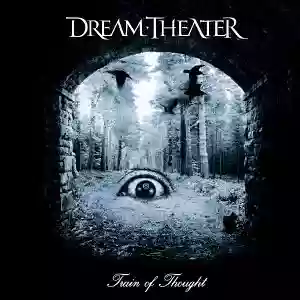
Dream Theater's latest effort represents a controversial and difficult to identify musical interlude, qualifying it as a bold album in terms of modernity, but characterized, unlike previous episodes, by a lesser creative verve. Let's clarify this aspect right away: if we had stumbled upon System Of A Down's latest effort, we would have hailed a miracle, but in the case of the “Theater of Dreams”, the work qualifies as one of the group's less convincing moments, choosing to embrace decidedly harder sounds reaffirming their technical abilities rather than focusing on songwriting, moving away from the versatility of the previous "Six Degrees...", revealing a simplistic work for a band that has accustomed its audience to peaks of superb musical class.
If the majority of historic metal bands, having reached the inevitable creative oblivion, replicate established patterns and formulas in an attempt to confirm their artistic merits, our heroes take another disorienting step: with the clear awareness of those about to self-destruct, they renew their sound, abandoning the class and inventiveness of their beginnings to infuse their sound with post-Pantera riffs and nu-metal arrangements. Given these premises, we are led to consider this "Train of Thought" as a complementary episode to the equally disappointing “Dance Of Death” by the Maiden: while the latter confirms the legendary tendency to recycle themselves, Dream shows boldness by risking it all, and do so, albeit unwittingly, in a ridiculous manner.
If the New York band had distinguished itself, in alternate episodes, for originality and versatility, we now face blurred imitations of Tool and Korn, courageously tackling occasionally rapped vocal lines and a strong debt towards the more recent “Four Horsemen”: where there remains a reminiscence of the originality that made us love Dream, we are met with an unpleasant sequence of technically perfect solos, which have the musical value of a bored yawn.
And to say that the opening seemed convincing, with a sharp “As I Am”, which, while paying tribute to Metallica's "Black Album" era, turns out to be one of the most exciting episodes on the album. With the following “This Dying Soul”, the group, after an impressive technical demonstration by the ever-green Portnoy, manifests its will to innovate by taking up its most overused clichés and enhancing them with current sounds. “Endless Sacrifice”, once again indebted to Metallica, presents a structure close to the gentle “Peruvian Skies” from "Falling Into Infinity", except it breaks into an inappropriate rap/metal refrain that shatters the promising initial atmosphere; a similar solution is also adopted in “Honor Thy Father”, where, however, the alternation of metal gallops and more modernistic rhythms creates a more assured and dynamic impact. “Vacant”, the only and very brief slow episode of the album, a sly and ineffective reworking of “Space-Dye Vest”, precedes the torrential solos of the instrumental “Stream Of Consciousness”, an unfortunate title for a band whose current creative coldness finds refuge in the stereotype: if this is the stream of consciousness of the five Americans who ten years ago brought prog metal to prominence, then we are truly scraping the bottom of the barrel. The closing is entrusted to the dark “In The Name Of God”, a track that showcases the tired interpretative skills of a rhetorical James LaBrie and the proven technical efficiency of the others. The track here and there draws from the band's more classic and thus interesting atmospheres, even if there is a vague sensation that it is a collage of the highlights of the early productions; however, the track turns out to be impactful, albeit hindered by the excessive technical lengths typical of the group.
The album, in conclusion, while showcasing some valid episodes, proves to be a low blow for longtime fans, while it could be an opportunity, surely already considered during production, to attract a new audience, more accustomed to current sounds.
Loading comments slowly
Summary by Bot
The review critiques Dream Theater’s Train of Thought as a bold but controversial album with a harder, less versatile sound than previous works. While technically proficient, it lacks the songwriting strength that fans expect. The band experiments with post-Pantera riffs and nu-metal elements, resulting in mixed success. Some tracks show promise, but overall the album divides fans and may target a newer audience more accustomed to modern heavy sounds.Tracklist Lyrics Videos
Dream Theater
American progressive metal band formed in 1985, known for virtuosic musicianship and landmark albums such as Images And Words and Metropolis Pt. 2.160 Reviews
Other reviews
By KiccoLSD1
Stream of Consciousness: 11 minutes of pure music that enter forcibly into Dream Theater’s history.
The album closes with 'In the Name of God,' probably the most beautiful song on the album, where indeed all the members give their best.
By TheSilentMan
The musicians' exhibitionism has become something abstract on the album; in fact, Petrucci's solos are indeed very fast but lack pathos.
Despite the usual mammoth durations typical of DT, the songs are the right length and contain some well-structured moments, but the ideas are now exhausted.
By cameli11
It's simply fantastic, it mesmerized the audience upon its release, they have once again shown themselves to be out-of-this-world!
DT are superior to everyone and Train of Thought is one of the many demonstrations they have presented and will hopefully continue to do for years and years to come.
By petrucci
Everyone’s entitled to their tastes—but veteran fans disowning the band baffles me.
'Stream Of Consciousness' is the most beautiful track on the entire album.
By Dreamtheater
"With 'Vacant' I feel the real Dream Theater: truly beautiful and touching... melancholic and even heartbreaking."
"Train of Thought falls into the 'trap' of metal, with too many solos and high rhythms... absolutely not their style."
