 •
Rating:
•
Rating:
THE REVIEW
Title: Black Celebration
Author: Depeche Mode
Producer: Depeche Mode, Daniel Miller, Gareth Jones
Label: Mute Records
Year: 1986
"Let's have a black celebration" and things changed. Changed for Depeche Mode who from that moment on will change their musical style and also their personal lifestyle to the point of risking dissolution several times, to the point of risking that Dave Gahan might die not many years later.
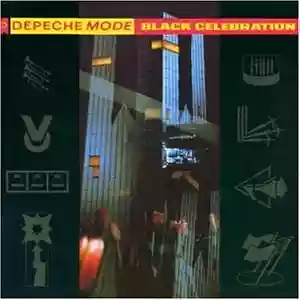
"Let's have a black celebration" and Anton Corbijn notices them. Corbijn is a Dutch photographer and director who had already collaborated with Joy Division and U2 and after listening to "Stripped" and the entire album, he realizes that Depeche Mode are no longer a synth-pop band for kids but are now an adult group. It's easy to see why: the melody, the arrangement, the almost oriental sounds of "Stripped", the melancholic poetry of the lyrics are the very essence of the album, probably the best song of the entire album. After listening to this song, Corbijn decides to work with them, and from then until Ultra he will be the author of all their videos, and even in more recent times, he will continue to be their official photographer and will design covers and stage sets for their tours, enjoying absolute freedom for his choices. Practically an additional member of Depeche.
"Let's have a black celebration" and Martin Gore goes to Berlin, writes the entire album alone with a result that the other band members don't appreciate but that then with everyone's collaboration becomes one of their best albums.
From Kraftwerk to this album, music had developed, there had been punk that had revolutionized everything, not only at a sound level but also the way of conceiving what music is. There had been dark, a child of punk, that had shown how gloomy spirits could be. There had been Suicide. And something inside the group had changed, Martin Gore had grown up, Depeche are no longer the kids of the first two albums and even from the previous two they begin to distance themselves. Nostalgia in the lyrics, although something could also be sensed in Some Great Reward, gloominess and melancholy also in the melodies and sound. 6 months to record the album, Wilder's quest for a perfect sound, Gore wanting to rewrite everything, Gahan slowly beginning his rock turning point in singing, internal fights within the group, Fletcher trying to make peace, an album continuously postponed but that will then mark a turning point for Depeche Mode. "Black Celebration" is the beginning of a darker period, which will be found in part in "Music For The Masses" but especially in "Violator" and the two subsequent albums as successors.
"Let's have a black celebration" thus begins the album and already from the first track ("Black Celebration" indeed) you realize you are in a different world compared to before. Obsessive rhythms, samples, Gahan's voice is more mature compared to the past and better suits the new album (a voice that in my opinion will truly improve starting from the next album), the sounds recorded by Wilder are very refined, the atmosphere of the song has something ritualistic but a ritual, indeed, black. "Fly On The Windscreen" continues more or less in the same way: Gahan tries to be sexier than ever, beautiful from this point of view the live version of the '93 tour, while he describes a world where death is looming over us. Then comes "A Question Of Lust", sung by Gore with his angelic voice. These first three songs are all linked both musically and by the lyrics where there is always talk of love. Love that consoles at the end of a day, which is the only thing that matters when everything is dying, fear of seeing it go away. All presented with great disillusionment. With the nostalgia of someone who feels the lack of this love and this world but tries to detach from it to suffer less. From this nostalgia, from this existential pain of Gore expressed in the lyrics, also comes the sound that Martin himself together with the producers and Alan want to achieve: gloomy and nostalgic. Like never before, but as Wilder had always wanted since he joined the group.
The album continues with "Sometimes" and "It Doesn't Matter Two" both sung by Gore, simpler from an arrangement point of view, much softer almost wanting to detach from the initial songs. Gahan returns to the voice with one of the classics of the album and which works better live, "A Question Of Time", a song with a clear rock flavor with obsessive and driving rhythms that hides much irony (a typical trait of Depeche Mode). I've already talked about "Stripped", almost a month of recordings just for this song, electronics becomes rock, rock becomes electronics, in a continuous crescendo, a true anthem, nothing left to chance or improvisation, with almost oriental suggestions, in the finale the double voice intertwines. Is it possible to do better than "Stripped"?
"Here Is The House" is the most typically 80s of the album. "World Full Of Nothing" is a small return to the pessimism abandoned shortly before, beautiful to me the finale.
"Dressed In Black" is a song where Gahan shows off his vocal improvements compared to the previous album. But Gahan's strength as a singer is not so much technique as expressiveness. The final "New Dress" is the song where the DM offer their political vision the most, criticizing the mass media and those who control them.
"You can't change the world, but you can change the facts, and if you change the facts you can change points of view, and if you change points of view, you can change votes, and if you change votes you can change the world" sings Gahan.
Not bad for 4 superficial kids from Basildon, Essex.
The CD version contains "Black Day" alternative version of "Black Celebration" as written in the Booklet, "Breathing In Fumes" remix of "Stripped" to which Rammstein owes something, and "But Not Tonight" already published in a slightly different version and wanted by the American label Sire.
What more can I tell you? Go get it!
Loading comments slowly
Summary by Bot
Black Celebration marked a pivotal shift for Depeche Mode, moving from synth-pop to a darker, more mature sound. The album features complex arrangements, melancholic lyrics, and the iconic track 'Stripped.' Collaborations with producer Daniel Miller and director Anton Corbijn deepened their artistic identity. Internal struggles and personal growth shaped this influential 1986 release, which set the stage for their future success.Tracklist Lyrics Videos
Depeche Mode
Depeche Mode are an English electronic music group formed in Basildon in 1980, led by Dave Gahan and Martin Gore. They built a global audience with synth‑based albums and large-scale tours and remain influential in synth‑pop and alternative electronic music.110 Reviews
Other reviews
By biaspoint
Dark and very distant voices, almost subliminal, the ticking of a bell growing louder and louder, deep and sinister sounds intertwining in a healthy harmony.
Anyone who has not yet had the chance to listen to it and is a fan of this genre cannot let it slip away.
By Stefano90
Black Celebration is an incredible container of great music, no track seems exempt from the others, they are all perfectly constructed together.
New Dress is Gore’s compositional peak and one of the absolute tops of the band, the masterpiece within the masterpiece.
By paolofreddie
"Black Celebration is one of the most representative pieces of the dark wave, an anthem to this genre."
"It is by fighting for love that people stay united."
By jeff3buckley
The "black celebration" covers the tracks with a gothic and dark atmosphere like never before, and there is a deeper exploration of the sonic nuances.
A record that marks an extraordinary turning point in the musical landscape of the time, charting the path to follow for a genre, new wave.
