
 •
Rating:
•
Rating:
THE REVIEW
I am about to write a review of an album that has been discussed over and over, but which, in my opinion, always deserves to be revisited. It is March 1986, and various musical genres populate the global music scene: on one hand, there is the pop of bands like Duran Duran and Europe, and on the other, there are bands like Queen that continue to fill stadiums with their energetic rock combined with pop; the '80s are also the era of disco music, the nightclub sound that had also had great success in the previous decade thanks to hits by bands like the Bee Gees.
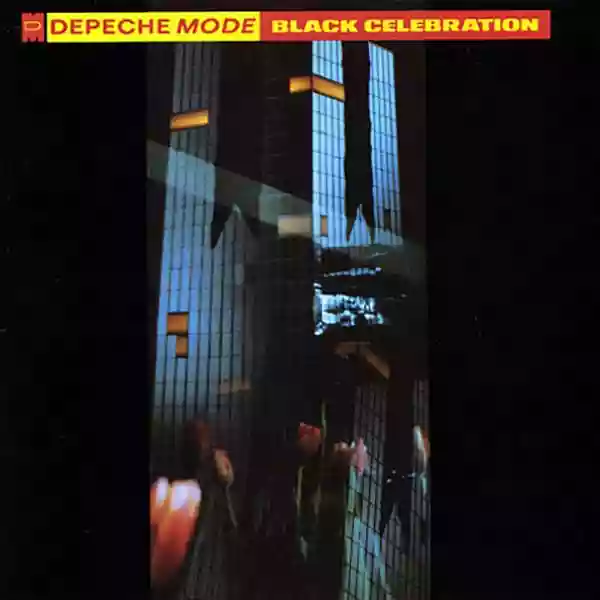
Well, in that distant March of 1986, the fifth studio album by Depeche Mode, a band representative of the darkwave genre, the dark wave, was released in stores. The lyrics and music are very sad and poignant; both lyrics and music convey a great pessimism. Bands that are part of this movement have rather eccentric clothing: usually, the clothes are dark-colored, and the members of these bands wear makeup in equally dark shades. Black Celebration, Depeche Mode's fifth album, was released under the Mute record label. It opens with the title track, a piece with a strong dark vein, a song through which Depeche Mode introduce us to their world. The title already hints at what the song is about: the black celebration mentioned does not refer to Black people but to sadness and abandonment. Black Celebration is one of the most representative pieces of the dark wave, an anthem to this genre: a line reads "Let's have a black celebration ... to celebrate the fact that we've seen the back of another black day." The pessimism is also present in the second song of the album, Fly on the Windscreen, where the theme of death is evident in the lyrics: "Death is everywhere, there are flies on the windscreen for a start ... death is everywhere, there are lambs for the slaughter waiting to die ..." The only thing to do before death arrives is to love, to live carnality. Closing the parenthesis on death, we move on to the theme of love as a deep feeling: love is seen as a matter of lust (A Question of Lust). The lyrics urge not to let a love story end badly, because it is by fighting for love that people stay united. To close the A-side of the album, there are short, introspective pieces: in the first, the guitarist, Martin Lee Gore, author of all the lyrics, questions why the world around him goes as it does, but he justifies himself by saying that "only sometimes" he wonders why everything is the way it is; in the second piece, the guitarist illustrates a typical scene in which two lovers lie together, and the worries go away, and there is no need to ask why things are the way they are, unlike in Sometimes.
The B-side opens with a very famous song from Depeche's repertoire, A Question of Time. What is this question of time being discussed? In the text, Martin, the band's guitarist, presents a boy speaking in the first person (probably himself) who expresses his anger towards boys trying to take advantage of the girl he loves. However, in the end, the same boy does not blame the opportunistic boys because, deep down, it is natural for them to be interested in such a beautiful girl; on the other hand, he curses and condemns them when he finds himself looking the girl in the eyes. Stripped, the seventh song in the lineup, is an anthem to love, an anthem to sex, to carnality. The author of the lyrics asks his girl to strip only for him, just for one day: "Let me see you stripped down to the bone". Next comes Here is the House, a piece following the pattern of It Doesn't Matter Two. The subsequent song, World Full of Nothing, is more introspective, and in it, Martin once again illustrates two lovers living their love story amid doubts and promises, in a pessimistic atmosphere. The last two tracks of the album are titled Dressed in Black and New Dress: the first talks about the attraction to a woman's black clothing, it is an exaltation of black; in the second, the band's guitarist makes us reflect on the fact that, despite the many sufferings in the world, Princess Diana (Princess Di) tries on a new dress, and with a particularly evocative line, invites us to change the facts because this sets off a series of mechanisms that can change the world. Change is necessary in a world that seems split into two parts: the first is the suffering part, of people suffering due to tragic events that shake humanity; the second part consists of people who, like Lady Diana, do not care about what is happening in the world and prefer to try on a new dress, to live in wellness, in short.
The CD version contains bonus tracks. Black Celebration is a fundamental album for the darkwave, a cornerstone of the genre, Depeche Mode's best work, the album that consecrated them in the world.
Loading comments slowly
Summary by Bot
Black Celebration, released in 1986, is a cornerstone of the darkwave genre by Depeche Mode. The album features melancholic and pessimistic themes, exploring death, love, and societal introspection. Songs like 'Black Celebration' and 'A Question of Time' showcase deep emotional expression and complex lyrical narratives. This album helped solidify Depeche Mode’s reputation worldwide.Tracklist Lyrics Videos
Depeche Mode
Depeche Mode are an English electronic music group formed in Basildon in 1980, led by Dave Gahan and Martin Gore. They built a global audience with synth‑based albums and large-scale tours and remain influential in synth‑pop and alternative electronic music.110 Reviews
Other reviews
By biaspoint
Dark and very distant voices, almost subliminal, the ticking of a bell growing louder and louder, deep and sinister sounds intertwining in a healthy harmony.
Anyone who has not yet had the chance to listen to it and is a fan of this genre cannot let it slip away.
By ApriGliOcchi
"Black Celebration is the beginning of a darker period... an album continuously postponed but that will then mark a turning point for Depeche Mode."
"You can't change the world, but you can change the facts, and if you change the facts you can change points of view..."
By Stefano90
Black Celebration is an incredible container of great music, no track seems exempt from the others, they are all perfectly constructed together.
New Dress is Gore’s compositional peak and one of the absolute tops of the band, the masterpiece within the masterpiece.
By jeff3buckley
The "black celebration" covers the tracks with a gothic and dark atmosphere like never before, and there is a deeper exploration of the sonic nuances.
A record that marks an extraordinary turning point in the musical landscape of the time, charting the path to follow for a genre, new wave.
