
 •
Rating:
•
Rating:
THE REVIEW
The 80s are a decade now etched in the collective imagination as the decade of glittering fashions and the attempt to hide discomforts under a carpet of eccentricity and disengagement.
In this context, one of the many exceptions arose from three Scots who seemingly appeared as "common" gothic artists with "spiky" hair and dark clothes, at most slightly more sober than the Virgin Prunes or Siouxsie & the Banshees.
After two post-punk works akin to some of these moods, with Treasure they created an oasis of contemplation and prevalent inner peace amid an atmosphere in popular music that mostly exalted dance, liveliness, sometimes reaching neurosis.
Probably until that moment, a rock record tout court had never been heard that had pushed the relaxation of sound to such levels (even in the most melodic prog albums), previously the exclusive prerogative of ambient or classical music, and for this reason, Treasure is a work that has now lost all those "muscular" remains usually associated with the macro-genre, towards a sound that oozes elegance and femininity from every pore.
From rock, only the skeleton of instrumentation and rhythm remains, so it barely reaches the sufficiency to maintain this label, and it’s a rock that has been pushed towards new territories, refreshing even the countercultural styles of the time with a quiet and naïve eccentricity in its spontaneity but not for this "domesticated" in its innovative power.
For Treasure, 4AD called on the famous Brian Eno for production, who had dealt with a similarly expansive and layered approach to the genre. After meeting the band, Eno commented: "you don't need a producer, you know exactly how the music should sound, you should do it yourselves", this should give an idea of how mature the band was in 1984, so skilled in the use of effects as to make it a protagonist without issues of pleasantness in a sound that had now lost the dynamogenic approach for which rock is still known today forty years after Treasure, for the Cocteau Twins the rhythm seemed to be nothing more than a beat (not by chance executed with the cold automatism of the drum machine) that became atmosphere, from an end it became a means to enter another world.
It is from this almost pictorial stratification applied to rock that the so-called "dream pop" definitively arises (which only has the gracefulness of pop): that branch of the alternative that managed to carry dreams beyond the lyrics and beyond the somewhat vague suggestions that instruments had managed to provide before, with a formal structure consisting of whispers, ethereal voices, dozing atmospheres.
But in Treasure, unlike many epigones, this dreamlike aspect is explored in the round, with Elizabeth Fraser who more than sings seems to "play" the voice, with vocalizations and words that lack regularity and logical connection between them and that almost seem to create a "private language," for this reason imbued with a disorienting femininity that makes this album difficult to digest for some more purist fringes of the classical singing, it is therefore advisable to listen to this album multiple times and focus on the images to let oneself be cradled by its sound arabesques.
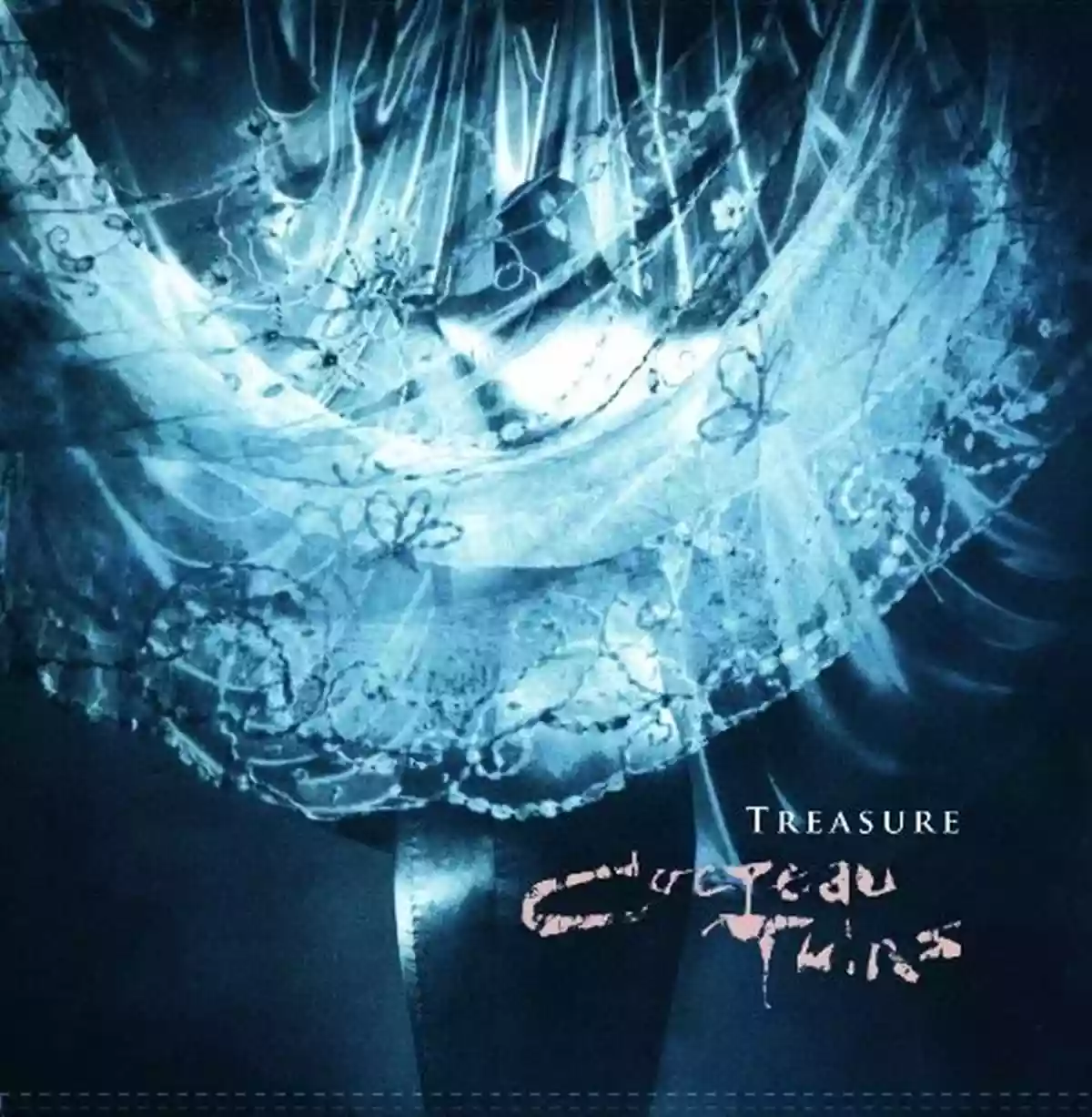
In the instrumental and post-production arena, it is an album that requires for a commentary the aid of many images which, being based on an evanescence similar to that of real dreams, may differ from listener to listener.
As far as I'm concerned, Treasure evokes unreal and minimalist images: plays of light and shadow in a smoky, iridescent, and chiaroscuro cosmos, evoked by the guitar and keyboards of Robin Guthrie, all achieved with a massive reverberation of sound that made the history of pop and rock to come, as an extremization of the "liquid" guitar style of New Order or The Cure.
To initiate us into the album are its two most "cheerful" and catchy pieces: Ivo is an acoustically spirited piece dedicated to one of 4AD’s producers: Ivo Watts Russell. The following Lorelei is perhaps the most famous track of Treasure and is based on a festive and chiming sound.
Beatrix is somewhat unique in the album, with its powerful and arcane riff that evokes a medieval atmosphere, its repetitiveness has an exquisitely hypnotic effect.
Persephone and Cicely are the two most aggressive and closest to the rock tracks we usually know, played on Simon Raymonde's bass and the drum machine, they are the ones where we can still find post-punk remnants that do not, however, limit these songs to pastism, as they are in line with the others and at times seminal for the walls of sound of Shoegaze.
Pandora (For Cindy) and Aloysius are the center of the network, the tracks that most synthesize the style of Treasure, as they evoke a great sense of adventure, as if the band members were delighting in a mental shipwreck, with a sound that is neither too calm nor particularly aggressive.
Amelia, Otterley, and Donimo are the tracks that border on the nightmare: a sublimated and metaphysical nightmare, the first two are characterized by unsettling vocalizations, with a gloomy, ghostly Fraser in the first track and the vaporous and desolate ambient of the second. The third is the longest on the album and stands out particularly for its experimental versatility, which floats between cosmic vertigo and emphatic angelic chants, all the album's directives are fused here and brought towards distant horizons of pure avant-garde, without the need to reach noise and schizophrenic structures to be so.
In light of these flashes of ether and sound decorations, Treasure is the dream album par excellence because it has all the salient characteristics with Elizabeth's singing style which recalls the automatic techniques of the surrealists and its irregular and fluid structure, with the melodies of Guthrie and Raymonde completing the circle with a form that reflects the substance.
In this masterpiece there is also a continuous oscillation between a wide-eyed and at times childlike wonder (in a good sense) and the abyss of the nightmare, something that the epigones (and themselves) will not be able to replicate in the future (or will not want to do), specializing more on the more intimate or "singer-songwriter" side of dream pop, as an evocation of nostalgic and romantic languors, often with less ethereal images, as if from the hyperuranium it passed into a limbo between the world of wakefulness and Morpheus’ arms, but perhaps it is better this way because new paths were taken and poorly made copies avoided, maintaining intact even posthumously the disruptive uniqueness of Treasure.
Loading comments slowly
Summary by Bot
Cocteau Twins' 1984 album Treasure is celebrated as a groundbreaking dream pop work that diverged from the energetic 80s mainstream with its ethereal, atmospheric sound. Featuring Elizabeth Fraser's unconventional vocals and Robin Guthrie's rich guitar layers, it blends elements of post-punk and shoegaze. Produced with minimal interference by Brian Eno, Treasure remains a unique and visionary album. The review praises its dreamlike qualities, innovative use of sound, and lasting influence on alternative music.Tracklist Lyrics Videos
Cocteau Twins
Cocteau Twins were a Scottish band associated with 4AD, widely credited as key architects of dream pop. Reviews highlight Elizabeth Fraser’s distinctive, often non-lexical vocal style and Robin Guthrie’s reverb-heavy guitar textures, with early work rooted in dark wave/post-punk and later releases becoming more melodic and accessible.24 Reviews
Other reviews
By Cleo
"Every time I close my eyes while listening to 'Treasure', this is what I feel."
"It is very difficult to describe this album truly built on intangible evocations."
By g.unreal
Approaching Treasure with downcast eyes... one wrong glance could shatter it.
You enter the album and lose the opaque layer that covers the inside, our inside.
By joe strummer
"From the first listen, we are captivated by the sparkling power of 'Treasure', a magic that has rarely been equaled in history."
"The work of art surpasses the artist, in short."
By CosmicJocker
Esoteric dream-pop irradiates the dust of reality with magical sand; cornucopias filled with silvery harmonies, rippling rhythms, and ringing timbres.
Crystalline and foamy notes crash against the voice of a siren; pagan and lunar warbles that strip words of meaning, bringing them back to a primitive purity.
