
 •
Rating:
•
Rating:
THE REVIEW
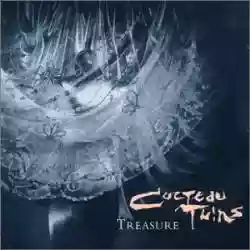
“Treasure” is the album that establishes the Cocteau Twins as one of the bands best representing the '80s “dark wave”; their genre is later renamed as “dream pop”. In reality, I don't excessively love all of their production, but “Treasure” is undoubtedly a masterpiece.
It is very difficult to describe this album truly built on intangible evocations. Imagine being curled up on the ground right in the middle of a forest; there is sunlight, but the dense vegetation allows only a few rays to penetrate. Imagine being lulled by a voice that can become a child's lullaby, a whisper of a mysterious creature, or the enchantment of a sordid seductress. Imagine feeling an absolute calm outside of time and space. Every time I close my eyes while listening to “Treasure”, this is what I feel.
The mostly electronic instruments and the few percussion parts remain in the background while she, Elisabeth Fraser, constructs a journey of lights and shadows. Sometimes the source of inspiration is the East, or the evocative medieval atmospheres “Ivo”, “Lorelei”, and “Beatrix” begin the journey, and she, Fraser, pronounces unknown words and loses herself in hypnotic litanies. With “Persephone”, we almost touch the unconscious and darkness, only to then rise to the light with “Otterley” and reach the deeply emotional “Domino”.
“Treasure” is a timeless album in essence, to be discovered with each listen.
Loading comments slowly
Summary by Bot
The review praises Cocteau Twins' album Treasure as an iconic dream pop record rooted in the 80s dark wave genre. Elisabeth Fraser's ethereal vocals and the album's hypnotic, mysterious atmospheres create a calming and timeless experience. Instruments and percussion stay in the background to highlight Fraser's voice. Each track unfolds an evocative journey blending medieval and eastern inspirations. Treasure is deemed a masterpiece to be rediscovered with every listen.Tracklist Lyrics Videos
Cocteau Twins
Cocteau Twins were a Scottish band associated with 4AD, widely credited as key architects of dream pop. Reviews highlight Elizabeth Fraser’s distinctive, often non-lexical vocal style and Robin Guthrie’s reverb-heavy guitar textures, with early work rooted in dark wave/post-punk and later releases becoming more melodic and accessible.24 Reviews
Other reviews
By g.unreal
Approaching Treasure with downcast eyes... one wrong glance could shatter it.
You enter the album and lose the opaque layer that covers the inside, our inside.
By joe strummer
"From the first listen, we are captivated by the sparkling power of 'Treasure', a magic that has rarely been equaled in history."
"The work of art surpasses the artist, in short."
By CosmicJocker
Esoteric dream-pop irradiates the dust of reality with magical sand; cornucopias filled with silvery harmonies, rippling rhythms, and ringing timbres.
Crystalline and foamy notes crash against the voice of a siren; pagan and lunar warbles that strip words of meaning, bringing them back to a primitive purity.
By Rager99
Treasure is a work that has now lost all those "muscular" remains usually associated with the macro-genre, towards a sound that oozes elegance and femininity from every pore.
Elizabeth Fraser who more than sings seems to "play" the voice, with vocalizations and words that lack regularity and logical connection between them and that almost seem to create a "private language."
