
 •
Rating:
•
Rating:
THE REVIEW
I would define Baglioni as the first to write about youthful love "face to face" with an immediacy that no one had done before him. He was the first to describe situations and sensations in detail that in a youthful context would be revisited in the decades to come but not always in the same way or tone (his weakness and fragility in songs are not found in singers of the same decade, '70s, nor in the following decades).
"Poetry of small things" I read a few years ago, I don't remember where, about his way of writing songs and he was compared to the crepuscular poets (like Gozzano. See "Carillon" in "Saturday afternoon"). I think the comparison fits, but let's get straight to the album.
The young man from Centocelle began with a self-titled album and "A minstrel of our times" as a warm-up, showing his vocal and musical qualities that needed a little breaking in: I must say that I find these two works interesting, carrying with them a fabulous decade that has passed (the '60s) with "When you kiss me" (a bit jazzy), "Interlude" (a "late '60s") and tracks that sound more "of the moment" ("Signora Lia" and "Cincinnato" ("Gira che ti rigira amore bello...". Fantastic)).
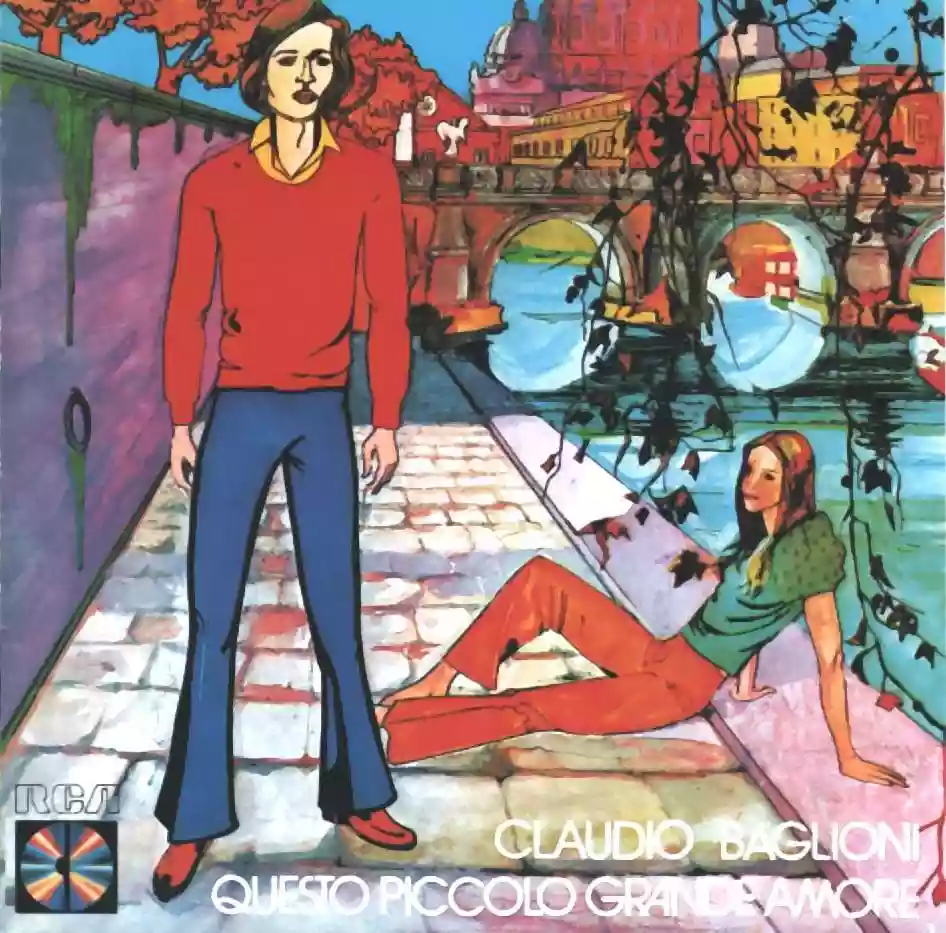
Here comes this very cinematic album (and "seventies") where it tells the story of a young man caught in the middle of student struggles ("Piazza del Popolo"), enters a bar and sees a girl he begins to fall in love with ("A clean face"), a heated discussion over gossip that is hardly true ("Squabble"), the blossoming of love with her along the Tiber ("With all the love I can"), the false "accusations" from friends who were "abandoned" for a month because of her and his defense ("What great friends!..."), a song of melancholy for the lost freedom ("My freedom"), the "first time" physically ("The first time"), the promise of marriage ("I take you as my wife"), the call to military service (it was '72 and military service was obligatory!) ("Pink postcard"), the memory of love during life in the barracks ("This small great love"), the leave and visit to the Porta Portese market (the eponymous song) to buy a pair of jeans to surprise her the next evening (and the discovery that she is with someone else). Then the anger that grips him, making him unable to think and hate (but still desire) her ("How much I want you") and clearing everything up in a love that has ended ("Like the first day"). If it were a movie, I would put the closing credits with the instrumental of "With all the love I can".
You have perfectly understood that Rome is the backdrop to our protagonist's love story.
I hope to return to Rome, to see it by walking and observing the specters of all the characters in Baglioni's work. Especially at Porta Portese and trying to hum as I hear here and there in the album ("Fiooooooooorrrrrreeeeee deeeeeeeeeeeeeeee saaaaaaaaaaaaaaaaaaaaaaaallllllleeeeeeee.....").
Loading comments slowly
Summary by Bot
The review praises Claudio Baglioni as a pioneer in vividly depicting youthful love with poetic detail and emotional depth. It highlights the cinematic quality of the 1972 album "Questo Piccolo Grande Amore," which narrates a romantic story set against the backdrop of Rome and student life. The songs cover themes from first love and jealousy to military service and heartbreak, showing Baglioni’s unique lyrical and musical approach. The reviewer appreciates the album’s timeless quality and its intimate connection to place and era.Tracklist Lyrics Videos
01 Piazza del popolo (01:58)
02 Una faccia pulita (03:16)
03 Battibecco (04:00)
05 Che begli amici! (04:19)
06 Mia libertà (03:50)
07 La prima volta (05:13)
08 Quel giorno (03:21)
09 Io ti prendo come mia sposa (01:47)
10 Cartolina rosa (03:10)
14 Sembra il primo giorno (03:12)
15 Con tutto l'amore che posso (versione orchestrale) (01:46)
Claudio Baglioni
Italian singer-songwriter and performer from Rome, active since the late 1960s. Known for melodic concept albums and stadium-scale tours, with major hits across the 1970s–1980s. Co-hosted the TV show Anima mia (1997).30 Reviews
Other reviews
By clauderouges
The new version attempts to bring to light the work as it should have been, and herein lies the merit of the operation.
Changing not only the arrangement, but also the tempo and harmonies of classics like 'Porta Portese' and 'Questo Piccolo Grande Amore' seemed a real tackiness to me.
By JpLoyRow
Despite its classic status, the album fails to impress.
Listeners are cautioned not to expect too much from this 1970s Italian music icon.
