
 •
Rating:
•
Rating:
THE REVIEW
Having loved the '72 album "Questo Piccolo Grande Amore," I approached this new version with much skepticism, which was partly confirmed and partly disproven. Let's start with the original album, a concept album that describes the genesis, evolution, and sad end of a teenage love story in 1970s Rome. Even at the time, the musical themes recurred and intertwined, creating a work that was somewhat sentimental but also well crafted and not as trivial as many believe, perhaps without even having listened to it. However, the 1972 version lacked something, and you can feel it. The story is fragmented, and sometimes some things remain implied. It now appears that the artist intended for the album to be a double LP with many more songs, but the short-sighted record producers of the time did not venture into such a titanic production. The album was thus cut down and printed in a reduced version.
This new version attempts to bring to light the work as it should have been, and herein lies the merit of the operation. Unfortunately, between saying and doing, there is vanity and the crowd-pleasing nature that characterizes Baglioni in the 2000s, combined surely with a need to enrich the coffers of the record label.
The beauty of this album is that it lets us discover the work in a different way. Finally, the pieces of the puzzle fit and fall into place. For example, one better appreciates now the fact that the short songs "Piazza del Popolo" and "Cartolina Rosa" are just two of the stops that form an ideal tour of Rome in the years gone by, and so we find that besides Piazza del Popolo and Stazione Termini, there are also Lungotevere, Centocelle, Fiumicino, and other "stops" on a way of the cross that sounds always with the same musical theme. Other old themes were indeed brought back in other songs that were discarded in '72. Even a discarded song, "Sissignore", then provided the melody for "Miramare", included in another LP. The beauty is also that the numerous guests, Mina, Venditti, Allevi, Bollani, Elio e le Storie Tese, the Pooh, and many others, usually do not disturb, although sincerely there are so many that it's quicker to say who isn't there.
The downside is exactly Baglioni’s mania for overdoing it, and not only: the operation would have made more sense if there had been a focus on a philological reconstruction of the original. But instead, as always, Claudio plays with the arrangements and gives everything an FM polish, with the pretense that every song must potentially become a single. Frankly, changing not only the arrangement, but also the tempo and harmonies of classics like "Porta Portese" and "Questo Piccolo Grande Amore" seemed a real tackiness to me. Not to mention the little waltz of "Battibecco", so cute and light originally, that somehow became something entirely different. "Piazza del Popolo" then has those electronic effects unacceptable for a song that was voice and guitar. In general, as always, the arrangers hired by Baglioni tend to insert transition chords ad infinitum without any sense. Claudio wants to appeal to the new generations at all costs. A "Moccia syndrome" that does not bear good fruits, starting with that horrible title that seeks to update an album set in the '70s.
The new songs, those composed in recent years, are the usual songs of the post-Fazio Baglioni. At times, more than a romantic song, it seems like you're listening to the anthem of the World Cup or swimming championships. The last song on the album, the single currently playing on the radio (at least I think so, since I've never heard it on the radio), is an ending that has nothing to do with the rest, a bit like the songs chosen to launch films and placed in the end credits.
Ultimately, "Q. P. G. A." is a heterogeneous album, a bit kitschy and a bit enjoyable, a bit of a philological operation and a bit of a commercial operation. It can also be seen as a pastiche or a summa (depending on the viewpoints) of the various styles adopted by Baglioni over the years. You'll find a bit of the romantic Baglioni from the '70s, a bit of the '90s Baglioni who plays with words, and (alas) a bit of the last few years' Baglioni who self-indulges and self-celebrates.
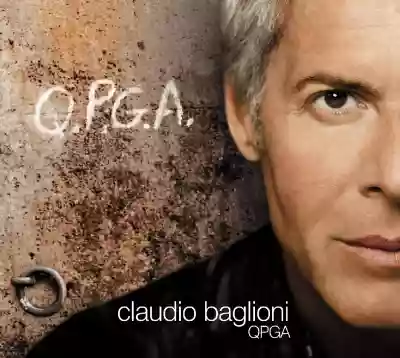
In conclusion, allow me to comment on the cover: being a concept, wouldn't it have been better to put a more themed image, I don't know, two teenagers or even better an "update" of the original cover instead of Baglioni's aged face?
Loading comments slowly
Summary by Bot
The reissue of Claudio Baglioni's 1972 concept album 'Questo Piccolo Grande Amore' brings to light the originally intended, more expansive work. While it enhances comprehension through added tracks and guests, the modernized arrangements and over-polishing detract from the original's charm. The album feels partly a commercial project alongside its artistic goal, reflecting different Baglioni eras but lacking cohesion. Ultimately, it is a mixed yet interesting tribute to a classic.Tracklist Lyrics Videos
01 Piazza del popolo (01:58)
02 Una faccia pulita (03:16)
03 Battibecco (04:00)
05 Che begli amici! (04:19)
06 Mia libertà (03:50)
07 La prima volta (05:13)
08 Quel giorno (03:21)
09 Io ti prendo come mia sposa (01:47)
10 Cartolina rosa (03:10)
14 Sembra il primo giorno (03:12)
15 Con tutto l'amore che posso (versione orchestrale) (01:46)
Claudio Baglioni
Claudio Baglioni (born 1951, Rome) is an Italian singer‑songwriter (cantautore) known for melodic pop and ambitious concept works. Breakthroughs include Questo piccolo grande amore (1972), Sabato pomeriggio (1975) and the chart‑topping La vita è adesso (1985). He has collaborated with figures such as Vangelis and Luis Bacalov and pursued expansive projects from Assolo (1986) to Oltre (1990) and Viaggiatore sulla coda del tempo (1999).28 Reviews
Other reviews
By Boop7
Baglioni was the first to write about youthful love "face to face" with an immediacy that no one had done before him.
If it were a movie, I would put the closing credits with the instrumental of "With all the love I can."
