
 •
Rating:
•
Rating: THE REVIEW
How many of you know this album? Or how many of you actually know these Can? Or even more generally, how many of you are involved with what is called "Krautrock"? Many, of course, certainly not a few chosen ones but many. Yet every time we talk about great albums, those epochal ones capable of dividing the history of music into before and after, artists of the caliber of Faust, Neu!, Popol Vuh, or the Can themselves are rarely mentioned.
Let's consider this "Tago Mago".
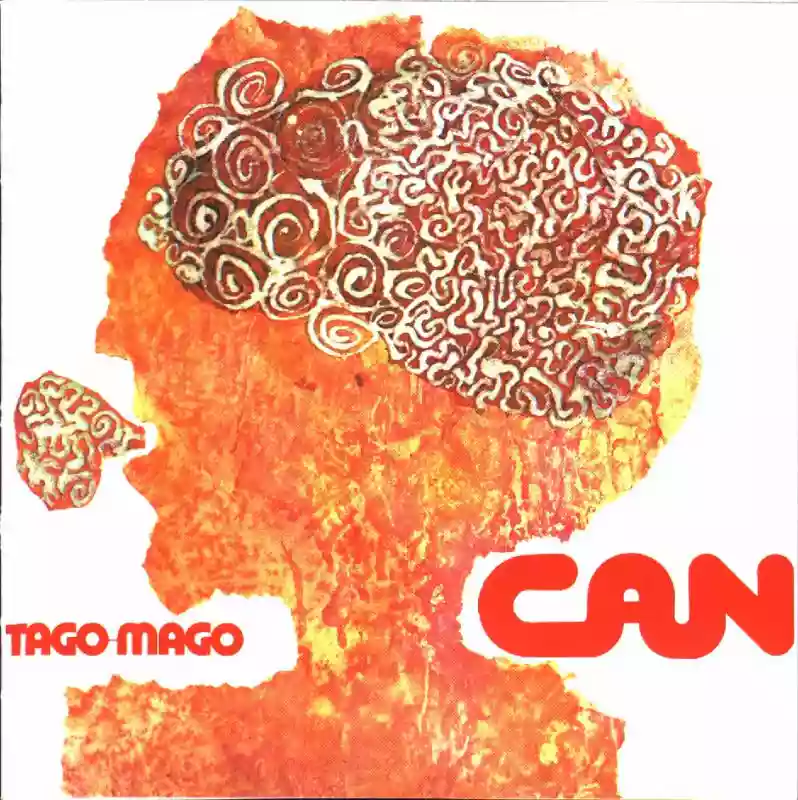
On the cover, a figure of a human skull distorted by the whirlwind of its own thoughts or who knows what, all in orange.
Singular cover, but the music is unique.
Seven tracks seven to redefine music.
It goes from the first two tracks (Paperhouse and Mushrums) which are the ones that can most resemble our concept of "song" even if ramshackle and with a free instinct, leaving space for improvisations, silences, and noises. Then it's the turn of Oh Yeah which starts with the explosion of a nuclear device and the subsequent 9 minutes are the rise and vanishing into nothing of the subsequent atomic mushroom, with Damo Suzuki first singing in English then in Japanese.
Rating 7.5.
But track number 4 is Halleluwah. It is the first of the 3 semi-conclusive long tracks made of pure experiments and noise progressions. That transform an excellent album into a masterpiece, into one of the highest peaks of rock. 18 minutes, an incredible percussive rhythm thanks to a Jaki Liebezeit never so inspired (in the humble opinion of the undersigned one of the most beautiful percussions in the whole history of rock) and without moments of weakness.
Then it moves to Aumgn: if in the previous track there was a rhythm or musical "logic," here (and also in the next) madness reigns. Pure madness of Can. Noise experiments like only the best Velvet Underground of "Sister Ray" or "European Son" knew how to do, but if they played from the sewers of New York, here it plays directly from Alcatraz (probably that's exactly where they fished Damo from!). The time of the peak of madness, that is Peking O, in which in the second part of the piece our singer (if he can simply be defined with this term) indulges in a vocal delirium that makes no sense, without the classic patterns of text and words, and we find ourselves at the last track: a calm and tranquil "Bring me coffee or tea" as if they almost wanted to ask us "what's up? why do you have that scared and surprised face? after all, it was just rock, nothing new."
And so ends Tago Mago, a magnificent album, among the most inspiring and inspired works in history along with White Light/White Heat by Velvet or the first two by Neu! or those by Frank Zappa. In short, in each of these seven tracks, there are thousands of cues, ideas, references, and innovations.
And even if titled magazines like Rolling Stones will not mention it among the best albums of the 900, know all of you that this is among the top 5.
Listen to believe.
Rating 10.
Loading comments slowly
Summary by Bot
This review celebrates Can's 'Tago Mago' as a seminal Krautrock album rarely mentioned despite its huge influence. It highlights the album’s unique sound, experimental tracks, and especially praises drummer Jaki Liebezeit’s percussion. The review compares the album to other groundbreaking works, calling it a masterpiece deserving top recognition.Tracklist Videos
Can
Can were a German experimental rock group central to krautrock, known for hypnotic repetition, improvisation, and studio tape experimentation. Key members included Holger Czukay, Irmin Schmidt, Michael Karoli, and Jaki Liebezeit; early vocals featured Malcolm Mooney, later replaced by Damo Suzuki.24 Reviews
Other reviews
By northernsky
Madness and rationality could peacefully coexist side by side on the same record.
Tago Mago is a work that goes beyond its particular episodes. It is 360-degree exploration, experimentalism in the positive sense.
By manliuzzo
"Tago Mago possesses these characteristics. It’s a spontaneous album, but not naive at all. It’s technical, but not cold."
"‘Halleluhwah’ is a psychedelic funk piece, incomparable to any other, a musical delirium of unique genius, simple yet complex."
By insolito
A thousand extinguished stars in 'Halleluhwah', supernova of modern music along with the version of 'Echoes' by Antonello Venditti.
How to understand a deliberately 'brick' record if one doesn’t have a hard head? By taking a bunch of LSD maybe?
By caesar666
Can become the pioneers and the indispensable point of reference of cultured and avant-garde European rock.
'Tago Mago' is the absolute best Can album and a milestone of inestimable value.
By Caspasian
"Tago Mago is an indispensable unity."
They all suddenly started shouting in unison, and then they felt good, were happy.
