
 •
Rating:
•
Rating: THE REVIEW
Introduction (22:17, from the Gospel According to Kurtz)
Inside a paper house, hunted by spliff-smoking krauts, long-haired mind-crushers who care about nothing but saving the plasticized world from such hope without apparent sense; poetic illusions where not even the pen of the writer knows what the hell is happening here and there. Eyes in a jar among neoplastic mushrooms, where Japanese motorcycles improvise words without caring about anything.
Futuristic guitar riffs with patches of tribal land crushed to the ground by a recharging drum set. Jet trash. Slapping two votes without apparent sense on a senseless text (not just apparently). But let’s proceed in order, this "Tango Mango", or "Tago Mago", deserves more.
Part One (58:34, from the toilet paper)
In not only a figurative sense, this record was born in 1971.
It was born from the semi-closed vagina of some German in a Germany destroyed by neo-Nazi regurgitations (words of Airone), from the exhaust pipe of a kind of man-machine-destroy-everything Damo Suzuki, with Germany having little to do with it. Or maybe not. 3 suites, inevitable. A thousand extinguished stars in "Halleluhwah", supernova of modern music along with the version of "Echoes" by Antonello Venditti. Like that night everyone experienced while Rai Uno broadcasted with a video inside Neu! '75. But when the hell did this happen???
Part Two (2:23, from your right buttock)
Among the thousand chainsaws (but even just saws) one realizes that they haven't realized anything yet. Here comes "Oh Yeah", dynamite bomb. Phrasing, patterns, singing. Orgasmically orgasmic. Pity for that extra "O" that brings everything down below the 5 constellations.
How to understand a deliberately "brick" record if one doesn't have a hard head?
By taking a bunch of LSD maybe? Smoking three joints in a row? Reading the Zingarelli 2020 dictionary? Licking your own butt? Standing up?
Conclusion (99:99, Day of Never)
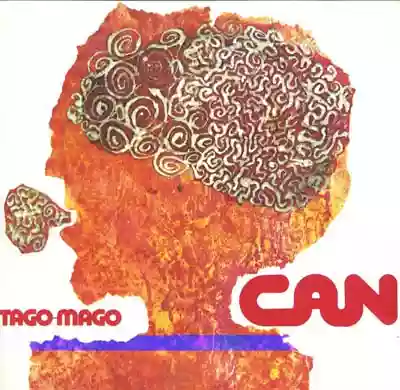
Perhaps Nietzsche believed that God was dead. No, God is here. Not Ronnie James. No. But God in person, father of Christ, unclassifiable lover of the whole universe. You can notice this "God" on the cover. Black? Noooooooooooot.
Orange.
Because as someone said a long time ago:
Everything ended at the beginning.
Can - Tago Mago
Side one
1. "Paperhouse" - 7:29
2. "Mushroom" - 4:08
3. "Oh Yeah" - 7:22
Side two
1. "Halleluhwah" - 18:32
Side three
1. "Aumgn" - 17:22
Side four
1. "Peking O" - 11:35
2. "Bring Me Coffee or Tea" - 6:47
Loading comments slowly
Summary by Bot
This review dives deep into Can's 1971 album Tago Mago, praising its psychedelic and experimental essence. The reviewer highlights the album's surreal, tribal rhythms, futuristic guitar riffs, and the iconic track 'Halleluhwah'. Despite its challenging nature, the album is celebrated as a landmark in modern music with its unique and mystical atmosphere.Tracklist Videos
Can
Can were a German experimental rock group central to krautrock, known for hypnotic repetition, improvisation, and studio tape experimentation. Key members included Holger Czukay, Irmin Schmidt, Michael Karoli, and Jaki Liebezeit; early vocals featured Malcolm Mooney, later replaced by Damo Suzuki.24 Reviews
Other reviews
By northernsky
Madness and rationality could peacefully coexist side by side on the same record.
Tago Mago is a work that goes beyond its particular episodes. It is 360-degree exploration, experimentalism in the positive sense.
By Neu!_Cannas
Seven tracks seven to redefine music.
Halleluwah transforms an excellent album into a masterpiece, one of the highest peaks of rock.
By manliuzzo
"Tago Mago possesses these characteristics. It’s a spontaneous album, but not naive at all. It’s technical, but not cold."
"‘Halleluhwah’ is a psychedelic funk piece, incomparable to any other, a musical delirium of unique genius, simple yet complex."
By caesar666
Can become the pioneers and the indispensable point of reference of cultured and avant-garde European rock.
'Tago Mago' is the absolute best Can album and a milestone of inestimable value.
By Caspasian
"Tago Mago is an indispensable unity."
They all suddenly started shouting in unison, and then they felt good, were happy.
