
 •
Rating:
•
Rating: THE REVIEW
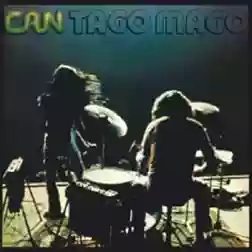
Can were undoubtedly the most cultured and complete German group of the diverse Krautrock scene. The lineup included two students of Karl-Heinz Stockhausen, namely bassist Holger Czukay and keyboardist Irmin Schmidt, the true inspired minds behind the project. The lineup was completed by the extraordinary drummer Jack Liebezeit, whose style came from free-jazz, the talented acid guitarist Michael Karoli and, initially, singer Malcolm Mooney. The latter was later replaced by the mythical and legendary Damo Suzuki, who was recruited after being seen performing on the street. The first two albums by Can are excellent and already demonstrate their qualities: “Monster Movie” is still indebted to the lesson of American psychedelia - especially Grateful Dead and Velvet Underground - but already contains the germs of what will be elaborated and refined in the future, while “Soundtracks” is an interlocutory record of the highest level. But it is with “Tago Mago” (1971) that Can become the pioneers and the indispensable point of reference of cultured and avant-garde European rock. For the occasion, the group locked themselves in the rehearsal room of the Schloss Nörvenich castle and managed to produce a double album of epic proportions.
The first side begins with “Paperhouse”: the start is quiet with Karoli's guitar drawing sharp hard-blues solos, then the pace becomes more frenetic with the drums and bass taking over. Then the music calms down and gives way to the next track “Mushroom,” a track secretly studied by many future protagonists of the new wave. “O Yeah” is introduced by a blasting and apocalyptic explosion, then the rhythm section – a sort of Great Bertha of Can - takes over in an impetuous and robotic way while the treated voice and the hallucinated organ of Schmidt create an unsettling atmosphere. The style of Can is monotonous, expansive, psychedelic, and avant-garde, so typically German. The second side is entirely occupied by the long “Halleluwah.” In this fantastic track, Jaki Liebezeit has the opportunity to shine on drums: his performance is extraordinary and demonstrates his free-jazz background. Suzuki sings possessed while the music expands into a cosmic and psychedelic funk. Can are here at their best, in the full force of their explosive power.
The first side of the disc is occupied by “Aumgn,” a long experimental and electronic composition dedicated to the magician Aleister Crowley. Forget the Cosmic Music that was then reigning in Germany of the various Tangerine Dream and Ash Ra Tempel: this is music directly inspired by the great master Karl-Heinz Stockhausen, of whom they are discovered legitimate heirs. The atmosphere is nightmarish: a treated voice (of Schmidt) that seems to come from the underworld repetitively chants the word “Aumgn” like an obsessive mantra accompanied by the corroding sounds of the cello. A great track in which Can embrace the lesson of concrete music. We are in the realm of pure avant-garde. “Peking O” is instead a sort of crooked song without a precise form: Suzuki seems to be in a trance and has sudden outbursts of violence supported by the electronic drums and an atonal piano. “Bring Me Coffee Or Tea” closes more tranquilly, supported by the solid rhythm section in the vein of the first side of the disc.
The recent 40th-anniversary edition CD reissue also features a bonus disc with live tracks. It is an unmissable opportunity to listen to the group in the concert context, where they were particularly at home. Live, Can improvised and never played their compositions in the same way. Everything was guided by an attitude of experimentation and the search for a new musical language. “Tago Mago” is the absolute best Can album and a milestone of inestimable value. Everyone is indebted to this record, from the new wave to shoegaze (I think of bands like Spacemen 3 and Loop).
Loading comments slowly
Summary by Bot
Can's 'Tago Mago' stands as a landmark double album in the Krautrock genre, showcasing a blend of psychedelic, avant-garde, and experimental styles. Featuring key members influenced by Stockhausen, the album unfolds with epic and cosmic tracks like 'Halleluwah' and 'Aumgn.' This record is celebrated as Can's best work and a foundational inspiration for future genres such as new wave and shoegaze. The live bonus tracks further emphasize the band's improvisational prowess.Tracklist Videos
Can
Can were a German experimental rock group central to krautrock, known for hypnotic repetition, improvisation, and studio tape experimentation. Key members included Holger Czukay, Irmin Schmidt, Michael Karoli, and Jaki Liebezeit; early vocals featured Malcolm Mooney, later replaced by Damo Suzuki.24 Reviews
Other reviews
By northernsky
Madness and rationality could peacefully coexist side by side on the same record.
Tago Mago is a work that goes beyond its particular episodes. It is 360-degree exploration, experimentalism in the positive sense.
By Neu!_Cannas
Seven tracks seven to redefine music.
Halleluwah transforms an excellent album into a masterpiece, one of the highest peaks of rock.
By manliuzzo
"Tago Mago possesses these characteristics. It’s a spontaneous album, but not naive at all. It’s technical, but not cold."
"‘Halleluhwah’ is a psychedelic funk piece, incomparable to any other, a musical delirium of unique genius, simple yet complex."
By insolito
A thousand extinguished stars in 'Halleluhwah', supernova of modern music along with the version of 'Echoes' by Antonello Venditti.
How to understand a deliberately 'brick' record if one doesn’t have a hard head? By taking a bunch of LSD maybe?
By Caspasian
"Tago Mago is an indispensable unity."
They all suddenly started shouting in unison, and then they felt good, were happy.
