
 •
Versione 1
Rating:
•
Versione 1
Rating:
THE REVIEW
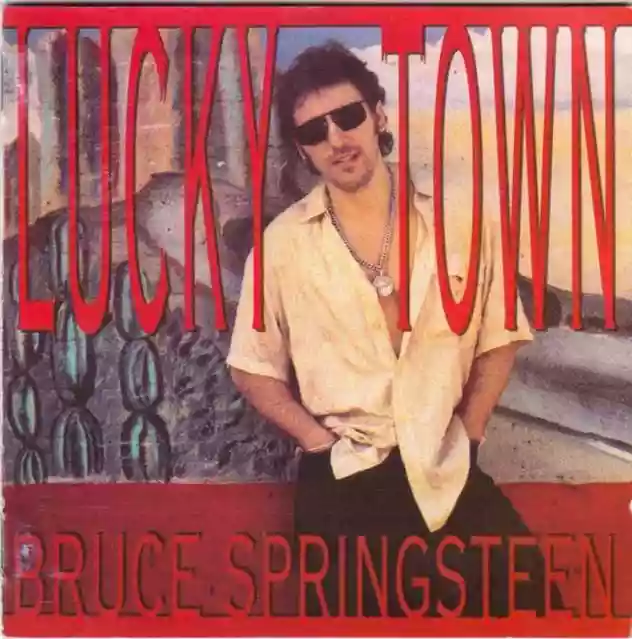
The story of this album is simple and quite unique in Springsteen's discography, and not only: the album was written, recorded, and released in less than six months, in a creative impulse probably unexpected even by the author himself. We are between July and December of 1991, Springsteen has been through three difficult years personally (the failure of a marriage and the start of a new relationship full of uncertainties and dangers) and artistically: he has just finished an album, Human Touch, that doesn't fully convince him, especially concerning the production, in which he wanted to downplay the end of the nearly 30-year relationship with the ESB but could not; Human Touch is not devoid of beautiful songs, but they are played and produced in a bland way with arrangements that don't steer in the direction of a rock with strong soul hues that was surely on the author's mind.
In this album, the intentions remain the same, but the execution changes: without a band, one can only do one thing, write and record "at home" alone, as he had already tried in previous works, Nebraska and Tunnel of Love, but, in this case, in an even more extreme way. The sound of the album is obviously very acoustic but follows the rock-soul inspiration that has resided in the author's mind for some time, clearly since the Tunnel of Love tour.
I would say the main theme of the work is the "second chance" to be seen not only related to the personal vicissitudes mentioned above but also to the artistic life: here I am, I can still do it, even without a band, the author seems to declare.
Better Days and Leap of Faith are, in my opinion, the core of the album and sharply express the thematic and musical intentions of the work: two acoustic rock ballads, yet quite powerful, benefiting from the trio of female voices, Scialfa-Lowell-Tyrell, which consistently returns throughout the album to fruitfully render Springsteen's gospel inspiration. Leap of Faith is described as "a fleeting humorous tableau, not devoid of sexual references, on love and resilience": the peculiarity is that biblical metaphors are used, Moses, the Holy Land, the Red Sea, almost at the edge of blasphemy, which is nonetheless softened by the humorous tone of the track.
The same humorous vein returns in Local Hero: here, Springsteen makes fun of himself: he was driving on the highway, stops, and in a small autogrill shop spots a figurine representing him, asks the clerk (who doesn't recognize him) who it was, and is told "it's a local hero". Musically, the piece does not stray from what is said about Better Days and Leap of Faith, with a country-folk flavor rendered by the addition (finally) of the inseparable harmonica.
The extraordinary Lucky Town does not deviate from this musical formula, which, compared to others, features a beautiful "vibrato" solo from Springsteen's unmistakable Telecaster: "I've had some victories that were only failures in disguise," Bruce says, referring to the huge success, hyped by the media, of the Born in the USA period, which evidently is not a full expression of his artistic, spontaneous, and essential soul, just as he, without effort, brings out in this album.
The Big Muddy and Souls of the Departed significantly change the tone of the album: they are two electric, livid blues with electric guitar, harmonica, and slide (all obviously played solo by the author) dominating the scene; particularly, The Big Muddy is an innovative and atypical track, an experiment that combines the very roots character of the blues with some very radio-friendly and contemporary musical loops. The themes abandon the personal sphere and become political: the Gulf War echoes in Souls of the Departed and the wickedness of the human soul that yields to war, as he says in The Big Muddy, "a poisonous serpent bites you, you become poisonous too," quoting (declared in the credits) the novel "Paris Trout's Black Heart" by Pete Dexter, a beautiful text that I recommend rediscovering.
If I Should Fall Behind is the masterpiece of the album, a track I consider among the best in all of Springsteen's vast discography where he sings with a very melancholic lyricism on a melodious keyboard backdrop (played by himself) accompanied by beautiful acoustic guitar phrases reminiscent of Springsteen's origins as a skilled guitarist, electric and, perhaps even more so, acoustic. The text is an ode to the beloved woman, to the life to be lived together overcoming every difficulty: precisely because of the universality of Springsteen's poetry, the "love" theme can become the "friendship" theme, as he often does in the superb live renditions of the track post-reunion with the ESB, sung in turn by all the group members and dedicated on those occasions to the friendship with the band members, part of a true extended musical family. An example of a live performance of the track can be found in Live in New York City, which I recommend giving some listens to, you will be struck by the beauty and theatricality of the piece.
Another masterpiece is My Beautiful Reward, a country piece, all drums (light), acoustic guitar, organ, and harmonica (closing the track): the theme of escape returns, the same as Born to Run, from a dissatisfying life in search of one's "extraordinary reward": here, the protagonist doesn't race on a Cadillac on the highway, but, transformed into a bird, flies over gloomy fields in search of light, of a better life.
The beauty, in my opinion, of this album lies in the immediacy of the songs, in the impression of the author's artistic trance, pulling from his subconscious pieces that he had probably despaired himself of being able to recover from his artistic spirit.
I recommend listening to it, or perhaps rediscovering it for those who hadn't fully appreciated it.
Loading comments slowly
Summary by Bot
Lucky Town stands out in Springsteen's discography as a swiftly created, deeply personal album reflecting his life changes and artistic renewal. It blends acoustic rock and gospel influences with themes of second chances. Notable tracks include the powerful ballads 'Better Days,' 'Leap of Faith,' and the masterpiece 'If I Should Fall Behind.' The album also explores political themes in tracks like 'The Big Muddy.' Overall, Lucky Town captures an immediate and heartfelt expression of Springsteen’s creative spirit.Tracklist Lyrics Videos
Bruce Springsteen
Bruce Springsteen (born 1949 in Freehold, New Jersey) is an American singer-songwriter and bandleader best known for his work with the E Street Band. His career spans from the 1960s/1970s to the present, with landmark albums such as Born to Run, Darkness on the Edge of Town, Nebraska and Born in the U.S.A.90 Reviews
Other reviews
By Night87
Lucky Town is Springsteen’s first true album of human maturity.
The choice to give more space to the electric guitar is also excellent.
By fyguns
Lucky Town immediately reveals itself as genuine, straightforward, without contamination.
After listening it leaves a taste of positivity and redemption.
By TommasoFalc
"Lucky Town" is a heartfelt, unified album with a single central theme: family happiness.
In Leap of Faith Springsteen says: Oh heartbreak and despair got nothing but boring.
