
 •
Rating:
•
Rating:
THE REVIEW
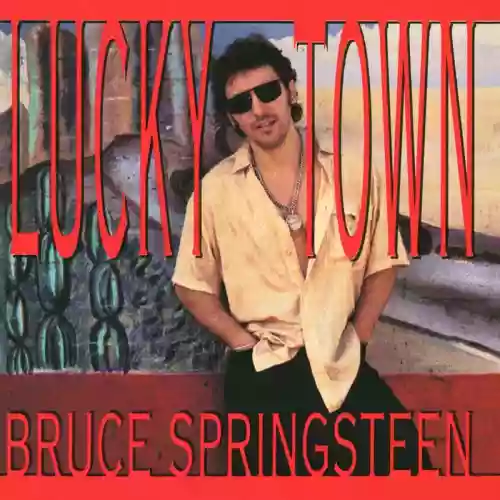
In 1992, Springsteen simultaneously released two albums, "Human Touch" and "Lucky Town", which were not particularly well-received by critics or the public. To this day, these works are considered minor; they are said to be the product of a period of disorientation (the E Street Band had been disbanded, and Bruce had moved to California, leaving New Jersey, the cradle of his American dream). In reality, Lucky Town is different from its companion in themes, sounds, and even musicians. Much like the reevaluated Tunnel of Love, it is a largely autobiographical work, with intimate lyrics that contrast with the pompous and populist image Springsteen’s detractors have of him.
Those not passionate about the New Jersey rocker argue that "Nebraska" is his last valuable album. Some say that the million-dollar hunt of "Born in the USA" confined Springsteen to the pen of mainstream rock dinosaurs. Usually, however, dinosaurs in cages sell well, but after 1984, Bruce didn’t earn much, certainly not enough to cover the hefty heating bills of the aforementioned pen. The space granted to a dinosaur isn’t eternal, and if you don’t make good records, eventually you get evicted, even if you are called the Boss. Yet, in the nearly thirty years since "Born in the USA", it seems Springsteen’s reputation hasn’t suffered any severe declines. So, it’s time for even the most uncompromising critics to consider the possibility that there are valuable albums after "Nebraska". One of these is indeed "Lucky Town".
Unlike Human Touch, Lucky Town is a compact album, written in a short time, and above all, unplanned (Springsteen had only planned the first), a fact that attests to its authenticity. In fact, what need was there for another album besides the one already in preparation? Cynics will respond sharply: but two albums, two sets of revenues, two albums equals a double fleecing of the fans! One could respond: are we sure that a mainstream dinosaur releases two albums simultaneously? Wouldn’t it be more convenient, like a good accountant “in charge of artifice”, to perhaps add a couple of songs and keep the rest in reserve for lean times? No, it’s much more plausible that "Lucky Town" was released immediately because it is a heartfelt, unified album with a single central theme. And this theme is family happiness.
In the early '90s, Springsteen was no longer a man on the run; he had married backing vocalist Patti Scialfa and had a son. If Tunnel of Love narrated the couple’s relationship from the perspective of crisis, "Lucky Town" is the album of lived happiness. Better Days, the opening track, is clear from the title, and it sings: It’s a sad man who’s livin’ in his own skin / And can’t stand the company, a sad man is one who lives closed within himself and can’t stand company. Most of the songs describe typically familial situations: intimacy (If I Should Fall Behind, Leap of Faith, Book of Dreams, My Beautiful Reward), fatherhood (Living Proof), and new awareness (Better Days and the title track). The exceptions are Souls of the Departed, a prayer for the victims of war violence and society (although there is also a reference to being a parent, the anxiety for one's child in such a society), The Big Muddy, a disillusioned track about the small trades and maneuvers everyone engages in (There ain't no one leaving this world buddy / Without their shirttail dirty / Or their hands bloody), and the self-ironic Local Hero.
From a musical standpoint, "Lucky Town" is sober, with no piano or brass and understated keyboards. Without the E Street Band, Springsteen does almost everything himself, playing guitars, bass, and keyboards (as he already did in "Tunnel of Love"). There are virtually no arrangements: the result is almost a live studio album. The spotlight is on Bruce’s guitar which, again, to the chagrin of connoisseurs who dismiss him as a crude rocker, proves capable of refined interventions (the acoustic intricacies on If I Should Fall Behind, the slide on The Big Muddy), as well as an unexpected, distorted, and effected sound in the brief finale of Souls of the Departed.
"Lucky Town" is an album that deserves a place of respect in Springsteen’s discography. It contains If I Should Fall Behind, now a classic. It features ballads that effectively portray intimacy with few strokes (Book of Dreams, My Beautiful Reward) and successful Springsteen rock tracks like Lucky Town, Better Days, and Leap of Faith. Even the “swampy” progression of The Big Muddy perfectly matches the sinking in the mud sung about in the chorus. "Lucky Town" has been and is penalized by its coexistence with the mediocre "Human Touch", yet it is a valuable themed album. In my opinion, the cause of its (current) lack of adequate recognition lies precisely here: the theme of family happiness doesn’t have citizenship in rock where, as is well known, only torment and recklessness are predominantly sung about (and exalted by listeners). But in Leap of Faith Springsteen says: Oh heartbreak and despair got nothing but boring.
Loading comments slowly
Summary by Bot
Lucky Town, released alongside Human Touch in 1992, stands out as a compact and authentic Bruce Springsteen album focused on family happiness and intimate themes. It showcases stripped-down instrumentation and autobiographical lyrics, contrasting with the mainstream image of Springsteen. Despite initial lukewarm reception, the album deserves recognition, particularly for ballads like "If I Should Fall Behind." Its rarity lies in celebrating family life in a rock genre often dominated by themes of turmoil.Tracklist Lyrics Videos
Bruce Springsteen
Bruce Springsteen (born 1949 in Freehold, New Jersey) is an American singer-songwriter and bandleader best known for his work with the E Street Band. His career spans from the 1960s/1970s to the present, with landmark albums such as Born to Run, Darkness on the Edge of Town, Nebraska and Born in the U.S.A.90 Reviews
Other reviews
By Night87
Lucky Town is Springsteen’s first true album of human maturity.
The choice to give more space to the electric guitar is also excellent.
By fyguns
Lucky Town immediately reveals itself as genuine, straightforward, without contamination.
After listening it leaves a taste of positivity and redemption.
By Hungry
"The story of this album is simple and quite unique in Springsteen's discography, written, recorded, and released in less than six months."
"If I Should Fall Behind is the masterpiece of the album, a track among the best in Springsteen’s vast discography, with melancholic lyricism and beautiful acoustic guitar phrases."
