
 •
Rating:
•
Rating:
THE REVIEW
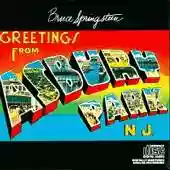
"Greetings From Asbury Park" is a title that perfectly encapsulates everything that revolves around this album, which marks the debut of a Bruce Springsteen still tied to Dylan-like motifs and as raw as the production initially entrusted to Mike Appel (it's also worth remembering that from what would become the E-Street Band, only "Big Man" Clemons and Gary Tallent are present, and Vincent Lopez, who was a key figure in Steel Mill, still handles the drums).
The themes addressed in this debut are very far from those that will make Springsteen famous, but they essentially show, despite the presence of certain muddled symbolism, the beginning of a surprisingly rapid maturation process when we consider his age and relate it to his tumultuous adolescent journey.
The first song on the album is "Blinded By The Light," a lively tune featuring Bruce on the bass (the song would later become a hit by Manfred Mann's Earth Band) and precedes a signature song like "Growin' Up," which was wonderfully covered by an inspired David Bowie; after these two excellent songs, we arrive at "Mary Queen Of Arkansas," a song that never thrilled me and which I find much more appreciable on "Tracks." "Does This Bus Stop At 82nd Street?" is another lively track that is masterfully placed within the album's overall economy before what I consider the true gem of this debut: "Lost In The Flood," a song that still moves me as if it were the first time (the 1975 London performance is stunning) and can easily be considered among Springsteen's 15 best songs; "The Angel" is one of the less regarded songs of his career and plays, with due proportions, the role that the little jewel "Factory" will have in "Darkness On The Edge Of Town." The next two songs, "For You" and "Spirit In The Night" (where Bruce reappears on the bass), are in my opinion splendid examples of approaching the atmosphere of "Born To Run" and precede "It's Hard To Be A Saint In The City," characterized by a successful blend of various instruments and, in a sense, leads us straight to an unpredictable album like "The Wild, The Innocent & E-Street Shuffle."
Ultimately, examining all aspects, I recommend this as the album to start with to appreciate the resources of this extraordinary singer-songwriter, while obviously not considering it on par with his masterpieces and placing it in a hypothetical ranking ahead of only "Human Touch" and "Lucky Town" (the latter just slightly).
Loading comments slowly
Summary by Bot
This review explores Bruce Springsteen's debut album, 'Greetings From Asbury Park, N.J.', highlighting its raw production and youthful Dylan-inspired lyrics. Key tracks like 'Blinded By The Light' and 'Lost In The Flood' stand out as early indicators of Springsteen's talent. While not on par with his later masterpieces, the album is a valuable listen for understanding his artistic beginnings.Tracklist Lyrics Videos
Bruce Springsteen
Bruce Springsteen (born 1949 in Freehold, New Jersey) is an American singer-songwriter and bandleader best known for his work with the E Street Band. His career spans from the 1960s/1970s to the present, with landmark albums such as Born to Run, Darkness on the Edge of Town, Nebraska and Born in the U.S.A.90 Reviews
Other reviews
By MAR1973
Inside the album, there are some authentic gems like "Growin' Up" and "Lost In the Flood."
An unsettled record, perhaps still unripe, but already crowded with those characters that will populate Springsteen’s songs in the future.
By claudio carpentieri
"It is clear to call 'Greetings From Asbury Park, N.J.' a sufficiently defined and castigated work by hesitant production."
"When the first record came out, people were scandalized there was no electric guitar!"
