
 •
Rating:
•
Rating:
THE REVIEW
Ok, I confess. I absolutely adore Manuel Agnelli and his very personal creation, Afterhours. I firmly believe that, for the consistency demonstrated over the years in terms of musical and poetic quality - masterpieces in series - Afterhours can be considered, without remorse, one of the best rock bands in Italian music history. (for me, the best, ça va sans dire)
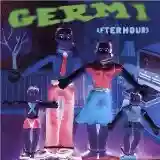
"Germi" (1995) is just the first chapter (in Italian) of the saga. Before reaching this album, Manuel and his associates had already accumulated a decent amount of experience and excellent feedback from industry critics, even internationally. In their homeland, however, if we consider actual success, little or nothing, the English language did not aid the band's emergence just as the musical context, probably, was not yet ready for that type of sound. A decent change of course occurred precisely with this work: out with English, in with Italian. Thus, also somewhat as a “personal challenge.”
From the album emerges the urgency to communicate, the desire for freedom, the experimental, iconoclastic, and innovative drive of the band. It was time to blow away the piles of dust accumulated over years and years on the Italian music scene. The result achieved, in my opinion, is overwhelming. Music and lyrics, elaborated, especially the latter, through the interesting technique of cut-up (of Dadaist lineage), manage to almost perfectly alternate moments of wild rock fury, direct like a punch in the face (the title track "Germi" is emblematic in this regard) with ethereal "ballads" that are venomous, acidic, never mellifluous or affected (like "Dentro Marilyn," later revisited by a certain Mina, not exactly a newcomer... what a testament of esteem!). The use of cut-up also gives a certain depth and peculiarity to the album both in terms of the author's text processing technique, based on abandoning the canons, linguistic cages, and on the freedom of expression of the unconscious and instinct, and in terms of the listener's experience of the album itself (texts and music allow the listener the opportunity to freely use their own imagination for interpretation).
We could say that, thanks to this album, Afterhours were, in some way, among the promoters of the semi-cultural revolution that occurred in the '90s in our Bel Paese. Essentially, they managed to transfer onto our music scene some of the artistic and aesthetic canons that were widespread, especially in the United States and particularly appreciated by them. The band's longevity and the success they achieved starting from their subsequent album (“Hai Paura del Buio?”) completed the work.
And then... should I say it? Yes, I’ll say it. In my opinion, Afterhours played a major—indeed, I’d say fundamental—role in the evolution of Italian songwriting. The aim of Manuel Agnelli, in a certain sense, was precisely this: to create a breaking point in the Italian music scene.
Strong words, but heartfelt.
...and to think that many came to know Manuel and company thanks to X-Factor.
Life is truly strange…
Loading comments slowly
Summary by Bot
The review praises Afterhours' album Germi as a groundbreaking and influential work in Italian rock music. Manuel Agnelli's shift from English to Italian lyrics marked a turning point, combining poetic depth with raw rock energy. Germi is credited with fostering a semi-cultural revolution in Italy’s music scene and playing a fundamental role in the evolution of Italian songwriting. The album's use of the cut-up technique adds artistic uniqueness, making it a timeless classic.Tracklist Lyrics Videos
Afterhours
Afterhours is an Italian alternative rock band from Milan led by Manuel Agnelli, active since the mid-1980s and widely cited as influential in the Italian indie/alternative scene.52 Reviews
Other reviews
By nadir
Germi shifts the boundaries of new Italian music with an album that is not Italian at all.
The result is the greatest Italian rock album of all time, an absolute paradigm for future generations.
By Bleak
"Germi is their first album in Italian and the first in a long series of small masterpieces."
"The album is a kind of germ that it is impossible to forbid from reproducing in the mind of those who listen to it, a virus you will be happy to be infected by."
By lucarandi80
When I think of this album, the first image that comes to mind is Agnelli harming someone just for the pleasure of doing it.
This is rock in its purest form.
