
 •
Rating:
•
Rating: THE REVIEW
I was young and had no criteria for purchasing my records, the only two factors that vaguely influenced me were the covers and the “Special price” offers.
I have never wanted to criticize this primitive method which, albeit a little adolescent, has proven useful and fun over time. Buying in this way, or in the absence of a way, broadens musical horizons - perhaps too much - forms a complex taste and discovers music from other generations and origins (the LPs on sale are those) rather than the ones approved by MTV.
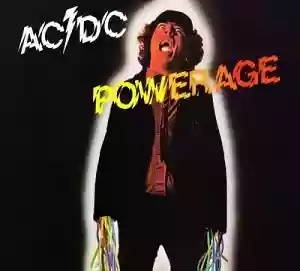
Speaking of AC/DC… they entered my life precisely through this whimsical method. After watching a disgusting film called "Maximum Overdrive", one day among the many covers in a supermarket basket, I reread and remembered the name of those holy protectors, who shielded me from total perdition during the viewing of the atrocity, and I proceeded with the purchase. I remember the great help of the soundtrack in enduring the 80 minutes of projected indecency; against that imagery, the celestial notes of our heroes seemed like a masterpiece! Back to reality, I realized that it wasn’t exactly the compositional peak of AC/DC ("Who Made Who"), but that in much other realms lay the properties of that group. Maybe it’s because I don't have a strictly Rock background, but I still haven’t figured out why an album like "Powerage," which I consider one of the most valid of AC/DC’s, often takes a backseat, overshadowed by other decidedly mediocre ones ("For Those About To Rock"). As proof of what I am saying is the absence of "Powerage" among the current reviews.
"Powerage" is a splendid album that finds AC/DC in great shape and definitely in their most creative moment, an album that follows a raw and raucous "Let There Be Rock" (and that’s not a bad thing) and, unfortunately, precedes the ruinous collaboration with John Mutt Lange, which, in my personal opinion, will excessively clean up the band’s sound. The record is short and fast; there are 9 songs and in some ways 9 singles… sincerely, there are also moments where the album slightly dips, but those are physiological transitional tracks that serve as necessary cushions between rock pieces that are true history (Riff Raff, Sin City, Up To My Neck In You).
What is immediately appreciated in this precious work is the greater variety it presents and thanks to which each piece is well distinct from the others, an exceptional thing considering AC/DC’s rock lens (nauseating and uncontrollable repetition). It starts with "Rock’n’Roll Damnation," which is more an anthem than a song, with a non-exhaustive but engaging rhythm. Next is a rich blues, that of "Down Payment Blues," which grows slowly until the end where Malcolm is left bare with his guitar. The interpretation of the never too lamented - at least personally - Scott is to be noted. It develops the theme of the poor ragamuffin full of debts and vices who survives only with the strength of his blues. Next is "Gimme a Bullet," a champagne rhythm decisive and compelling, a nice sound different from the usual. Then come two gems where AC/DC demonstrate their mastery and ownership of the highest rock wisdom: "Riff Raff" is something sensational, now the rhythm pulls and no one can resist, no one can stay still. Breathlessly, you reach the attack of "Sin City," well, what can I say, in our condition only that powerful and sly riff can help us keep up with the frenzied pace of the race. After the city of perdition, we stumble upon "peace" and "innocence" in "What’s Next To The Moon," which after those two rock monuments serves to present us with the unusual AC/DC going up and down the scale with multi-voiced choruses. In "Gone Shootin’" we find a splendid game of guitars having fun and chasing each other in a blues-divertissment, it is pointless to reiterate again that the great variety of this record is facilitated by the presence of a great, grand rock’n’roll singer. "Up to My Neck in You" squeezes our last energies, it’s devastating, if it lasted a minute longer, we’d find poor Angus in ashes! Finally, "Kicked In The Teeth" closes the album remarkably without regrets.
Summing up, for those who weren’t there the previous time, this "Powerage" is a decidedly rock, fun, varied album - at least as much as one can expect from AC/DC - great even for those who are unfamiliar with this band and would like to approach it. In conclusion, I would say that there are no valid reasons to put an album that rightfully belongs among AC/DC’s best works on the back burner. The rating of 5 is justified both within AC/DC’s discography and in the history of the genre, it’s a pity there wasn’t a 4.5!
Loading comments slowly
Summary by Bot
The review praises AC/DC's Powerage as one of the band's most creative and varied albums, highlighting its raw sound and strong rock tracks. Despite being overshadowed by other records, Powerage is celebrated as essential listening for rock fans. The album's mix of blues influences and hard rock energy is noted, with standout tracks like Riff Raff and Sin City. The reviewer strongly recommends it for both longtime fans and newcomers.Tracklist Lyrics Videos
AC/DC
AC/DC are an Australian hard rock band formed by Angus and Malcolm Young, known for raw riff-driven songs and large-scale live shows.74 Reviews
Other reviews
By Hardrock92
The best moment of the record is surely "Sin City," where the main riff is repeated ad nauseam and Bon Scott's performance is full of screams.
"Powerage" is still a great album in full AC/DC style, capturing the energy and spirit of the Bon Scott era.
By teenagelobotomy
"Powerage turns out to be... a unique album in weight and power, if not the most aggressive, certainly the most compact and powerful."
"Riff Raff... certainly the masterpiece of the album."
By JonnyORiley87
Powerage passed unjustly in near general indifference of the time, actually proving its strength between two gems of the caliber of Let There Be Rock and Highway To Hell.
The apex of the album is reached with the Rock/Blues gem Gone Shootin’: a nearly funk-like beginning grows into a monstrous solo that seems never-ending.
