
 •
Rating:
•
Rating:
THE REVIEW
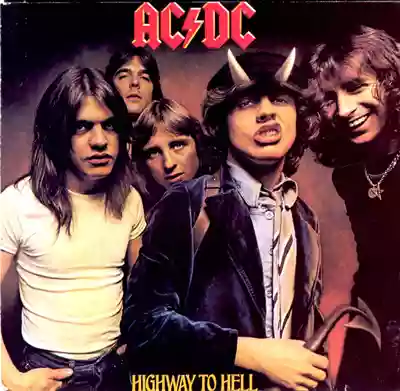
At the end of '78, AC/DC were on the brink of an unstoppable rise: their last great album "Powerage," thanks to the single "Rock N' Roll Damnation", had been the first to break into the UK and US charts and had led to a triumphant tour that saw them play everywhere to enthusiastic crowds alongside, among others, Thin Lizzy (a memorable episode with an almost-brawl), Van Halen, Aerosmith, and other sacred monsters who were literally scared to play after the Australian giants, a tour that culminated with the historic performance on April 30th at the Apollo Theatre in Glasgow, which would be the main source for "If You Want Blood (You Got It)," a future live album that would become their best-selling work up to that moment.
They were ready for the definitive assault on the world and wanted to release the album that would silence everyone, skeptical record executives in particular. However, their road to hell immediately became uphill: under pressure from Atlantic, AC/DC found themselves forced to change producer for the first time, relying on an external figure, unlike the familiar George Young and Henry Vanda. The separation from George was particularly traumatic because George was more than just a producer: he was the sixth effective member (he had also been a bassist in the early days and during the first sessions of "Powerage"), the band's putative father. While Malcolm had always been the more or less silent leader, the elder brother and former Easybeats member had always been the acknowledged leader and the true inspirer and architect of the entire AC/DC saga.
For the first time, the band found themselves facing a different situation, and the record company immediately proposed the prestigious Eddie Kramer, the historical producer and sound engineer of, among others (Who, Kinks, Small Faces...), Jimi Hendrix, as the new man behind the console. Problems quickly emerged, however: serious disagreements on artistic direction, working hours, and methods resulted in an immediate break-up in the midst of unprecedented sessions in Miami, a brand-new place for the boys used to recording in Sydney. The band then moved to cold London to start over working on the pieces and ideas that were the fruit of the previous sessions, this time with Mutt Lange, a name and character much appreciated by the group, who then began working on the new album "Highway To Hell".
The working methods were nonetheless very different from those used for their previous works. Previously, they would enter the studio with simple sketches and develop them at the piano together with George; now, they entered with more complete pieces that they found themselves elaborating on with the new producer. Lange's first moves were immediately to highlight and enhance Bon's vocal harmonies and technique, the fruits of which can be best heard in the absolute masterpiece of the album and the group: "Touch Too Much", an authentic gem of the band, was a piece already circulating from the previous sessions.
But the work previously started with the famous title track inspired by the US Highway 666, a road said to bring a terrible curse just by mentioning it. The idea was for it to be their "All Right Now", in terms of impact, and the historic riff stood out "like a dog's balls," to use Malcolm's always refined words. "Girls Got A Rhythm" and "Walk All Over You" (with an amazing instrumental moment in the middle) complete the incredible initial quartet; there is little to say about these fantastic and indefinable tracks.
"Beating Around The Bush" with its unmistakable riff is one of the lesser-known tracks of the album, along with "Get It Hot" and the great blues "Love Hungry Man", the other two less famous but not less worthy, although the best comes from the others. From "Shot Down In Flames" for example, from "If You Want Blood (You Got It)", and especially from the wonderful closure of "Night Prowler": a long hard blues ballad, one of the only ballads from the five little devil kangaroos, not the only one ("Ride On", "Love Song") but certainly the most beautiful, intense, and emotional with those spine-chilling initial breaths, with the incredible Angus giving his best.
The album was a continuation of the group's mentality, always a damn aggressive rock n' roll, but this time less raw and more refined, partly due to the major's requirements for more radio-friendly pieces and partly due to a true artistic maturation. Also, the lyrics differed from those of the previous record, which, at Bon's will, appeared this time less dark and serious compared to, for example, "Gone Shootin'".
This closes what would be the last album of the great, never too much mourned Bon Scott, who would die of asphyxiation, choked on his own vomit like Hendrix and John Bonham, following a controversial night and a controversial binge (well below his standards) with the newly-acquainted Alister Kinear, a former roommate of his ex-girlfriend, when they say fate, but that's another story. I know there are obviously already many reviews of this epochal album, you already know my thoughts on it but this time I also wanted to pay homage to the great Bon 30 years after his passing, with his greatest masterpiece, the absolute pinnacle of AC/DC, better than "Let There Be Rock," better than "Back In Black," the album that would bring them to the top of every chart before definitively cementing their legend status with the aforementioned successor.
The album that would lead them to play almost always as headliners except with friends Cheap Trick, Thin Lizzy again, Who (memorable anecdotes of banter between Bon and Pete Townshend), and Stranglers at Wembley, Def Leppard, Judas Priest, and others (they should have also played at the historic '79 Knebworth edition but they weren't much liked by the influential Robert Plant); besides the recording of the historic documentary "Let There Be Rock" in France, the ultimate testament to the greatness of that formation, always great afterwards but never like that historic lineup. AC/DC at their best, sealed by one of the greatest albums in rock history.
Loading comments slowly
Summary by Bot
Highway to Hell captures AC/DC at the peak of their early career, showcasing refined production under Mutt Lange and Bon Scott’s vocal mastery. Despite initial struggles with producers, the album became a defining rock classic with memorable tracks and enduring impact. It also marks the last work of the legendary Bon Scott before his tragic death, sealing this lineup’s place in rock history.
AC/DC
AC/DC are an Australian hard rock band formed by Angus and Malcolm Young, known for raw riff-driven songs and large-scale live shows.74 Reviews
Other reviews
By JaymezHetfield86
We are talking about Highway To Hell, one of the most representative albums by AC/DC, certainly one of the best three or four produced by the Australian band.
An album that ABSOLUTELY must be included in the collection of anyone who listens to Rock 'n' Roll and Rock in general.
By metallicaliveshit88
The characteristic of this CD is that it exudes energy from every pore, and the band was in extraordinary shape.
It represents the creative pinnacle of the band (thanks especially to the inimitable Bon Scott).
By S.I.A.P.
The masterpiece is "Highway to Hell" and the band is the Australian group AC/DC.
This is a record that all hard rock enthusiasts should have on their shelf.
By kain3325
What strikes one about their music is the simplicity, the brute force of a guitar solo aptly unleashed, the incredibly beautiful and powerful voice, and a tidy and clean rhythm section.
Highway to Hell opens with the title track and it’s immediately great music: a classic rock’n’roll where Malcom’s strumming draws an appealing and nervous riff.
By paolofreddie
Most likely for this reason! I don’t deny that they have been one of the most influential bands of all time.
A bit like with Queen! Their commercial component has elevated them to the pinnacle of the world, but skill is not just about crafting hits and filling stadiums.
