
 •
Versione 1
Rating:
•
Versione 1
Rating:
THE REVIEW
My heart went on stage with a poorly pressed tuxedo and your absence in the front row; it tried to sing, but you took the highest note with you. So now it improvises: a misstep, a crooked bow, a smile that tastes of behind-the-scenes, and the audience laughs, and maybe, for once, they’re laughing with me.
There exists a pop theater that does not need an audience to shine. When your world is full of strange chords and gravity won’t let you through, you know you’re missing something.
The Look of Love.
That something depends on you.
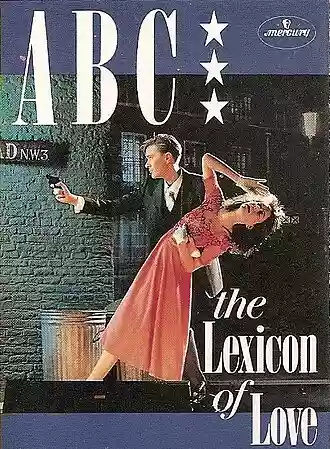
The Lexicon of Love parades before the listener with the confidence of someone who knows they are the best dressed: lush strings, Trevor Horn’s sparkling production, Martin Fry seeming like an actor from a ’50s melodrama catapulted into a timeless British wave. Class is everywhere, in the stalls, on the radiant stage, among the shadows of the gallery. As with all great things, the difference is in the details: Philly soul horns, geometric synths, songwriting that turns every heartbreak into an elegant gesture.
The influences intertwine like fine fabrics: the orchestral soul of the Philly Sound, with its soft harmonic progressions and warm horns, blends with the controlled coolness of British new wave; Roxy Music–style art-pop provides Fry with a model of the modern crooner. Meanwhile, Anne Dudley’s arrangements recall John Barry soundtracks, with strings that sound straight out of a glamorous spy film. There’s even a refined disco echo, the most elegant and orchestral kind, flowing beneath tracks like Show Me.
Fry sings about love as a sentimental dictionary full of cutting definitions: in Poison Arrow he complains with irony (“I thought you loved me, but it seems you don’t glamour.” In The Look of Love he stages abandonment as an upside-down romantic comedy (“When your girl has left you out on the pavement”), in All of My Heart he surrenders with a romanticism that the orchestra amplifies until it feels like a film ending. The soul influences emerge in his vocal delivery, always a bit theatrical yet with a warmth betraying a love for Marvin Gaye and Smokey Robinson; at the same time, the rhythmic precision and use of synths place him firmly in the early-’80s electronic modernity.
The result is an album that speaks of broken hearts but does so with such elegance that every crack becomes a golden reflection. A classic because it doesn’t truly belong to the ’80s: it belongs to the realm where pop becomes art without losing its immediacy. A place where Motown, Broadway, new wave, and romantic cinema meet to tell the same love story, each in its own voice.
Loading comments slowly
Summary by Bot
This review praises ABC's debut album, The Lexicon of Love, lauding its lush 80s production, catchy melodies, and emotional lyricism. The reviewer highlights the album's place as a pop classic and showcases the band's creative vision. The orchestration and polished sound receive particular admiration, cementing the album as essential listening for any fan of the era.Tracklist Lyrics Videos
ABC
ABC are a British pop/new wave group formed in Sheffield in 1980, fronted by vocalist Martin Fry. They broke through with The Lexicon of Love (1982), produced by Trevor Horn, spawning hits like Poison Arrow, The Look of Love, and All of My Heart. Subsequent albums include Beauty Stab (1983), How to Be a... Zillionaire! (1985), Alphabet City (1987), Up (1989), Abracadabra (1991), Skyscraping (1997), Traffic (2008), and The Lexicon of Love II (2016).04 Reviews
Other reviews
By gnoato
"Poison Arrow" is a real 'poison arrow,' scratching the ego and spirit of the previously innocent listener without hesitation.
The Lexicon Of Love is a low blow to the excessive materialism and political commitment present in today’s music, a complete and classy work.
