
 •
Rating:
•
Rating: THE REVIEW
If the quality of Xandria's releases were directly proportional to the delicate and fragile beauty typical of pianists like Lisa Middelhauve (singer and keyboardist of the band), today we would find ourselves with three masterpieces in our hands. Instead, the band's sonic exploration has always lingered, as if scared, where it needed to be daring, to go beyond the already well-tested and established frameworks set by someone else.
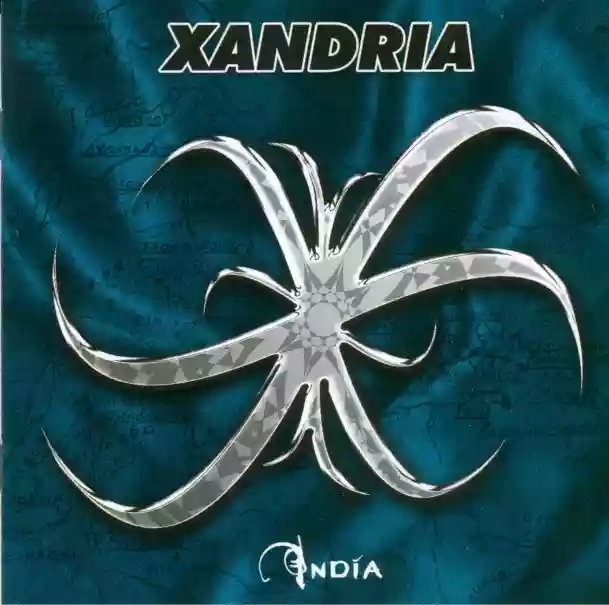
Leaving aside the commendable rock spontaneity of the debut album "Kill the Sun" (2003) and nullifying the limited yet still appreciable gothic movements of the successor "Ravenheart" (2004), the German quintet ventured in 2005 toward more metallic territories that aimed to recycle the orchestral material of Nightwish's "Once" (thanks to collaboration with the German Film Orchestra of Berlin), adding to this prepackaged package, named "India," hints of Celtic folk, making the listening of the twelve tracks quite hostile even for those trying hard to find some notable spark within derivative works like this. The hostility is not linked to some intricate musical construction, but to a clear and irritating lack of personality and ideas and several episodes of dubious aesthetic taste.
Right from the opening track, which shares the album's title, it becomes apparent how the band has squandered and buried the most ephemeral semblance of originality that seemed to animate it up to the times of "Kill the Sun." Even the elegance in copying that characterized them in "Ravenheart" has decided to go on vacation; now the band is almost no longer capable of playing anything other than pathetic mimicries, as demonstrated by the song in question, which strives unsuccessfully to give an epic and choral aspect to Xandria's music by combining Lisa's vocal virtuosity (excellent, but only when she doesn't try to embrace too high notes) with cinematic orchestrations and sharp guitars (not to mention a baseless solo towards the end of the distressing three minutes and twenty seconds). The risk of nausea is always present.
Anyone wishing to venture into this sort of concept, a daring metaphor for a journey through one's existence (hence the title, an evident tribute to Christopher Columbus's voyage) is therefore advised to arm themselves with a bag, also because Drakkar Records didn't even spare us the effort of having to procure it, when there was the possibility of including it in a nice cardboard digipack. If you have a weak stomach, I suggest you forgo listening, because the discomfort might overwhelm you any moment, as in "Now and Forever," which combines disco-pop keyboards with sunny choirs reminiscent of a well-known Enya song and guitars borrowed from Nightwish. No signs of improvement with the subsequent "In Love with the Darkness," a powerful demonstration of how to mold the most banal lyrical and musical clichés of a genre into a single song. "Fight Me" attempts to blend electronic samples with epic choirs, oriental melodies, and melodic refrains, tarnishing everything with the syncopated guitar rhythms overused by Evanescence. Needless to say, the elegance of Amy Lee's band is light-years away from this song. So many laughs when I hear poor Lisa trying to appear sensual in "Black & Silver" and engaging in a section that would like to offer intimate and sweet emotions of Celtic flavor in "Like a Rose on the Grave of Love," which, with its bagpipes, would be the perfect soundtrack for an Osella robiola commercial. If the bottom had been hit for quite some time, now it's starting to scrape and drill the subsoil, and the patience of the listeners too!
With "Widescreen" we begin to better understand what weapon the band has decided to focus on: the refrains, which in every single episode seek easy melodies (thus opposing the roughness of the guitars), yet result in being predictable, repetitive, and uninspiring. By the eighth track, Lisa, Marco, Philip, Nils, and Gerit face an existential question: "Which band have we not plagiarized yet? Of course, Within Temptation!". Here is "The End of Every Story". Only now do I realize how despicable it is that classical musicians and entire orchestras dare to lend their art to such atrocities, motivated purely by economic reasons. And I still can't understand how the group's performance at the latest edition of the Wave Gothic Treffen in Leipzig, always characterized by a niche and quite uncompromising audience, received wide approval. However, from the following track, entitled "Who We Are", the plagiarism attempts are momentarily shelved, and amid pop flirtations and romantic piano notes (reminiscent of the previous album), Xandria even manages to reach adequacy. And to describe "Dancer" I have to resort to adjectives like intense, dramatic, and moving. Although originality in this field is practically an unknown concept, finding a beautiful ballad like this one is always pleasant, and it's also true that not everyone can compose valid ones. Listening to this beautiful song with highly respectable symphonic peaks feels like being in the presence of another band. Mixing cues from both previous songs, the band still manages to surprise with "Winterhearted," also filled with never banal melodies and equipped with a finally catchy refrain as well as never bombastic guitar parts and a short but partially successful solo.
But here comes yet another imitation to close the show. Exemplified by the title "Return to India"; it indeed marks a return to the album's guidelines, but not as ridiculous and irritating as the previous tracks, featuring a finale worthy of the most cinematic Rhapsody.
However, compared to the pleasant surprise of the last tracks, the obnoxiousness that oozes from the remaining songs of the bunch is overwhelming. For this reason, I believe albums like this are not deserving of any merit and do nothing but distort a reality that never enjoyed great merits, even going so far as to justify the criticisms of those who, when faced with a metal genre album, are not in favor of using classical instruments and female voices.
Loading comments slowly
Summary by Bot
The review criticizes Xandria's 'India' for its lack of originality and heavy imitation of bands like Nightwish and Within Temptation. While some tracks show brief moments of adequacy and a few pleasant ballads, most of the album suffers from uninspired music, misplaced orchestration, and cliché lyrics. The band's shift towards metallic and orchestral elements is seen as unsuccessful, resulting in an overall hostile listening experience. The review implies the album damages the reputation of symphonic metal by recycling ideas without innovation.Tracklist Lyrics Videos
Xandria
Xandria is a German symphonic/gothic metal band formed in 1994 in Bielefeld. Early releases with vocalist Lisa Middelhauve reached the German charts; later albums include Neverworld’s End, Sacrificium, Theater Of Dimensions, and The Wonders Still Awaiting.03 Reviews
