
 •
Rating:
•
Rating:
THE REVIEW
In all likelihood (of course, everyone has their own tastes), even after 24 years, this remains Wes Anderson's most accomplished (and most ingenious) film—a director as visually flamboyant as he is sometimes a bit too lost in his own worlds, to the point of “folding” his talent in on itself (Grand Budapest Hotel is a perfect example). But not here—this time, he hits the film of a lifetime (thanks in part to a screenplay co-written with Owen Wilson) despite being only 33 years old and on just his third feature (his previous works, Bottle Rocket, 1996, and Rushmore, 1998, had gone unnoticed).
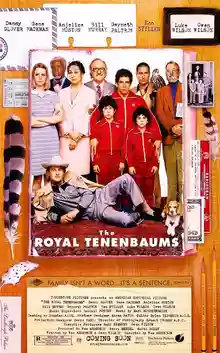
Anderson’s world is inhabited by caricatured figures who are always so similar and so repetitive (and so inadequate to the demands of the real world), of which The Royal Tenenbaums is a perfect showcase. And, despite his young age, he can count on an all-star cast that Touchstone generously granted him: Gene Hackman, Anjelica Huston, Ben Stiller, Gwyneth Paltrow, Luke Wilson, Owen Wilson, Danny Glover, and the ever-present Bill Murray. The story revolves around the elderly Royal Tenenbaum (Gene Hackman), who, due to his repeated selfishness, has broken with his wife (Anjelica Huston) and raised children “stuffed” with insecurities (Chas, Ben Stiller, financial analyst; Margot, Gwyneth Paltrow, playwright; Richie, Luke Wilson, tennis player). The ex-wife, meanwhile, is getting remarried (her new husband is played by Danny Glover): Royal fakes a terminal illness. Does he just want to stay at his children’s house now that he’s penniless, or does he simply intend to “sabotage” his ex-wife’s wedding?
It’s an acerbic comedy, with a (nearly) always brisk pace (sometimes, but very rarely, the rhythm seems to slow down without reason) that treats the cast members as comic-strip or cartoon idiots (like in the Simpsons or Family Guy; here, everyone wears the same outfit: who could forget Ben Stiller’s eternal red Adidas tracksuit, which he never takes off, not even at work) and sketches an America so out of its mind that it becomes more real than reality itself. Built like a long photograph (little editing, many fixed shots), where magazine clippings and completely invented newspaper headlines (yet eerily realistic) force the characters to confront the pillars of the made in USA Mythos: the importance of family; the eternal second chance that one wants (and should) grant to everyone; unbridled ambition; mourning as a “passage” that cannot be avoided. Wes Anderson, with a color style bordering on the genius, tears all this apart—and makes us laugh while doing it. A complex operation, but extraordinarily successful.
Each character has a more or less clear reference: Owen Wilson, who plays a drug-addled, braggart writer, is inspired by Cormac McCarthy; Ben Stiller’s dog recalls Snoopy, and more generally, the director declared he was inspired by the Peanuts, as is evident in the characterizations of the three, heavily neurotic, Tenenbaum children.
A film that opens many questions and provides no answers, leaving it up to the viewer to try to “fill” the emptiness.
Mind-blowing soundtrack, expertly mixed within the film: from Beatles arrangements by Mark Mothersbaugh to Bob Dylan, from Nico to Johnny Cash, from the Rolling Stones’ Between the Buttons to The Clash, from the Ramones to Paul Simon, and even passing through, among others, Maurice Ravel (and there’s also Elliott Smith and Van Morrison). One of the best, most original, and funniest movies post-2000. Box office was excellent, no Oscars won (oh well!); Gene Hackman had to “settle” for a Golden Globe.
Loading comments slowly
Summary by Bot
The review analyzes Wes Anderson's film 'I Tenenbaum,' appreciating its unique blend of quirky storytelling and visual artistry. The film's exploration of family dysfunction is highlighted, alongside Anderson's signature style. The reviewer rates the movie highly, noting its emotional resonance. The film strikes a balance between whimsical elements and heartfelt drama. Overall, it's recommended for fans of distinctive filmmaking.
Wes Anderson
Wes Anderson (born 1969, Houston, Texas) is an American filmmaker known for meticulously composed frames, pastel color palettes, chaptered narratives, and ensemble casts. His work spans live-action comedy-dramas and acclaimed stop‑motion features.11 Reviews
