
 •
Rating:
•
Rating:
THE REVIEW
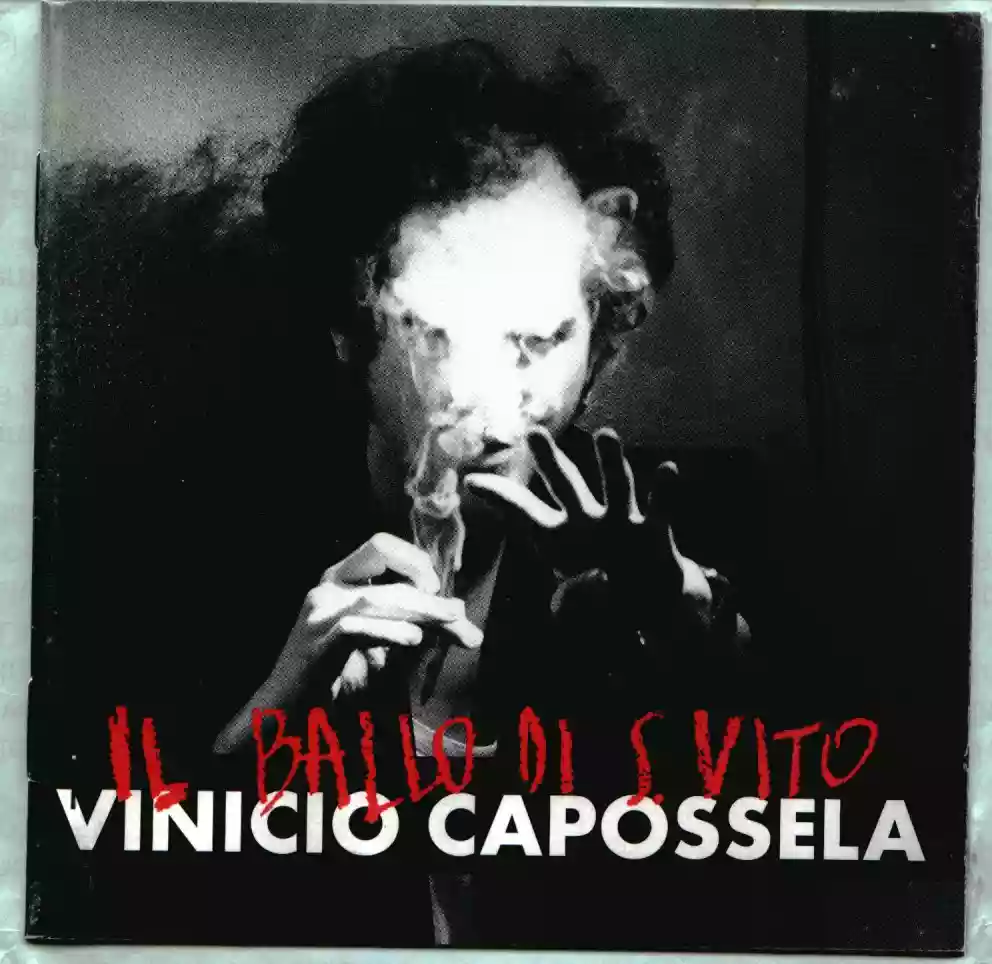
Heir of Paolo Conte and therefore, inevitably, the Italian Tom Waits (here's another one). With this cumbersome label stuck on his shoulders since his debut, Vinicio Capossela has had to struggle a lot to assert his own identity. If he finally succeeded, it is thanks to albums like this one, which, while undeniably showing ties to the two illustrious models, has a setting and a climate all its own, finally (let's say it) Caposselian.
These are tales of misfits who kill the night somehow in the back of a van with broken springs, of Mustafà bewitched by nostalgia as soon as they feel a wind "coming from Africa" like them, of tacky but fun village festivals, of places with names that seem like a joke ("Contrada Chiavicone"), but with a Touring Club sign to prove they really exist. It is the Italian province, but the liveliest and harshest, real and contemporary, quite different from that of Conte, a bit asleep and immersed in the dreams of a not-too-distant past, even if already mythologized. If anything, it is a world closer to that of the unfortunate overseas people immortalized by Tom Waits, but more familiar, down-to-earth, where instead of the poisonous cocktail "whisky + drugs" there are the forty-three Peronis that Master Sentiment downs in the irresistible "Al veglione", a true concentrate of irony and comedy, even if musically little more than a band march.
If we also consider "Il ballo di San Vito", it doesn't go much beyond the tarantella, complete with tambourines and rattles, but these casually folk episodes should not mislead: they are touches of color, grafts that enrich but do not alter the sturdy jazz-blues trunk, with branches towards Latin rhythms, from which Capossela's music originates. And here, more than in the lyrics, one feels the kinship with the Lawyer from Asti: just listen to the splendid, melancholic "Morna", which takes its title from the typical music of Cape Verde, but rather recalls certain slow tangos and milongas.
Other precious moments of sweetness: "Le case", a surreal portrait whose nocturnal colors are masterfully painted by a jazz duet between piano and trumpet, and "Pioggia di Novembre", with an impressionistic piano note arrangement. A refined Capossela, who doesn't even seem related to the village scenes style of "Al veglione", but he is a versatile author, whose more "Waitsian" side is yet to be discovered. Hence "Il corvo torvo", an old-time blues, in the series "don't shoot the pianist," "La notte se ne è andata", acid and pissed-off blues, unfussy guitar style "Hang on St. Christopher", coincidentally by the same Marc Ribot, who plays throughout the album. Also "L'accolita dei rancorosi" with its swaying, broken rhythm, like a malfunctioning pendulum, and the sinister whisper of Vinicio's "pissed-off" voice, belongs to the ideal world of Tom Waits's slanted songs.
And so, mentioning the voice, I have come to the sore point, the one that at least partially ruins the fantasy, the irony, and the musicality of this author of ours, unfortunately also a singer. When it goes well, on the lower tones, it is hoarse and impersonal, far from both Paolo Conte's aristocratic hoarseness and Tom Waits's devilish ogre's cry. If then it ventures into sudden spikes, it results in a monstrous cross between Topo Gigio and Bruno Lauzi, with a predominance of the former, and then you can sing the most nocturnal jazz, the toughest blues, but in the end, everything gets distorted and loses value. A shame, because Vinicio Capossela's music does not deserve it.
Loading comments slowly
Summary by Bot
Vinicio Capossela's album 'Il ballo di San Vito' carves its own identity, blending Italian folk, jazz, and blues with rich, ironic storytelling. While comparisons to Paolo Conte and Tom Waits abound, Capossela delivers a unique and lively portrayal of Italian provincial life. The music shines with versatile arrangements and notable collaborations, though his vocal style divides opinion. Overall, the album is a refined, creative fusion that deserves recognition.Tracklist Lyrics Videos
Vinicio Capossela
Italian singer-songwriter and performer, born in 1965 in Hannover, Germany, known for theatrical, eclectic albums and live shows that mix folk, Mediterranean and world influences. Active since the early 1990s.42 Reviews
