 •
Rating:
•
Rating:
THE REVIEW
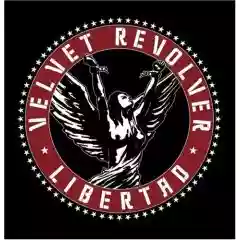
Without drawing merciless parallels with previous productions of "our band," "Libertad," the recent effort by Velvet Revolver, reveals itself as an uneven, asymmetric record, with some interesting elements where the band sounds confident and cohesive, and moments when it takes refuge in the driest citationism.
"Libertad" highlights some performance strengths as well as compositional limitations, elevated by a production that well enhances the sonic blend, albeit smoothing the rock edges of the previous "Contraband." The majority of the tracks are based on the riff/verse/chorus sequence, which over time stifles their development; in this context, the good Stradlin' was a godsend: his compositions had the architecture of the song as their trump card: just think of the dynamic interweaving of riffs in "Rocket Queen" or "Nightrain" to understand the structural poverty of some Velvet Revolver episodes.
The fragmented influences of "Contraband," which sounded like a reinterpretation of Guns in a "Seattle" key, coalesce in "Libertad," forming a sonic humus made of Beatles-esque suggestions, exotic interweavings, and hard rock echoes.
The album opens with the scorching "Let it Roll," which is Slash at 100%: a blatant provocation, the most Guns-like track of the entire lot, capturing the listener's interest before offering less conventional episodes: the sing-song "She Mine" is an evocative fusion of oriental music with a slightly Aerosmith-like flavor ("Jaded" is just around the corner...) on a grunge canvas, while "Get out the Door" is the sonic sum of the individual Velvet inclinations and the elements they incorporate: scorching blues, captivating vocal lines, and modernist production—the latter being an exception: the unfortunate single "She Builds Quick Machines," like the following "Just 16," lives on pure exercise, with a predictable compositional framework.
The second half of the album dives into its indigestible core: "American Man," punk pop of the worst kind, winking at the Offspring, "Spay," a crude recycling of early Snakepit, and "Mary Mary," feel old even before opening the package. Notable, however, is the reinterpretation of "Can't Get It Out of My Head" by ELO, a pity it takes a cover to elevate the album's level. "Grave Dancers," with an intro reminiscent of "Fall to Pieces," surprises with its gentle flow: the guitar bridge, far from ineffective technical gluttony, allows the song to unfold in its lyrical beauty... these are the Velvet Revolver, for the writer, tender-hearted rockers who express themselves best on delicate registers. Worth remembering is "Don't Drop That Dime," a pleasant divertissement that closes the album, in which Scott Weiland demonstrates vocal versatility by playing at imitating Bob Dylan.
Despite some lapses in style, "Libertad" is characterized by many inclinations: among the surprises, a musical context accommodating Scott's vocal abilities is woven, allowing him to play with different registers; in this perspective, the ending of "Get out the Door" and the crooner-like vocals of "Last Fight" are fitting... Slash... Slash seems out of place, with less "pomp" and hyper-processed sounds than in "Contraband," but uncomfortable in a musical frame aimed more at charts than genuine sound... and here you can open a thousand avenues on "differences in musical views": on the eve of the GNR split, there was talk of Axl's modernist ambitions, music influenced by Pearl Jam, NIN, and Queen, while Slash did not appreciate such sound turns. Fifteen years later, we find Axl with 4/5 songs (what an effort, huh?) that approach the "Illusion" sound, and Slash alongside a grunge icon, grappling with alternative sounds, Electric Light Orchestra covers, and three-and-a-half-minute songs... for these reasons, Slash seems forcibly included: the solos are there, but they are not the lyrical and melodic ones to which we were accustomed. I believe the project's profitability is a good answer to his presence in the group.
In general, "Libertad" proves to be a notch above "Contraband" in terms of eclecticism but several steps below it in terms of inspiration: with the exception of "Last Fight," elegantly mannerist, it lacks a driving track, as "Slither" was in its predecessor. ...I find little creative freedom in "Libertad"...
Loading comments slowly
Summary by Bot
Velvet Revolver's Libertad is an eclectic but inconsistent album, balancing moments of confident performances with weaker, formulaic tracks. The production smooths the band's hard rock edge, while some songs showcase vocal versatility and creative fusion. Despite a lack of driving hits, the album presents a mature but uneven effort compared to Contraband. Covers and softer tracks bring some relief to its less inspired core.Tracklist Lyrics Videos
Velvet Revolver
Velvet Revolver is an American hard rock supergroup formed in 2002 by former Guns N' Roses members Slash, Duff McKagan, and Matt Sorum with Scott Weiland (ex–Stone Temple Pilots) and Dave Kushner. They released two studio albums, Contraband (2004) and Libertad (2007). Their single Slither won the 2005 Grammy Award for Best Hard Rock Performance.10 Reviews
Other reviews
By tedsilver
Scott’s voice seems to have remarkably improved, the lead guitar of the LEGENDARY SLASH delivers the emotions as always.
'Libertad' opens with an overwhelming 'Let It Roll' full of energy, showcasing Scott’s improvement and Slash’s notable leading role.
