
 •
Rating:
•
Rating:
THE REVIEW
VADO AL MASSIMO (1982) 9/10
“A dumb, ugly, and drugged guy, worth sending to Siberia just like that guy Lou Reed (Nantas Salvalaggio)
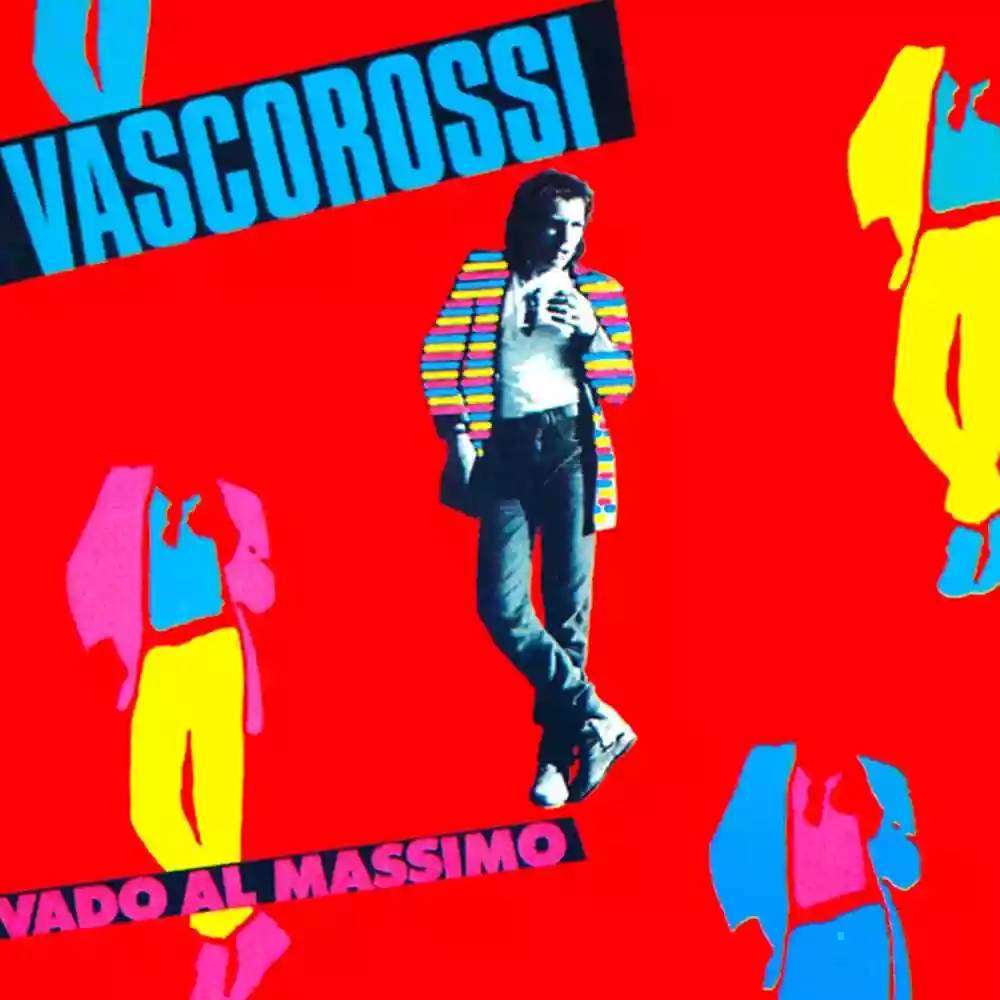
Aside from one of the ugliest album covers ever, “Vado al massimo”, if it weren’t for two other superior albums (“Non siamo mica gli americani”, 1979; “Liberi... Liberi”, 1989), would be Vasco’s masterpiece, despite two tracks (“Credi davvero” and “Amore... aiuto”) that are just so-so. And it’s a masterpiece because it fully contains everything about him (the anarchic streak; the purely rock one; the funky “assaults”; the reggae detours; the romantic moments) much more than the following (and overrated) “Bollicine”, 1983. Back then, Vasco was already quite famous (though not yet a household name), and the moralizing hatchet job by the straight-laced Nantas Salvalaggio helped introduce the character to a wider audience, the idol at the time of the younger generations (parents, horrified, had to pretend all was fine). Yes, in 1982 Vasco as an over-the-top rocker was still pretty believable. Not for long, but he was.
His participation in Sanremo (the first of two in a row, not counting the one in 2005 as a super-guest) with the renowned title-track went down in history. Today we would call it dissing; back then, it was simply called giving as good as you get. The legendary “tale che scrive sul giornale”, mocked in the song, is none other than Salvalaggio, and the idea to mention Mexico—then famous as a kind of free port for Westerners looking to get heavy into cocaine—was genius. As if to say: if I have to be a druggie, I might as well go all the way. Knocked out of Sanremo in the first round—okay, that year Riccardo Fogli won with “Storie di tutti i giorni”, you know what that means...
The first two songs on the album are brilliant, a shame he’s rarely played them in live performances. “Sono ancora in coma” is manic and flashosa—just as the early '80s dictated: Vasco had the knack for understanding that the audience, especially the young, no longer liked the long, elaborate lyrics of the previous decade’s singer-songwriters (attention spans had already plummeted at the time), and that a few words and concepts could “hit” that particular audience more effectively. The story of a girl dumping him by phone while he wakes up totally dazed was the perfect snapshot of an early-twenties made in eightees (and it still is today). Next up, “Cosa ti fai” is a super fun mid-temp that ends with the shout “Non dirmi che non ti droghi mai”; the sax (Rudy Trevisi) and keyboards are crucial here, as in the whole album, signaling Vasco’s desire to break from past works, which were far from contemptible anyway. How he came up with “Splendida giornata” remains a mystery: in his first collaboration with Tullio Ferro, Vasco invents a sort of soul track with nothing to do with his earlier or later work—so much so that in 2003, in Fabriano, producer Guido Elmi recounted the difficulties Vasco and the band (Solieri and all the Steve Rogers Band) encountered during recording, completely thrown for a loop by something they’d never “handled” before. The extremes of existence are told in “La noia”. First the day was marvelous, then here comes boredom. It’s the final track, perhaps the most beautiful (maybe, because there’s another one that’s always been in my heart): beyond the gorgeous suspended outro, it’s the lyrics that give you chills, with all the traits of a crepuscular and definitive poem (surely incomprehensible at a young age): “...Quella noia che c'era nell'aria, che c'era nell'aria allora è ancora qui, è qui che ti aspetta, sai, e tu ora non puoi certo più scappare come hai fatto allora, ora sai che vivere non è vero che c'è sempre da scoprire e che l'infinito, è strano ma per noi sai tutto l'infinito finisce qui...”. And then there’s “Ogni volta” (but how many “ogni volta” are there in Italian music?): it’s a long, listing song which, as critic Michele Molina wrote years ago, is “[...] impreziosito dalla chitarra di Maurizio Solieri davvero ispirato ed in grado di cavare dallo strumento note da brivido”. Of course, you can always joke about it, as Paola Maraone and Paolo Madeddu did in their “Da una lacrima sul viso”: “...Il meccanismo diventa contagioso […] Ogni volta che manca il sale, ogni volta che il gatto sta male”.
Loading comments slowly
Summary by Bot
The review offers a thoughtful analysis of Vasco Rossi's 'Vado al massimo,' highlighting its energetic rock sound and enduring appeal. The reviewer appreciates the artist's unique style and songwriting, emphasizing the album's significance in Rossi's discography. Listeners are encouraged to revisit the classic tracks and experience the album's vibrant atmosphere.Tracklist Lyrics Videos
Vasco Rossi
Vasco Rossi is an Italian singer‑songwriter from Zocca (Modena), active since the late 1970s. Debuting in 1978, he broke nationally with Sanremo performances (including Vita spericolata) and went on to become a defining voice of Italian rock, known for blunt, conversational lyrics and massive stadium tours.89 Reviews
Other reviews
By macciocapatonda
Vasco delivers a product that is highly appreciated, with irreverent tones that he manages to maintain for a couple more albums.
'La noia' is a melancholic ballad cradled by acoustic guitars and bass, about the boredom of suburban life from which one attempts, in vain, to escape.
By papus
In Italy, rock is me.
I write the beautiful songs that people like: Canzone, La noia, Cervello cervello spiacciacato and the others.
