
 •
Rating:
•
Rating:
THE REVIEW
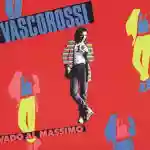
The penultimate album by Vasco Rossi – the lean one – dates back to 1982 and is titled “Vado al massimo”.
In that year, Rossi decides to take the big step and get himself massacred by the least objective jury in Italy: he indeed participates in the Sanremo Festival and is relegated to the last place, just like many illustrious colleagues in previous years who would find redemption and success by later ignoring the vacuous event.
Vasco participates precisely with “Vado al massimo”, which finds its audience among those more inclined to accept novelties, a category of which he himself is a part, that of the young and the rebellious, who see in him a spokesperson for their culture.
Despite the negative criticism, Rossi delivers a product that is highly appreciated, with irreverent tones that he manages to maintain for a couple more albums; supported by the Steve Rogers Band of Maurizio Solieri and Massimo Riva, Vasco gives us nine very catchy and charged tracks, for an album varied in style selection: the album indeed opens with “Sono ancora in coma”, a hard rock piece neurotic in lyrics and interpretation with the simulation of an airplane taking off supported by electric guitars for an introduction; a demonstration of mastery and irony is the following “Cosa ti fai”, this time a mid-tempo rock, with a more amused Vasco than ever, mocking the classic easy girl trying to appear as an innocent daughter.
Alongside the demonstration that Vasco knows how to laugh (and this is the difference between the old Vasco and the new one – or rather: between Vasco and the Blasco), there is a song – splendid, mind you – that however prefigures a new way of composing, more geared towards the slogan, which he will later use extensively; it is “Ogni volta”, and represents, by the author’s own admission, "the transition, as far as writing method is concerned, from reality to fiction!", and thus to a quasi-pop. “Vado al massimo”, on the other hand, is a reggae with a hard rock refrain, in which our protagonist takes issue with "that guy / who writes in the newspaper", that is, with journalist Nantas Salvalaggio who had previously disparaged him, and in which – who knows why – he declares, contradicting what he previously stated (in another reggae, “Voglio andare al mare”), wanting to spend the holidays "in Mexico, anything but the sea". All, of course, with a very ironic tone.
If side B starts with another juxtaposition of serious – playful track, namely with the hard rock of “Credi davvero” and the funk of “Amore… aiuto” (the latter underrated but very beautiful and, if nothing else, entertaining), three unforgettable songs follow: the sad “Canzone”, the result of a musical composition by Maurizio Solieri after a love ended, and of a text written by Vasco after the death of his father: heartrending to say the least; the famous “Splendida giornata”, which needs no introduction, with 80s atmospheres and written with Tullio Ferro; finally, the jewel of the album, perhaps the most beautiful and simultaneously – fortunately – least known song, “La noia”, a melancholic ballad cradled by acoustic guitars and bass, about the boredom of suburban life from which one attempts, in vain, to escape. A somber sax solo, fading out, closes the track.
Vasco Rossi is a character who splits the audience in two: there are those who love him and those who would like to see him dead, those who consider him a legend and those who see him as a fake and hypocritical character; those who recognize that the first part of his production is gold and the other is mud (or vice versa), and those who spit on his entire discography. But the truth is that at a certain point, Peter Pan was forced to grow up, he forgot how to fly. We are all here, on the island that doesn’t exist, not wanting to grow up and waiting, hoping to see him return.
Loading comments slowly
Summary by Bot
Vasco Rossi's 'Vado al Massimo' (1982) marked a daring step in his career, despite a last-place Sanremo finish. The album blends hard rock, reggae, and melancholic ballads with ironic and rebellious tones. Backed by the Steve Rogers Band, Vasco crafts nine memorable tracks, including the heartfelt 'Canzone' and the underrated funk 'Amore… aiuto.' The album reflects a transition in his songwriting, balancing seriousness and playfulness, solidifying his legacy among fans.Tracklist Lyrics Videos
Vasco Rossi
Vasco Rossi is an Italian rock singer‑songwriter from Zocca (Modena), active since the late 1970s. Known as “Blasco,” he’s a central figure of Italian rock with enduring anthems and massive live shows.91 Reviews
Other reviews
By papus
In Italy, rock is me.
I write the beautiful songs that people like: Canzone, La noia, Cervello cervello spiacciacato and the others.
By JpLoyRow
"Vado al massimo stands out as a pivotal moment in Rossi’s career."
"Its infectious energy and honest lyrics make it a must-listen for Italian rock fans."
