 •
Rating:
•
Rating:
THE REVIEW
"A SIAE law makes it possible to register a song with the same title as a pre-existing one, as long as none of its authors have the same last name as any of the already reported songs’ credited authors: this has made it incredibly possible for there to be as many as seven Albachiara (and one Albachiara Six)" (Dario Salvatori; "Dizionario della Canzone Italiana 2015").
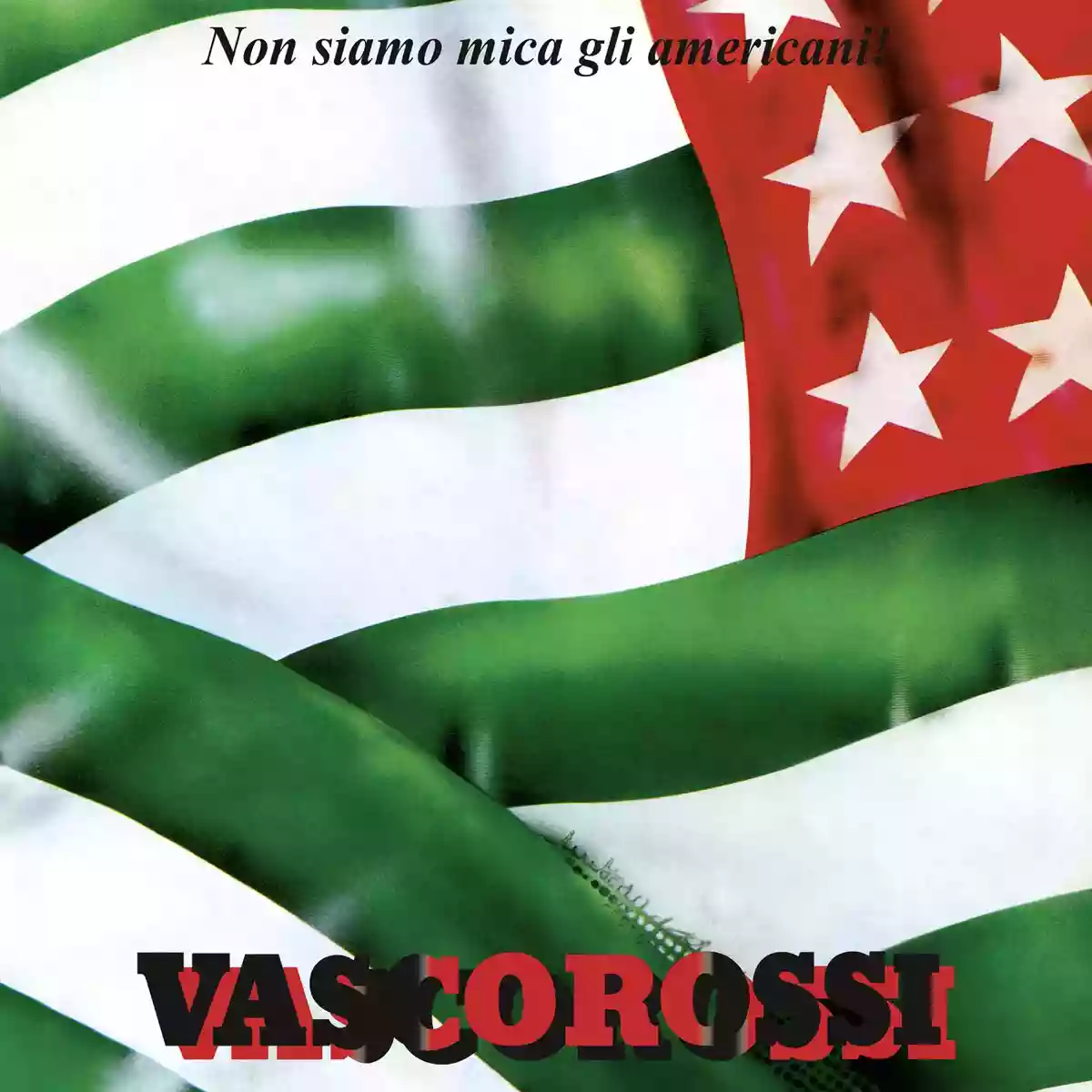
"Albachiara" is a girl whom Vasco saw, in 1978, at a bus stop. Back then, the “Blasco” only had one album in his workshop, "Ma cosa vuoi che sia una canzone", listened to by family and close friends (his popularity at the end of the ‘70s was pretty much confined to Emilia and surrounding areas). "Albachiara" begins with a splendid piano intro by Gaetano Curreri, then continues with the description of this shy and unconventional girl, makes an (obvious) reference to female masturbation (as Gianna Nannini already did the previous year, 1978, with the daring "America") and ends with a rock guitar burst from Maurizio Solieri. The album it’s featured on is "Non siamo mica gli americani", 1979, his second one. It sold nothing and was only re-evaluated after 1982 (that is, after the Sanremo appearance with "Vado al massimo"), and had a reissue in 1984 titled "Albachiara" (which circulated on CD until a few years ago) and, finally, a well-deserved edition in 2019 on the fortieth anniversary, whose cover is above (excellent job, perfect remastering).
"Non siamo mica gli americani", painful as it is to say, is Vasco’s best work, and it’s painful to say because 46 years have passed and he never really outdid it (so many great albums, especially in the ‘80s, with special mention for "Cosa succede in città", 1985, and "Liberi... Liberi", 1989) but not at this level. In just 34 minutes, it condenses a variety of styles and genres that’s simply astonishing: from rock to punk, from dance to the most traditional Italian songwriting, from talking’ blues to vaudeville, from pop to american rock. So much (and so beautiful) in so little space. If "Albachiara" became an anthem (and it already had all the makings of one), one could say the same for "Fegato, fegato spappolato" (a stroke of genius tout-court). The stifling depiction of a small-town Sunday where "la festa ha sempre il solito sapore/il gusto di campane, non è neanche male/c’è chi va a Messa e c’è chi pensa di fumare/come aperitivo prima di mangiare". The song starts in a whisper, almost incomprehensible, then comes the description of his mother scolding him, but he rushes out pulling on his trousers, has a strange look in his eyes and "si dice addirittura in giro che sono drogato" (indeed...). The punk “variant” arrives at the end with "God Save The Queen" by the Sex Pistols marking its path. There’s mention of Fini ("Fini s’è alzato da poco e non è ancora sveglio/non è ancora sveglio, ed è talmente scazzato che non riesce a parlare nemmeno", by the way, the term "scazzato", unusual in late ‘70s Italian music, was the sign of a new youth slang that Vasco was among the first to pick up on) and for years, some thought it referred to Gianfranco Fini, former leader of AN, also from Emilia. Of course, it wasn’t that Fini (the idea of Vasco hanging out with MSI folks is curious), but Floriano Fini, friend and historic manager of the singer-songwriter from Zocca.
Equally surprising are "Sballi ravvicinati del terzo tipo", a hallucinatory vision of a possible alien landing that tells of a singer-songwriter Vasco perfectly at ease with the “long story” (he who, before long, would become king of slogan and concise, direct phrases) which he revived in concert at Imola in 1999 (something that would happen only a few more times). But just as astonishing is the talking’ blues of "(Per quello che ho da fare) faccio il militare", an ironic and hugely entertaining parody of the notorious compulsory military service ("Non siamo mica gli americani/che quelli possono sparare agli indiani [...] ma non ci si puo’ riposare/i russi potrebbero arrivare" which, heard today, wherever you stand politically, comes across as very modern indeed), including references to Christmas songs ("Astro del ciel") and an incipit in Neapolitan dialect (!).
Sentimental chapter. The album opens with "Io non so più cosa fare" in which our protagonist is teased by his girlfriend (who wants to make love), but he’s afraid of her reaction ("…magari è femminista e non vuole certo farsi violentare/ma vuole gestire") and they end up doing nothing. And it’s not just some little song, tossed off, because the theme of the new man-woman relationship, with the latter less passive and much bolder, underpins much of the works of, for example, Woody Allen ("Io e Annie", 1977, above all) and here Vasco delivers a tale in which the man fears that his girlfriend might misunderstand gestures or special attention (the days of the conquering male, like Humphrey Bogart, so to speak, had long been over). Only for, in the vaudeville closer "Va bè (se proprio te lo devo dire)", things to be set straight by telling his girlfriend that yes, you’re pretty, you’re cute, "... non è che tu mi faccia poi impazzire" (and there go black stockings, which will reappear in "Brava", 1981, evening calls and so on), and that love is often destined to end is exemplified by the beautiful "Quindici anni fa", one of his very best tracks, mysteriously never played again live.
As if that wasn’t enough here comes the dance of "La strega (La diva del sabato sera)", the one who "…fuma marijuana/di nascosto però/non dalla polizia ma da Edwige e la zia", another splendid female portrait, a “maneater” who "...fa l’amore per gioco/e le piace anche poco" and "...la testa, la testa/non la perde mai". Without emotions, without fear of the judgment of others (to whom "...non fa neanche una piega"): a masterpiece, with the usual wonderful saxophone of Max Trevisi.
Now, Vasco wasn’t having a great time back then; besides his “Emilian enclosure” his music seemed unable to “explode”. Discharged from military service (and there you have "(Per quello che ho da fare) faccio il militare" and the resulting irony) for abuse of prescription drugs, he recorded the album in just one month (November–December 1978), giving up half the rights to the songs to Alan Taylor in exchange for a precious “Martin” guitar he otherwise couldn’t have afforded. He didn’t give up, perhaps cleverly or maybe just out of pure luck, the rights to "Albachiara" (which is also credited to Alan Taylor), though the initial musical base (the chord progression) was the work of Massimo Riva. With 3 platinum records to its name, "Albachiara" is the proverbial goose that lays the golden eggs. From 1984 onwards, it will become the closing song at all of his concerts. And one wonders (or, better, I wonder): why has Vasco never repeated an album of such “craftsmanship”?
Loading comments slowly
Summary by Bot
This review focuses on Vasco Rossi's influential album 'Non siamo mica gli americani', acclaimed for its strong rock sound and cultural impact. The reviewer highlights the album's significance within Italian music. It is praised for its bold themes and Rossi's unique songwriting. The sentiment is overwhelmingly positive, recognizing the album as a milestone.Tracklist Lyrics Videos
Vasco Rossi
Vasco Rossi is an Italian rock singer‑songwriter from Zocca (Modena), active since the late 1970s. Known as “Blasco,” he’s a central figure of Italian rock with enduring anthems and massive live shows.91 Reviews
Other reviews
By Viva Lì
"Non siamo mica gli americani" is a record that young people cannot understand, soaked as it is up to the ears in rubbish like "Senorita" and due to the poor historical knowledge present in Italy in those years.
The ace in the hole, the one that will go down in history, is "Albachiara", the mother of all Italian ballads, a song that brings serenity and causes anguish.
By Il Tarantiniano
Vasco’s style... is mainly composed of lyrics that address societal issues with original irony.
If you are big Vasco fans, like me, listen to this album in its entirety and you’ll discover that the genius was born right here.
