
 •
Rating:
•
Rating:
THE REVIEW
Frankly unbearable today: swims in gold like Scrooge McDuck, is courted by dozens of famous advertising brands, and fills stadiums even when tickets cost 100 euros. Watching him sing "Un senso" (which I consider the most insipid Italian song of the last thirty years) brings sadness and thinly veiled melancholy.
And yes, because for those who don't know, even Vasco had his golden period, and it was roughly around 1979. To be clear, he made very original records and didn't sell more than ten copies, was independent and had the courage to take risks.
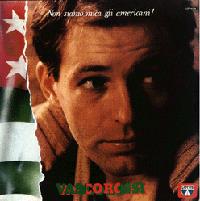
This masterpiece (the only one, and I want to emphasize, the only one, in Vasco's long and expensive discography) demonstrates it excellently, "Non siamo mica gli americani". He knew how to rock, he knew how to span genres (the blues, the pop, the rock, the late vaudeville) and, above all, he had the courage to talk about taboo subjects (sex, drugs, pacifism, youthful desolation) in an Italy still bigoted and already shattered by the excellent deaths at the hands of brigatisti killers. Everyone called him 'junkie', everyone said he was a scoundrel, and perhaps there was some truth, but that wasn't the problem: whether he was a junkie or a scoundrel, Vasco knew how to make music, and he even knew how to sing without missing a note.
"Non siamo mica gli americani" is a record that young people cannot understand, soaked as it is up to the ears in rubbish like "Senorita" and due to the poor historical knowledge (be it social or political) present in Italy in those years. Because it is difficult to understand today, if you are young, what it meant to sing almost thirty years ago "Fegato, fegato spappolato". Today, talking about drugs is commonplace, but in 1979, talking about drugs so liberally and frankly was almost like appearing naked on television (that is, it was almost a mortal sin). The rock shake of "Fegato, fegato spappolato" contrasts with the lucid calm of "Per quello che ho da fare (Faccio il militare)", a track that praises pacifism: Vasco questions what military training is for if there are no wars to participate in, and ends with a sad "For what I have to do,....I do the military". The track, musically simple, is divided into two parts: the first introduces the theme of the song, the second explains it better. Absolutely atmospheric "Sballi ravvicinati del terzo tipo", here too drugs are alluded to, and it mimics Steven Spielberg's famous masterpiece "Close Encounters of the Third Kind", but, if the song is very beautiful, especially in terms of lyrics, the interspatial finale, with the sounds of the spaceship, sends shivers with every listen.
Only a bit remains to be said about young people (when Vasco knew how to do it, not like now that he wants to set himself up as a champion of youth when, proportionately, he makes more money than Bill Gates), "Io non so più cosa fare" is the forerunner of "Siamo solo noi", only with more anger and more clarity. Also very successful is "La strega" which tells the strange life of a nightclub regular, while "Va bé" is a delightful dixieland, not without very enjoyable ironic nuances. "Quindici anni fa" does not miss a beat, where Vasco resumes the lesson of American rock, but the ace in the hole, the one that will go down in history, is "Albachiara", the mother of all Italian ballads, a song that brings serenity and causes anguish: the loneliness of a girl in the manifesto of late '70s youth, perfect sexual hints ("with one hand, one hand you touch yourself") and a final coda as admirable as it is surprising. At the time, no one said anything: "Albachiara" went unnoticed. And to think that the arrangements were curated by Gaetano Curreri, today's leader of Stadio (in short, not exactly a genius in the strictest sense of the word).
"Non siamo mica gli americani" is beautiful: those who will have the pleasure to listen to it (and understand it) will have a chance to appreciate it, those who hate Vasco irrespective of anything should not listen to it altogether because they would understand nothing, those who are young, either appreciate the history of our country or will find this album insignificant.
Poor them, they don't know what they're missing.
Loading comments slowly
Summary by Bot
This review praises Vasco Rossi's 1979 album 'Non Siamo Mica Gli Americani' as his only true masterpiece. It highlights the album's originality, musical range, and courageous addressing of taboo topics like drugs and pacifism during a conservative era in Italy. The reviewer laments the artist's current commercialism but celebrates the lasting impact of tracks such as 'Albachiara' and 'Fegato, fegato spappolato.' The album is presented as a vital cultural artifact often misunderstood by younger generations.Tracklist Lyrics Videos
Vasco Rossi
Vasco Rossi is an Italian singer‑songwriter from Zocca (Modena), active since the late 1970s. Debuting in 1978, he broke nationally with Sanremo performances (including Vita spericolata) and went on to become a defining voice of Italian rock, known for blunt, conversational lyrics and massive stadium tours.90 Reviews
Other reviews
By Il Tarantiniano
Vasco’s style... is mainly composed of lyrics that address societal issues with original irony.
If you are big Vasco fans, like me, listen to this album in its entirety and you’ll discover that the genius was born right here.
By JpLoyRow3
An essential listen for anyone interested in classic Italian rock.
Vasco's songwriting and energy remain unmatched from the first track to the last.
