
 •
Rating:
•
Rating:
THE REVIEW
‘Songs the Lords Taught Me’ – For a small sentimental education of this humble writer of yours. 2nd Episode: Cupid's arrow strikes, Zeno's... falls. Love or Not Love? And who sang it better than anyone else.
Major premise: What do you want to prove, then? That ‘love is eternal as long as it lasts’? And you know what a novelty. And yet, yes: that. Not very original, right?
In a few years spent listening to records, I have found some that have been more enlightening on the subject than entire philosophical-literary treaties.
And yes, okay, we know, singing about love is never enough, but for me, it will be more beautiful when it speaks of a love that consumes, that torments, that you already know will end or has already ended.
If love is a trajectory of life, to catch the flight of that arrow when, in an instant, from apogee it transforms into descent, a parable inexorably declining. Like those cyclist-climbers who have just made the maximum effort to top the Grand Prix of the Mountain, just a moment of happiness to enjoy because it's already time to descend, and so they put newspapers on their bellies to keep warm. And yet, unlike the cyclists, the descent will coincide with the trap, with the inexorable inclined plane of sentiment.
We will therefore talk about this: of an ineffable moment. Which, as in Zeno's paradox, is not ‘a moment’, indeterminate. It is ‘that moment’. That one alone. The greatest joy, which will soon mutate and, if you're lucky, can change into absence. Or worse, into pain. Or worse still, into tragedy. It is not expected that you will agree.
Minor premise: And so... why, in the end, the most beautiful love song among the many thousands in my life, as far as I'm concerned, is about the ‘memory’ of love itself, having already vanished. And why ever, the most beautiful? Simple.
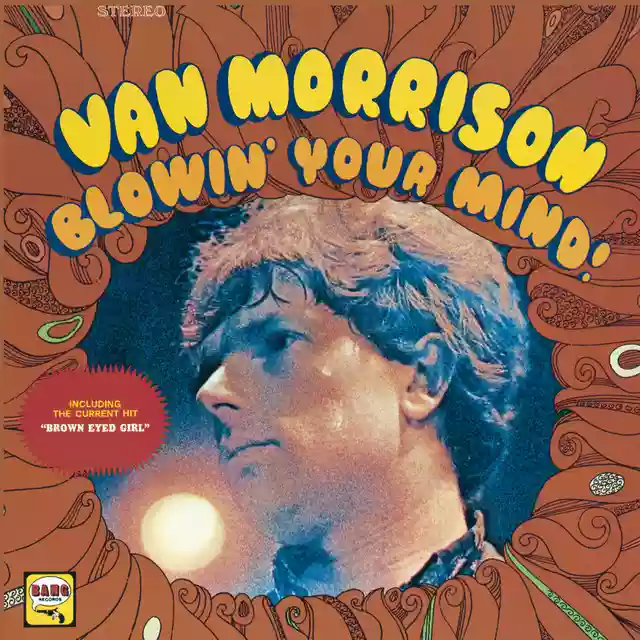
I think that listening to ‘Brown Eyed Girl’ makes life better. And also this - and that's two... - isn't exactly original, as a claim. It has been said about some hundreds of GREAT songs. And everyone could enumerate theirs. The inscrutable secret of music. For me, and I underline, for me, ‘Brown Eyed Girl’ makes life better, a privilege I reserve for a small handful of songs. If not, what privilege would it be? That's how it is, don't you think? If you don't think so, I tell you, you have problems.
Which then I don't even know if Van thought so, indeed it is more likely that he didn't think that way at all.
Because then he also changed, and we know: he was just over twenty and had upset (his, but also many other) music and (his, but also some other) life by leaving those Them and moving to New York, a way to make it in every sense concrete (it would be said today: ‘in presence’) the British Invasion. That is: young English 'barbarians' who, after appropriating American music and reworking it, like new Pilgrim Fathers, (re)depart to return the rock'n'roll-son of rhythm n'blues-itself son of the blues etc. to their rightful owners, at home.
Van was just 21 years old, but I really believe that the word ‘youth’ has never been contemplated in his life. A twenty-year-old boy trapped in the mind of a sixty-year-old (incidentally: let's hope he never reads this...bitter as he is, he would be able to wait for me under my house not like the old satyr described in ‘Cypress Avenue’, but just to make me pay for it)
A song like this, painted by a sad bard of those who have populated troubadour songs across all latitudes (you choose the name, I won't expose myself), in the best case would have become a painful dirge. In the worst, the classic ditty good for those Sixties Sanremo festivals, where our singing stars would duet with the ‘foreign guests’, who at that point had to offer themselves a la Dan Peterson ‘i cciuoii ooochiii sono fari abba-g-li-ancccciiiii etc’.
But here, there is Van (the Boy...): his happiness is the one that conceals a bitter aftertaste.
The jazz-guitar chirps merrily, the shuffle beat drumming in four-four time, the bass goes up and down drawing the melody that, true to form, becomes descending, as those green Irish hills that you ascend and descend and reascend and redescend and every time the only sunset seems that it gives reason and remission of all the evils that we must endure in this dirty life.
The memory (of Van and all of us).
‘Walking hand in hand’
'Hey, where did we go / on rainy days / down in the meadows...' - the unrivaled happiness of a MOMENT. That ‘moment’. Youth, ineffable goddess that lasts the space of a morning
'And laughing and running (...) in the magic morning mist' - joy, carefree, with those three instruments (the organ is not there yet, it will come) bathing in the light
(the organ enters, sixties and sexy, like from contemporary lesson)
'With our hearts beating together almost to burst and YOU, my brown-eyed girl...' - ‘our hearts a thumping’: the palpitations of two lovers in four words, and those three instruments that are still immersed in the light.
‘Walking hand in hand’
'Hiding behind a rainbow / beside a waterfall with YOU, my brown-eyed girl'
But the parable is there at its peak and thus from the descent and the height of the climb, at that point the trajectory of life MUST necessarily explode into that 20th-century Ode to Joy, that, thank rock'n'roll!, purifies us of all the sins committed and especially still uncommitted.
Which then is the chorus. That I, if I were the God of Music, would put it alongside that other more famous one, that of that other (Ludwig) Van and he too would have to abandon himself unrestrainedly, not just the angels and saints and sinners of all Lands.
Because at that point, like in the most engaging of orgiastic rites, at weddings as in the stadium or in public rallies, you are obliged to sing too.
'Sha-lalala-la / lalalala-deh dah!'
Or rather, a nonsense-scat! What’s better? I mean, would you ever want to use meaningful words? To express the inexpressible? It really shows that you understand even less about texts than about music, my child.
And now, the present becomes emotional transfer, the memory becomes poignant yet inevitable. Always with the cheerful contrast of the jazz-guitar strumming in the background, always with the open melody, up and down, down and up. If art is made of contrasts, as the experts say, between meaning and signifier, here we are at the maximum.
‘Oh! It's so hard to find my way / Now that I'm all alone / I saw you just the other day / Gosh, how you have grown (and here, in essence, in this verse there is already the poignant poetics of ‘Astral Weeks’. Therefore, I’ll throw it out here, boldly: ‘Brown Eyed Girl’, despite all appearances, is the ‘Astral Weeks’ devoid of torment)
‘Bring back my memory there, Lord / Sometimes I'm overwhelmed thinking about it’ (and who wouldn't be? Who doesn't remember that first moment of ecstasy?)
‘Making love in the green grass / Behind the stadium with you’ (my brown-eyed girl)
And then... chorus! That I, if I were the God of Music etc.
That you're always obliged to sing it too.
PS: when the tears of joy that will flow from your throat in the midst of it won’t prevent you.
Loading comments slowly
Summary by Bot
This reflective review delves into the bittersweet nature of Van Morrison's 'Brown Eyed Girl,' portraying it as a beautiful memory of youthful love that makes life better. The reviewer admires the song's melody and emotional depth, connecting it with vanishing moments of joy and the inevitability of love's decline. It highlights the joyful yet melancholic contrast that defines this classic.Tracklist Lyrics Videos
Van Morrison
Van Morrison (born George Ivan Morrison) is a Northern Irish singer-songwriter and musician known for blending rock, folk, blues, jazz and soul across a long career beginning in the 1960s.34 Reviews
Other reviews
By JimMorrison
I hold it to my chest as if it were my child. I kiss it. My head is pounding.
When I was a child and alone, I listened to music to cheer myself up.
