
 •
Rating:
•
Rating:
THE REVIEW
Letter to Van Morrison.
So you want to be a rock'n'roll star... Who hasn't dreamed at least once of being an artist? I have. Among the first sexual appetites, indiscipline, and acne, utopias and realities, illusions, and disillusions, I grew like a tree in the forest. Over time, intellectual ambitions and ideals got lost along the way, and I gradually convinced myself that I was a healthy carrier of the germs of madness. Once I tore off my shirt and told my mother it was done by a girl who was in love with me. Finally, at twenty, I found myself living on beer and Lanciostory. At the same age, you managed to found "Them", conceive an immortal work like "Astral Weeks" in one day, and "Moondance" in less than a week. Thank you, Van, for that hour and a half of enchantment from these two records. "Lester Young" said: music is not tension, you have to piss music out, if it doesn't come out like pee, it isn't right. You managed it. When you sing, you are one of the very few capable of reproducing the chaos of the most private emotions. Your relentless exploration among the curves of rhythm and blues, in search of your own personal formula, pushed you beyond rhythm and blues. Besides your own subdued jazzy vein, you added something new to the expressiveness of the "singer-songwriter", so much so that critics also attributed to you the definition: stream of consciousness. Until then, it was used exclusively to describe the prose of some writers; Virginia Woolf, Italo Svevo, or your compatriot James Joyce, are the most famous. The most evident example of this narrative technique is the soliloquy of Molly Bloom.
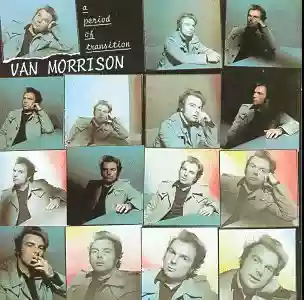
In '77 you had "A Period Of Transition" printed. I don't know how much time you spent putting those seven songs together, but if it's true that every record captures a period in an artist's life, it was clear you were going through a deep crisis. You knew it wasn't a work worthy of your class, the title is clear. You also knew that the record would be received with skepticism by both critics and the public. Why this record? I have always tried to justify this work of yours, but, listening to it today, it seems even more disappointing than when it was published. Even when predisposed to the best, searching for merits, one remains unsatisfied. Of that mystical component, which had distinguished your previous solo works, there is no trace. Unless one appreciates the extravagant combinations of gospel-sounding choirs in "The Eternal Kansas City". I feel I can only save "Cold Wind In August," but even this is not on par with the compositions of "Into The Music" the album you released a couple of years later. One of your best works.
Loading comments slowly
Summary by Bot
The review reflects on Van Morrison's 1977 album 'A Period Of Transition,' acknowledging the artist's earlier brilliance while highlighting the album's disappointing and uneven nature. The reviewer appreciates some moments like 'Cold Wind In August' and the gospel choirs but ultimately sees the album as a sign of a difficult creative period. It is viewed in context of Morrison's wider discography and artistic evolution.Tracklist Lyrics
Van Morrison
Van Morrison (born 31 August 1945, Belfast) is a Northern Irish singer‑songwriter who fused R&B, soul, jazz, folk and Celtic traditions. After early success with Them (“Gloria”), he launched a landmark solo career with Astral Weeks (1968) and Moondance (1970). He was knighted in 2016 for services to music and tourism.35 Reviews
