
 •
Rating:
•
Rating:
THE REVIEW
Essay on "The Endless Descent of the Undercover Man"
Zundert, extreme south of the Netherlands; second half of the 19th century. Only a handful of years had passed since that tragic date in 1852 that marked the death of Vincent van Gogh. His grave, long since drowned among dozens of others in the garden in front of the church, did not arouse much interest among visitors to the modest cemetery, except for the small son of the pastor, a frowning boy, forced to walk that macabre path daily to attend his father's services. Even if he had wanted to, he probably couldn't prevent his curious and naive eyes from feverishly fixing on the letters engraved on the austere and spectral tombstone, although with each new passage, he felt the obscene and intolerable shadow of a dire doubt spreading like an oil spill within him, as if such misfortune could somehow be attributed to him. He who fatefully was named Vincent. Vincent van Gogh.
"Here at the glass - all the usual problems, all the habitual farce.
You ask, in uncertain voice, what you should do, as if there were a choice but to carry on
miming the song and hope that it all works out right."
At the time, it was not so unusual to transfer the name of a child who died in early infancy to the next one, almost as if to create a custom-made replica, a replacement to fill the void left by the unfortunate firstborn. The real crime was rather that of subjecting the innocent child to the torture derived from the constant vision of a tombstone on which his exact name was engraved, thus preventing him from turning his eyes away from both the inevitable end that would await him sooner or later, and the overwhelming guilt of having come into the world only thanks to the unconscious sacrifice of his older brother. It is difficult if not impossible to imagine what might trigger in the mind of a lost child at the moment he realizes, by reflecting on his own tomb, that he was born from death itself.
"I reflect: 'It's very strange to be going through this change
with no idea of what it's all been about except in the context of time...'
Oh, but I shirk it, I've half a mind not to work it all out."
How many changes followed from that point on in young Vincent's life! How many paths he walked, initially trying to conform to the upper bourgeois class with a disastrous school career at boarding school, then following the footsteps of more affluent relatives by taking, as per family tradition, the irritating path of an art dealer, to finally launching himself, driven by a religious delirium born from a chronic inability to relate to others, into an improbable career as a preacher, which soon degenerated into a kind of ruthless self-martyrdom. Fortunately, after several excruciating years, he was struck by a much more stimulating type of fanaticism and decided to dedicate his ruined existence to art and the raw and violent portrayal of reality. Not even the desperate presence of Sien by his side could divert him from his intangible intentions, to the point that, faced with the difficult choice between having a family (having to feed them too) and continuing to paint, he hesitated no longer than necessary to cut down every human relationship and finally embrace his troubling nature, as unstable and painful as it was unique and brilliant.
"Is this madness just the recurring wave of total emotion,
or a hide for the undercover man, or a litany - all the signs are there
of fervent devotion - or the cracking of the dam?"
But can we really talk about madness? It is curious how every term seems inaccurate or at least approximate in describing any aspect of van Gogh's life. In 1975, for example, journalist Jonathan Barnett, reviewing that massive monument to the most intense, dramatic, and tormented progressive that goes by the name of "Godbluff", took impressionism as a reference to compare the Dutch painter’s art with the syncopated and unpredictable technique of saxophonist David Jackson, creating an interesting parallel that has gone down in history among Van der Graaf Generator fans. It is useless to deny how Vincent remains confined within the definition of "mere" impressionist, having clearly surpassed that movement, as well as having introduced the fauves, anticipated expressionism, and even contemplated abstract art, but the bridge with Dave's unique style remains solid and creates undeniable suggestions during the listening of that gothic and introspective parable, which ranges from the twilight marches of "The Least..." to the autumnal and nostalgic tones of "Still Life."
"It's cracked; smashed and bursting over you, there was no reason to expect such disaster.
Now, panicking, you burst for air, drowning, you know you care for nothing and no-one but yourself
and would deny even this hand which stretches out towards you to help."
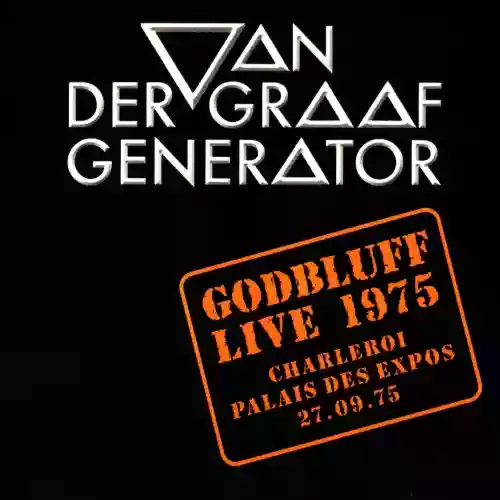
It is precisely halfway through this path, having reached the poetic heights of "H to He..." and revealed the existentialist abysses of "Pawn Hearts," that the balance, now too perfect and delicate to last, broke. Just as long before, in the celebrated yellow house in Arles, the creative union between Gauguin and van Gogh tore, inducing the latter to cut off an ear and give it to Raquele, his favorite prostitute, so too did the exploratory campaign of Hammill’s vessel come to a halt, generating similarly curious situations, albeit less bloody, ranging from the captain's solitary excursions to the peaceful meetings of the rest of the crew under the banner "The Long Hello." "Godbluff" marks the resumption of the journey, after a 3-year hiatus, and the DVD "Live 1975" seals its value and impact thanks to the demonstration of a strengthened, more sober and balanced understanding than before, where Peter's vocal feats, in the lyricism framed by the flute strokes ("The Undercover Man") as in the anguish exacerbated by the relentless murmur of the sax ("The Arrow"), are wrapped like ivy by the other instruments, whether we talk about Hugh Banton's organ mosaics ("Scorched Earth") or focus on the convulsive rhythm of Guy Evans's drunken drumsticks ("Sleepwalkers").
"When the madness comes, let it flood on down and over me sweetly,
let it drown the parts of me weak and blessed and damned,
let it slake my life, let it take my soul and living completely, let it be who I am."
Beyond the aforementioned concert, held on September 27, 1975, in Belgium, in Charleroi, this precious digital treasure chest offers us a TV performance (also Belgian) dating back to March 21, '72, previously published in the "Masters from the Vaults" series. The setlist is very simple, essentially encompassing the colossal "A Plague of Lighthouse Keepers", however introduced by the energetic instrumental "Theme One", in which Hugh's skill and Guy's fury, following the indomitable guide of David Jackson's saxophone, beloved by the cameras, converge into a piercing and prolonged sound, so akin to the ending of "The Talking Drum" that one would almost expect a surprise raid by Fripp's cavalry, if it weren't for another year to pass before the "lark’s tongues in aspic" were introduced at court, in the sophisticated menu of the Crimson King's kitchens. Peter's entrance then marks the beginning of a spine-chilling performance, which, amidst low-key lamentations, mystical crises, neurotic attacks, and lightning inspirations, unfolds throughout the length of one of the most passionate and overwhelming suites of all progressive.
"There may not be time for us all to run in tandem together - the horizon calls with its parallel lines.
It may not be right for you to have and hold in one way forever
and yet you still have time, you still have time."
Although they still had time to continue expressing their distorted visions through that dark and unique music, Van der Graaf Generator parted ways in '76 after the release of "World Record" and the rather convoluted attempt to continue the work without the organ maestro and the irreplaceable van Gogh of the saxophone (who would return for the splendid reunion of 2005). The legitimate painter who owned that name also had this trait in common with the band: the time available. When life began to slip through his fingers, imprisoned in the apathy of the asylum of Saint-Rémy; when he plunged into a state of depression and indifference due to the incompetent care of the miserable Doctor Gachet; when, exhausted, he decided to plant a bullet in his stomach while lying in a ditch, he was just 37 years old. A relatively short period but also intolerably long if composed exclusively of despair, abandonment, misery, and loneliness, endless and insurmountable loneliness, except perhaps for the support of his brother Theo, who, although not unconditionally, always provided for Vincent’s sustenance, believing, if not in the qualities of his person, at least in the potential value of his extraordinary art.
"My dear Theo,
[...] In the life of an artist, death is probably not the hardest challenge. I admit I know nothing at all, but observing the stars always makes me dream. A bit like the dots on maps that indicate cities and towns. Why, I wonder, shouldn't the bright dots in the sky be as accessible as the black ones on the map of France? Just as we take the train to get to Tarascon or Rouen, we can take death to reach a star. [...]
Now I am going to sleep, as it is late; I wish you good night and good luck.
A hug from your
Loading comments slowly
Summary by Bot
This review celebrates Van der Graaf Generator's 'Godbluff Live 1975' as an intense and mature progressive rock performance. It highlights the band's refined balance and Peter Hammill's powerful vocals wrapped in intricate instrumentation. The album marks the band’s strong comeback after a hiatus and connects their artful intensity to Vincent van Gogh’s tortured genius. A valuable historical and emotional live recording captures one of the peak moments of 1970s prog.Tracklist Lyrics
Van der Graaf Generator
Van der Graaf Generator are an English progressive rock group led by Peter Hammill, noted for a dark, dramatic, organ-and-sax-driven sound and intense theatrical vocals. Formed in the late 1960s, they were influential in early 1970s prog, split in the late 1970s and reunited in 2005.35 Reviews
