
 •
Rating:
•
Rating:
THE REVIEW
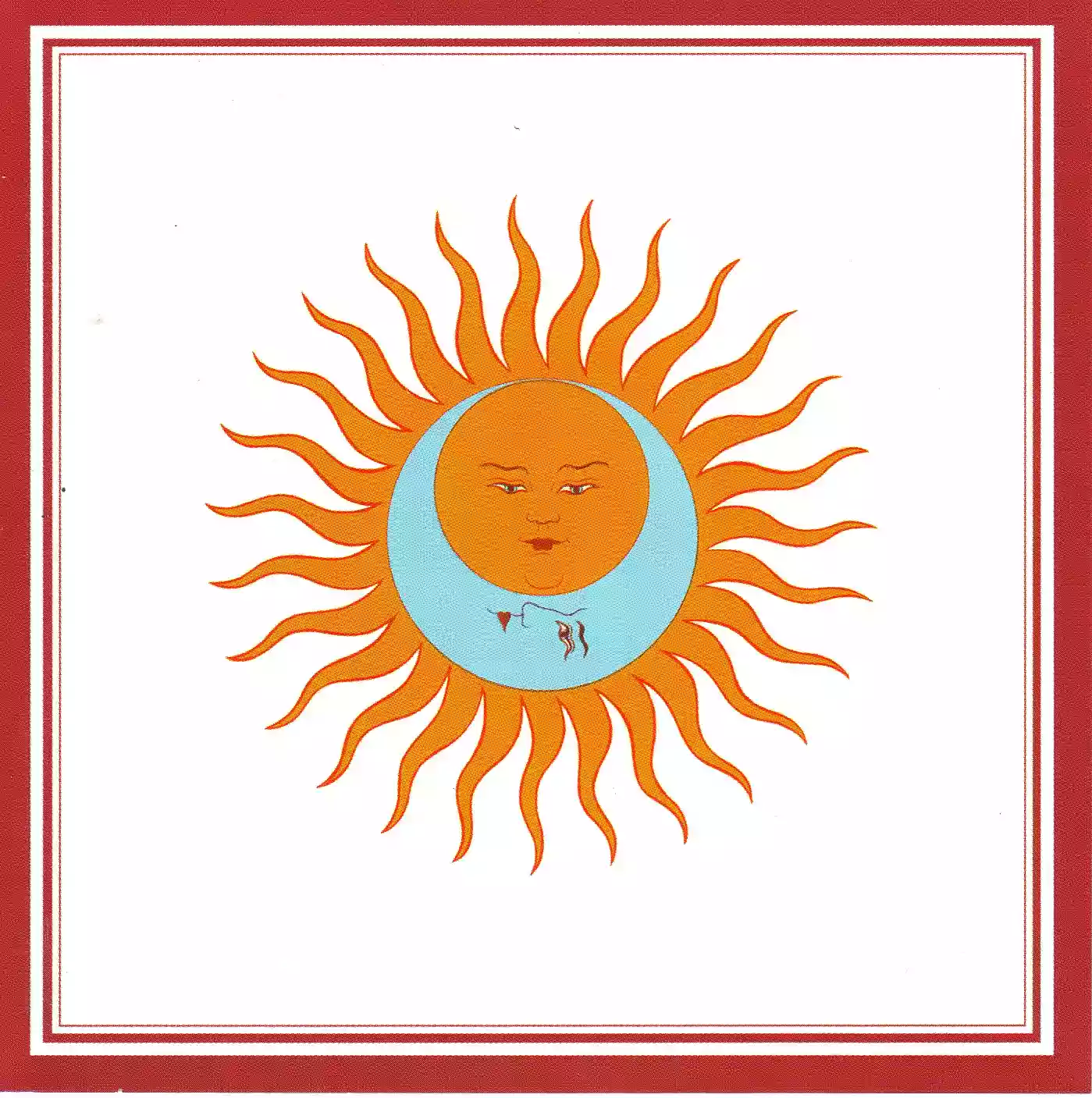
It's a useless and sacred game that, I assume, every music lover plays at least once; electing one's own, highly personal, "best album of all time". And the mechanism doesn't reflect charts and surveys, rather it mobilizes a series of conscious and unconscious factors, technical as well as emotional, that magically take on the appearance of a "mythic" cover, at least for those who assign it the top step of the podium.It was an early 1973 and Robert Fripp had just reassembled his crimson creature; "Yes man" Bill Bruford on drums, John Wetton among basses, violas, and vocal cords, David Cross with violin, flute, and mellotron, and Jamie Muir beating saws and plastic bottles before retreating to a Tibetan monastery in Scotland. Daddy Fripp's Les Paul would enter the scene at the third generous minute of the album that was born within a month: "Larks' Tongues in Aspic".
After "Island" (1971) starts like a De Lorean heading toward a dream theater with porcupine trees and some nine-inch nail tools - stuff not even Lynch, but it's just to dismiss the question of foresight - with sounds to shatter time systems and today's prejudices, driven by a compositional sense that probably has in "Larks' Tongues in Aspic, Part One" the historical peak since we can talk about rock music. It's not just rock, it's not just jazz, it's not just jazz-rock; 13 minutes of sonic interlocks, rhythmic alternations, dizzying fullness and emptiness, a frippian genius ride backed by the court musicians' acrobatic talent. "Book of Saturday" and "Exiles", episodes masterfully "touched" by David Cross, conducted on bold choices like Fripp's inverted solo, are some of the most refined belonging to the magical Kings, those of "I Talk to the Wind" and "Cadence and Cascade", with Wetton as the perfect performer as Greg Lake, historic bassist and singer of the band, was.
The digression of "Easy Money" settles debts with jazz already present in the unpredictable trend of the verses, so that the sung trilogy closes by shattering the song form from within, in its most obvious components; verse, chorus, and variation. The last two tracks, "The Talking Drum" and "Larks' Tongues in Aspic, Part Two", are one the natural consequence of the other; the talking drum leads a hypnotic and wild crescendo jam, then Fripp intervenes to ravage the odds and evens of the rhythmic session in the final triumph. "Can we try one more immediately?" says Wetton as the vinyl makes its last spins; all year long King Crimson would improvise the material for the next "Starless and Bible Black" (1974)... "Possiamo farne subito un'altra?"...
It's a useless and sacred game that, I assume, every music lover plays at least once; electing one's own, highly personal, "best album of all time". And I, spontaneously, take my thoughts back to 1973; in that year the moon showed the world its dark side but I, once again, prefer it embraced by the sun's rays...
Loading comments slowly
Summary by Bot
This review hails King Crimson's 1973 album Larks’ Tongues in Aspic as a revolutionary work that transcends traditional rock and jazz. It highlights the band’s innovative instrumentation and complex compositions, specifically praising tracks like 'Larks’ Tongues in Aspic Part One' and 'The Talking Drum.' The review views the album as an essential piece in progressive music history and a perfect blend of technical skill and emotional depth.Tracklist Lyrics Videos
King Crimson
King Crimson is an English progressive rock band formed by Robert Fripp in 1968. The group is known for seminal late-1960s/1970s albums, frequent lineup changes, and a long-lasting influence on progressive, art and experimental rock.74 Reviews
Other reviews
By jAMIEmUIRfanc
The album starts with “Larks’ Tongues in Aspic pt. I,” the most beautiful piece in Crimson history, in my view the most beautiful in the history of music.
One of the most beautiful albums in history is still underestimated and regarded simply as a “beautiful album” due to the mildness of its revolution, which instead should be the reason to love it.
