
 •
Rating:
•
Rating:
THE REVIEW
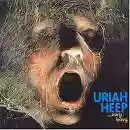
Upon the release of "Very Eavy, Very Umble", the first work by Uriah Heep, a critic said that if the band were to succeed, he would commit suicide. The anecdote is well-known, but it clearly highlights the superficiality and sarcasm with which Heep has been treated by certain music critics.
The album begins with "Gypsy", a historic track for the band, characterized by an initial part where all instruments play the same riff gradually coming into play, followed by a second part where David Byron's splendid voice emerges, and a central part where Ken Hensley's Hammond launches into a splendid solo supported by Mick Box's granite and repetitive riff: also splendid is how the piece seems to end only to resume up to the final sound apotheosis. The second track, "Walkin’ in Your Shadow," is a piece with more considered sounds, built around a clearly blues-derived riff and well-arranged with the intervention of all instruments: notably elegant are the choruses, with Byron towering above all. The third song, "Come Away Melinda", with its somewhat sickly-sweet lyrics (a girl discovers a photo of her mother, unaware she is dead, asking her father who the woman is who resembles her so), is a ballad with a particularly melancholic melody, essential in its acoustic accompaniment. Side A of the old vinyl closes with the excellent jam "Lucy Blues," where Heep, led by Hensley's Hammond, launch into improvisations that project the listener into the smoky clubs of the southern United States (à la "In Through the Outdoor" by Zeppelin…).
The relaxed tones of the last track are interrupted by the splendid "Dreammare," written by bassist Paul Newton, a particularly impactful piece where choirs, explosive guitar riffs, and Byron's warbles merge marvelously: a worthy counterpart to the "Gypsy" recorded on Side A. It is followed by the excellent "Real Turned My On," a hard rock piece with killer riffs and a syncopated stride. The last two tracks, "I'll Keep on Trying and Wake Up," show clear influences of the nascent prog rock, with a more decorative use of keyboards, more articulated and complex themes, though without losing the melody, an essential characteristic of the band, which emerged clearly in subsequent albums.
It is therefore a thoroughly enjoyable album for all lovers of hard rock, unfairly defined as unoriginal and uninspired by the aforementioned critic, aspiring to suicide: let it not be sacrilegious to say that it does not pale at all next to the masterpieces released in the same year, such as "In Rock" by Deep Purple, "Paranoid" by Black Sabbath, or "III" by Zeppelin, indeed characterized by a cleaner sound than the aforementioned works, and more appealing even to an audience not particularly attentive to the genre.
The rating is a necessary consequence of the previous evaluations.
Loading comments slowly
Summary by Bot
This review praises Uriah Heep's debut album 'Very Eavy Very Umble' as a richly composed and enjoyable hard rock work. Contrary to early critical dismissal, the album is compared favorably to seminal 1970 releases by Deep Purple, Black Sabbath, and Led Zeppelin. The reviewer highlights standout tracks like 'Gypsy' and 'Dreammare,' emphasizing the band's melody, musicianship, and early prog influences. Overall, it celebrates the album's lasting appeal and musical quality.Tracklist Lyrics Videos
06 Real Turned On (03:41)
09 Gypsy (edited version) (02:59)
10 Come Away Melinda (alternative version) (03:44)
11 Born in a Trunk (alternative version) (03:47)
12 Born in a Trunk (03:49)
13 Magic Lantern (08:34)
14 Lucy Blues (alternative version) (05:12)
15 I Want You Babe (Behind the Green Shed Blues) (05:42)
Uriah Heep
English rock band formed in 1969, led by guitarist Mick Box; notable for 1970s hard/progressive albums, Hammond-driven arrangements and close vocal harmonies. Continued recording and touring across decades with multiple lineup changes.32 Reviews
Other reviews
By BugMeNot
"If this band makes it, I’ll commit suicide" – a critic’s harsh debut review, later defied by Uriah Heep’s success.
David Byron’s fantastic vocal performance and Mick Box’s teaspoon mixing sugar became part of the recording.
By Angelowar6
This album has its charm, that raw, imperfect 70s sound, but damn rock.
An intense and very melodious voice... David Byron’s voice, at times operatic and anyway a great performer.
