
 •
Rating:
•
Rating:
THE REVIEW
Tracks
- Gypsy (Box, Byron) – 6:37
- Walking in Your Shadow (Byron, Newton) – 4:31
- Come Away Melinda (Hellerman, Minkoff) – 3:46
- Lucy Blues (Box, Byron) – 5:08
- Dreammare (Newton) – 4:39
- Real Turned On (Box, Byron, Newton) – 3:37
- I'll Keep on Trying (Box, Byron) – 5:24
- Wake Up (Set Your Sights) (Box, Byron) – 6:22
"If this band makes it, I'll commit suicide"
Thus wrote Melissa Mills, a critic for the renowned music magazine Rolling Stone, opening the review of this record, the debut work of the band named after a character from Charles Dickens' "David Copperfield."
Luckily, Mills never fulfilled her grim promise, and Uriah Heep, though never particularly loved by critics, became the missing piece in the trio that dominated the '70s (Led Zeppelin - Deep Purple & Black Sabbath).
The album prefigures Heep's typical sound, which, due to the not yet well-defined line-up (which would only be established after the album's beginning) and the inexperience of the very young members, would fully develop only in subsequent albums.
The first track ("Gypsy"), used as a single and as the TV theme for a Rai program, stands out for its dark and simple riff, the solo keyboard, David Byron's fantastic vocal performance (Voice), and the tinkling of Mick Box's (Guitars) teaspoon as he waits his turn, enjoying a cup of tea, unaware that his mixing sugar in the cup would become part of the recording.
After the wholesome and robust track "Walking In Your Shadow", the spotlight shifts to perhaps the most beautiful song on the album, "Come Away Melinda", an atypical ballad for a hard rock group.
The same cannot be said for "Lucy Blues", a very bluesy piece (as the title anticipates) but also very Zeppelin-esque. Perhaps it was no accident that this song was replaced by "Bird Of Prey" in the American edition.
The remaining songs flow along the same lines as "Walking In Your Shadow" with quick excursions into jazz, blues, and '60s rock environments.
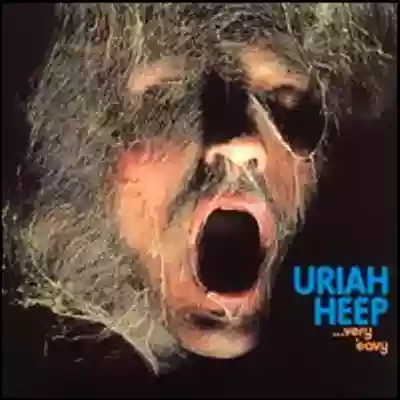
Noteworthy, alongside the excellent songs, is the album cover, which became one of the most famous in the world, featuring David Byron's face completely covered in cobwebs (created thanks to a kind of substance he managed to fully remove from his hair only after several days of washing :-)
Loading comments slowly
Summary by Bot
Uriah Heep's debut album, ...Very 'eavy ...Very 'umble, showcases the band's nascent but distinctive sound with a mix of hard rock, blues, and jazz influences. Despite initial critical skepticism, the album delivered standout tracks like 'Gypsy' and 'Come Away Melinda.' The cover art is iconic, featuring David Byron covered in cobwebs. The record is a foundational piece in the 70s rock scene alongside bands like Led Zeppelin and Deep Purple.Tracklist Lyrics Videos
06 Real Turned On (03:41)
09 Gypsy (edited version) (02:59)
10 Come Away Melinda (alternative version) (03:44)
11 Born in a Trunk (alternative version) (03:47)
12 Born in a Trunk (03:49)
13 Magic Lantern (08:34)
14 Lucy Blues (alternative version) (05:12)
15 I Want You Babe (Behind the Green Shed Blues) (05:42)
Uriah Heep
English rock band formed in 1969, led by guitarist Mick Box; notable for 1970s hard/progressive albums, Hammond-driven arrangements and close vocal harmonies. Continued recording and touring across decades with multiple lineup changes.32 Reviews
Other reviews
By vellutogrigio
If the band were to succeed, he would commit suicide.
It is therefore a thoroughly enjoyable album for all lovers of hard rock.
By Angelowar6
This album has its charm, that raw, imperfect 70s sound, but damn rock.
An intense and very melodious voice... David Byron’s voice, at times operatic and anyway a great performer.
