
 •
Rating:
•
Rating: THE REVIEW
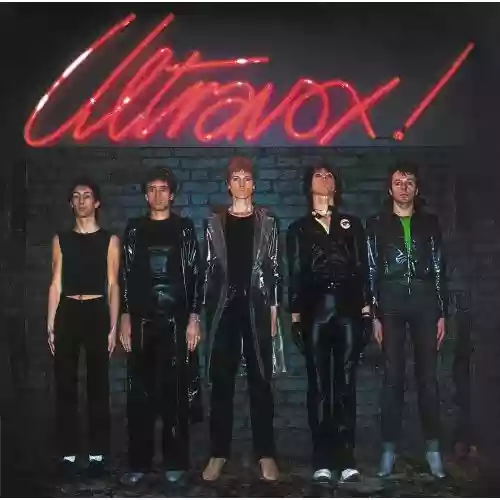
Alongside the renowned "Marquee Moon," "77," "Suicide," "Pink Flag," "Horses," "Modern Dance," "Are We Not Men," "First Issue," "Unknown Pleasures," "Buy Contortions," "Killing Joke," this magical "Ultravox!" deserves a place in the showcase of dazzling debuts that changed the course of alternative rock, founding the various "new waves" in the late '70s.
Many, too many honors have been given to the mythical Midge Ure, an illustrious exponent of '80s synth-pop; the genius John Foxx deserved just as many, the mastermind of the early Ultravox, the more genuine, more rock ones, those who, despite being steeped in a futuristic imagination, gladly set aside the more sterile synthesizers (the guiding instrument of the second-wave Ultravox) to create intriguing and baroque harmonic fortresses, where bass-guitar-drums amiably conversed with the two most romantic instruments in the history of music: the piano and the violin (both courtesy of Billy Currie).
Among the many paths to formal renewal that interested rock music in the new-wave era, Ultravox (as un-American as one could expect at the time in the rock field) found the most ambivalent solution more congenial. Ambiguous because fundamentally still with one foot in the past, namely in the first half of the decade, the "progressive," symphonic, grandiose one, the art-rock one, that of Roxy Music, their direct forerunners. The peculiarity of early Ultravox (baroque in an era of essentiality; decadent after the death of glam) is precisely explained by the peculiarity of their supreme Masters, the inimitable band of Ferry, Eno, Mackay, and Manzanera, a case apart in the precious rock panorama of the early '70s (progressive and decadent, but without prolixity and garishness).
John Foxx, in particular, starts from Brian Ferry's grotesque crooning, which finds expression in the enchanting epos of "Life At Rainbow's End," their very own "Ladytron," or even better in the splendid "Slip Away," the best track on the album, an elegant, captivating, Viennese waltz to the core, a daydream that takes you straight to certain Ophuls films, to certain vertiginous long takes in aristocratic ballrooms... It's romantic, nineteenth-century music (in spirit clearly, certainly not in form!), which seems far from reality, from the street, from punk, from new-wave. The mellotron of "My sex" and the pathos of "I want to be a machine," a semi-acoustic ballad in crescendo, which seems to be a tribute to the quiet desperation of Pink Floyd of the Waters era or the poignant epitaphs of early King Crimson (early '70s, we're still there), seem to confirm the neo-romantic vocation of the English band.
And then where is the new-wave? Where is the new that advances? Where is the break with the past? Why should we put this record together with those of CBGB's? Because there are at least two tracks to recommend to fans of the great Stan Ridgeway (supreme "theorist" of new-wave): they are "Saturday Night In The City Of The Dead," a relentless metropolitan ride, and "The Wild, The Beautiful And The Damned," a showdown steeped in fatalism and bitterness, just like the legendary "Camouflage"... tracks capable of shading that daily epic, which constitutes the only possible glorification for a loser's life.
It's not over here. "Ultravox!" is fully new-wave, because the riff of "Wide Boys" could have come from Keith Richards' guitar, but the filtered singing and squared sound give it an android charm. But the track that more than any other projects the band into the '80s is the splendid "Dangerous Rhythm," a reggae track (like so many other new-wave classics, from "Prove It" to "Redondo Beach" to "Humour Me," not to mention Clash and the Police), but a cooled, crystallized reggae, forcibly transported from the sun of the Caribbean to the neon lights of Old Europe. It's a track that alone founds the new-romantic, Culture Club, Japan, a sweet and warm surrender to its own resignation. Surrender that echoes in the refrain of "Lonely Hunter," a chorus of lost angels...
An unmissable album, more complete than the subsequent and renowned "Ha! Ha! Ha!," too subservient, in my opinion, to the neurotic boogie of "Editions OF You," despite the classic "Hiroshima Mon Amour," another impeccable redefinition of romanticism for the new-wave era.
Loading comments slowly
Summary by Bot
Ultravox!'s debut album stands alongside iconic 70s alternative rock records, blending baroque and neo-romantic elements with new wave energy. John Foxx's vision created a unique sound that bridged art-rock and early synth-pop, distancing itself from the later Midge Ure era. The album's eclectic mix ranges from symphonic piano and violin to cutting-edge new wave riffs and reggae influences. Tracks like "Slip Away" and "Dangerous Rhythm" highlight the band's pioneering role in shaping the sound of the 80s new romantic and alternative scenes.Tracklist Lyrics Videos
Ultravox
Ultravox are a British band associated with new wave and synth-driven rock. Early recordings (often credited as Ultravox!) featured singer John Foxx; from 1979/1980 the group fronted by Midge Ure achieved major commercial success, with “Vienna” commonly cited as their signature work.17 Reviews
