
 •
Rating:
•
Rating:
THE REVIEW
In a synthesis of grand systems, few bands like Ultravox have thoroughly embodied the idea—already vast in itself—of new wave. A band that started with many guitars, leather jackets, a name with an exclamation mark from old school tradition, soon transformed into white new romantic attire, makeup, decadent symbols, a desire to experiment, and, above all, embrace the endless possibilities of the alluring synthetic territories. The clock started ticking back in 1976, and we cannot forget the talent of the defector John Foxx, a fragile and aesthetic singer who seemed as if he stepped out of another era, the visionary mind behind the early themes dear to the project, above all, the ambiguous and unsettling relationship between man and machine. But it is with the arrival of the new vocalist Midge Ure that Ultravox found their definitive consecration, smoothing the rougher edges of their sound in favor of engaging and never banal melodic solutions, almost always marking the charts. "Vienna" is the first example of this shift, a commercially successful album thanks to its blend of synthetic textures and classical harmonies highlighted by the powerful and modulated voice of the new leader.
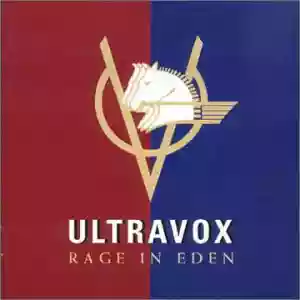
Just a season later, here comes "Rage in Eden," a work that, continuing in the footsteps of its predecessor, immediately presents itself as more mature and refined, owing to a better amalgam of electronics and traditional sounds, this time of a more rock origin. The typical Ultravox melody is unleashed in all its power in compelling tracks such as the incipit "The Voice," worthy of the annals of new wave, and the robotic "The Thin Wall," warmed by the skillful strokes of synth and Ure's warm voice. But "Rage in Eden" also reveals a more introverted orientation, particularly when the rhythms slow down, and the atmospheres become hypnotic, if not downright dark. The title track, for example, progresses like a slow funeral procession from a post-atomic civilization, while "I Remember" alternates smooth and delicate harmonies with a refrain made of threatening dusk choruses. It is also important to emphasize the role of the guitars, now solely in Ure's hands, which, although intermittent, know how to carve out epic moments of great impact when called upon: see the "Fender-like" arpeggios and the excellent solo in "We Stand Alone," one of the best tracks on the album, or the polychrome touches over the futuristic boogie of "Accent Of Youth". The work closes with "Your Name," again with something sinister but actually devoted to the most hermetic experimentation.
After the good signs of "Vienna," with "Rage in Eden," the new Ultravox of Midge Ure realize they can go far, riding an art rock that, in essence, pleases everyone: neither fans of chart-friendly melodies nor aficionados of a certain colder and more refined new wave. And if, in the future, the group's commercial inclination will become all too apparent, this album episode fits best between the two poles of thought, thus representing an excellent summary of different moods and colors of the "new wave". For those who love those years, an unmissable testament; for newcomers and the curious, it will never be money wasted.
Loading comments slowly
Summary by Bot
Ultravox's album Rage In Eden marks a refined evolution from their previous work Vienna, showcasing a mature and seamless blend of synthesizers and rock elements. The album balances catchy melodies and darker, introspective moods, highlighted by Midge Ure's compelling vocals and skillful guitar work. Key tracks like 'The Voice' and 'We Stand Alone' exemplify its range, from energetic anthems to hypnotic, atmospheric pieces. This album appeals to both fans of accessible new wave and those seeking deeper, artful expressions.Tracklist Lyrics Videos
Ultravox
Ultravox are a British band associated with new wave and synth-driven rock. Early recordings (often credited as Ultravox!) featured singer John Foxx; from 1979/1980 the group fronted by Midge Ure achieved major commercial success, with “Vienna” commonly cited as their signature work.17 Reviews
