
 •
Rating:
•
Rating:
THE REVIEW
"War" was released in stores in February 1983. U2 started the "War Tour" two days before the album's release. The first phase (February 26 – April 23) was in Europe for a total of 29 dates, followed by the intense American phase (April 23 – June 29) with 48 dates in just two months (almost one concert a day).
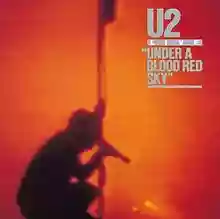
"Under a Blood Red Sky" captures U2's performances in their beloved Boston, a city that had welcomed them since 1980 (when they performed a concert there as perfect unknowns in a venue in front of four spectators), and in the wonderful amphitheater of "Red Rocks" (carved at the foot of the Rocky Mountains, in Morrison, Colorado).
The concert at "Red Rocks" became a famous documentary broadcast countless times by MTV in the early '80s. The video of "Sunday Bloody Sunday" with Bono raising the white flag is precisely U2's performance at "Red Rocks".
In a U2 live show, you can't expect significant changes from the original songs, like the expansions that the great bands of the '70s used to do, turning their live shows into a separate world compared to the studio versions. However, "Under a Blood Red Sky" manages to deliver a lot in terms of energy. It is a short and direct record like very few others, without a moment to breathe. This explains its extraordinary commercial success: eight million copies.
The opening is entrusted to "Gloria", the most famous single from "October", a praise to God. The song is accelerated compared to the original, with a more massive drum sound than the studio version. Everything is as usual until Bono has the audience sing during Edge's solo. Then, when the solo ball passes to the bass, Bono shouts "Adam Clayton!" before introducing the group's mastermind: "This is the Edge!", followed by an ovation. Then the grand finale by Vox until the crowd's triumph.
And it moves on to the furious "11 O'Clock Tick Tock", one of the most beloved songs by U2's early '80s audience. Repeated listens suggest that this version was mixed in the studio because the singing is too perfect to have been done live. U2 knew that the single version of "11 O'Clock Tick Tock" needed improvement and speeding up, and they seized the occasion of this live to do so. The result is amazing, with Edge's counterpoints simply perfect. Many people don't even suspect the existence of this track, which includes, among other things, one of the most beautiful riffs and solos in their entire discography. Bono simply extraordinary.
Then it moves on to I Will Follow, the opening track of Boy. Mullen's drumming reigns energetically throughout the track and, in fact, during the whole concert. The Edge distorts as necessary; here the sound is much less clean than the studio version. Bono takes care of the rest, giving his all as usual.
It continues with "Party Girl". While the single version starts with acoustic guitar and without drums, here Edge uses an electric guitar with little distortion. In the single version, Bono sings with a slightly melancholic and somewhat artificial voice. At "Red Rocks", his voice is much more virile and confident, and Mullen's drums are much more present. After playing it several times in concert, U2 had learned how to give it more energy. It's a matter of taste to say which is better. It's a real shame this track didn't appear on War. They needed to believe more in the song given its extraordinary melodic strength.
During Edge's solo, Bono shouts: "This is our hero," a tribute to his friend, the band's brain, looked upon almost with reverence by the singer at the "Red Rocks" concert. Majestic, strong, and silent, The Edge of the early '80s was among the most charismatic characters ever seen on stage. Never pandering to the audience for attention, always focused, never striking a pose, with a confidence in his eyes that couldn’t help but impress. A hypnotic presence. Unfortunately, over the years, his charisma will fade, and from 1987, Bono will become the band leader. The last captivating Edge can be found in the "Making of The Unforgettable Fire" and the supporting tour for that album.
But we are digressing; let's return to the record. Before introducing "Sunday Bloody Sunday," Bono states: "This song has been talked about a lot, maybe even too much. This is not a rebel song; this is 'Sunday, Bloody Sunday'!" And, of course, the audience goes wild, first for the unmistakable drum intro and then for the unmistakable guitar arpeggio. Bono's vocal intro here is prolonged compared to the original. The effect is excellent. Here there is neither the acoustic guitar nor the violin present in the (unreachable) studio version, so all the work is done by the distorted guitar. The comparison with the studio version doesn't hold, but the emotional impact is still strong. Then, when the song is over, the group resumes repeating the title.
"The Electric Co." begins with "The Cry," an early version of "Is That All" from "October," before the actual start. One of the band's classic arena-rock songs. The real song begins after a minute with its classic riff. Two super-fast verses in a row, then the riff again; then the solo, greatly supported by the drums. Two snare hits and the slow interlude (typical of early U2); guitar feedback; light drums; then Bono’s voice seems to come out of nowhere and onwards to the furious finale. Here we are a notch above the version on "Boy".
In "New Year's Day," we have a drum and bass start, and Edge goes to the keyboard and begins his work perfectly supported by Clayton and Mullen (who hits hard on the hi-hat). At the moment of the solo, Edge leaves the keyboard and switches to guitar. Great version, but here too, the studio version has no rivals.
And finally, "40". Bono asks the audience to sing with him. Clayton switches to guitar and Edge to bass, as the guitarist invented the bass line that is the basis of the song. The live version lacks the metaphysical atmosphere of the studio version, as it is difficult to reproduce the angelic choir present in "War", but the warmth of the audience compensates very well.
After saying "Good Night!", Bono lets the audience continue alone, singing "How long to sing that song?". A great finale.
35 minutes for an almost perfect album. Almost because "October" (single from the album of the same name) and "A Day Without Me" played at "Red Rocks" truly deserve their respective album versions and should have found a place here.
I can only invite you to go on YouTube to see the entire concert. You will be fascinated, among other things, by the natural lighting created by the fire that withstands the rain falling during the performance. Enjoy watching.
Loading comments slowly
Summary by Bot
This review celebrates U2's live album 'Under a Blood Red Sky,' highlighting its raw energy and iconic performances during the 1983 War Tour. It emphasizes standout tracks like 'Sunday Bloody Sunday' and praises the band's live charisma, especially The Edge's presence. The album's strong audience connection and historical significance, especially the Red Rocks concert, are addressed. Minor critiques include absence of certain tracks, but overall it's a near-perfect live record.Tracklist Lyrics Videos
U2
U2 are an Irish rock band formed in Dublin in 1976 by Bono, The Edge, Adam Clayton and Larry Mullen Jr. Rising from post‑punk roots to global fame, they fused atmospheric guitar textures with anthemic songwriting and ambitious tours such as Zoo TV and U2 360°.129 Reviews
Other reviews
By claudio12
One of their concerts is not a simple concert, but a true live adventure.
UNDER A BLOOD RED SKY has sensations to provoke. But telling or explaining them is difficult.
By tiziano.
Approximately 40 minutes of energy, melody, and finally, one of the most beautiful things, emotion.
U2 is one of those few bands that have never played with additional musicians at concerts, but always stuck with the four of them.
