
 •
Rating:
•
Rating:
THE REVIEW
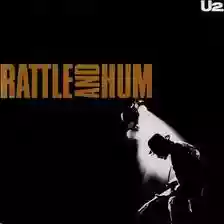
During the "The Joshua Tree Tour" (March – December 1987), U2 sketched out some tracks. Back home, they got back to work to transform the melodic ideas into musical ideas. The result is the excellent "Rattle & Hum," released in 1988, appreciated by the public (seven million copies) but condemned without real (musical) reasons by many critics.
"Rattle & Hum" can be seen as a sort of "The Joshua Tree, Part II", with its feelings of love-hate toward the United States and the even more direct exploration of American music that produced some results far surpassing several tracks from the acclaimed work of the previous year.
It starts with a stunning performance by Bono singing The Beatles' "Helter Skelter." Before the song, the singer says, "This is a song Charles Manson stole from The Beatles. We're stealing it back...", recalling Charles Manson, the troubled individual who claimed to have found inspiration from this song before committing the infamous Bel Air massacre in which Sharon Tate, the wife of director Roman Polanski, was killed. Critics were furious at Bono for this statement, which, according to them, implied U2's presumption of feeling equal to The Beatles. Hence, the origin of the absurd derogations the album suffered.
After the initial jolt, we sink into the peace of "Van Diemen's Land," where Edge sings – supported only by the sweet electric guitar without distortion, and the organ at the end. The lyrics tell, in the first person, the story of John Boyle O'Reilly, who fought for Ireland's independence and was exiled to Tasmania (an island in the Australian continent discovered by Van Diemen, hence the title) by the English government for twenty years.
The initial energy returns with "Desire," U2's attempt to make American rock-blues, where Bono ironically comments on the more controversial aspects of America ("She is the dollars; she is my protection; yes she is a promise in the year of election"), talking about the ease of getting weapons in the United States ("On the counter with a shotgun; soon everyone will have one"), and the evangelical preachers who dominate American television ("I’m like a preacher stealing hearts at a traveling show. For love or money, money... ?"). The song works quite well, but the version U2 played during the "Lovetown Tour" (1989/90) was far superior to the original and beloved by the public, with a surprising Edge using the right guitar and giving the song that blues flavor that is not so present in the recorded version. In this live version, Bono added a stanza and then left the stage to the guitarist, who abandoned his minimalist philosophy and let loose with the notes.
An organ introduces us to "Hawkmoon 269." The song was written when Bono was on tour and missing his wife. It is an electric and acoustic mix by Edge that unfolds in a slow crescendo. Toward the end of the piece, an exciting gospel choir completes the track. The number 269 indicates the number of mixes required before editing the song. Three weeks of hard work.
A beautiful live performance of "All Along the Watchtower" (a classic by the great Bob Dylan, recorded on November 11, 1987, in San Francisco at Justin Herman Plaza) leads us to the gospel version of "I Still Haven’t Found What I’m Looking For" (recorded with the gospel choir "The New Voices Of Freedom" from Harlem). Upon leaving the church where the recording took place, U2 encountered a street musician singing the song "Freedom for my People," which was decided to be included in the album.
We move to another live performance, with a blues structure, “Silver and Gold,” a B-side of “The Joshua Tree,” entirely written by Bono, who sings the story of a black man from Johannesburg (South Africa), and his rebellion against apartheid, perfectly paving the way to “Pride,” the beautiful celebration of another prophet of anti-racism, Martin Luther King.
We return to unreleased tracks with the classic "Angel of Harlem" (written and sketched during the "The Joshua Tree Tour"), dedicated to the famous jazz singer Billie Holiday (Lady Day), sublime angelic voice (hence the title), but fragile soul, who died at just 44 years old due to alcohol abuse. The sketched version can be found in the film "Rattle & Hum." In the remixed version of the album, the magnificent trumpets make the song one of the group's most memorable.
"Love Rescue Me" is one of the band's melodic gems, written by Bono with Bob Dylan towards the end of the "The Joshua Tree Tour." It's easy to imagine the greatness of the lyrics, written with the collaboration of the greatest poet of popular music. The text speaks of the redemptive power of love (human and divine), hence the title (love redeem me). The song talks about the passage from inner death ("I’m here without a name in the palace of my sin") to the new life and the hope that this new life brings with it ("I’ve defeated my past, the future is here, at last I stand at the entrance of a new world that I can see the ruins on my right will soon lose sight of me").
"When Love Comes to Town" is a simple but delightful mix of American blues (by the famous B.B. King) and Edge's sparkling blues. The text is a variant on the theme of love saving our lives, with a clear reference to Christ and his crucifixion. The town indicated in the title is none other than our soul, which is redeemed and changes when invaded by love.
And we move to the splendid "Heartland," a song that was sketched during the recordings of "The Unforgettable Fire" and was not completed at the time. Here we are in the presence of the magic of Edge's guitar sound and Bono's touching melody, supported by truly inspired background vocals. The heartland is none other than America. The song is a kind of travel diary along the famous Route 66, which "like a river runs through this land," and which, starting from Chicago, reaches directly to Los Angeles, passing from ghost towns to the desert of Death Valley.
"God, Part 2" is Bono listing everything he doesn't believe in and includes some stunning verses: "I don't believe in the devil and his book, but the truth wouldn't be the same without his lies. I don't believe in excess; success is in giving. I don't believe in those who tell me there's no remedy. I don't believe in cocaine." Then the singer goes beyond with the reckless truth: "I don't believe rock and roll can really change the world. I don't believe in the sixties, the golden era of pop. You glorify the past when the future dries up." The singer of the world's most famous rock band speaking against the sixties. It's obvious that critics in love with that decade began to spit venom against U2, completely forgetting the most important thing: the songs.
After the live version of "Bullet the Blue Sky," we move to the album's masterpiece: "All I Want is You." The acoustic guitar introduces us to the beautiful melody supported by an angelic organ, joined by the electric guitar with its very clean sound, supporting the song. All canonically structured, but the result is one of the best in the band's repertoire. The text is a splendid love song that seems to say that one can also fall into temptation, but if there is love, personal weaknesses cannot undermine it. The long two-minute violin finale perfectly closes the album.
Not a masterpiece, but certainly an excellent album, despite the debatable mix of unreleased and live tracks. An album of unreleased tracks and one of live tracks from the "The Joshua Tree Tour" (especially the extended version of "With or Without You") would have been much better.
With "Rattle & Hum," the story of U2 in the 80s ends, their most glorious page. Their adventure could have ended here if they had not called upon all their reactionary abilities to overcome the venomous and senseless criticisms they received after this album. But fortunately, for both us and them, they succeeded.
Loading comments slowly
Summary by Bot
U2's 'Rattle And Hum' builds on the success of 'The Joshua Tree' by blending live and studio recordings focused on American music influences. The album showcases depth in lyrical themes, powerful performances, and musical experimentation despite facing unfair critical backlash. It captures the band’s exploration of blues, gospel, and rock with passionate storytelling and collaboration. Not perfect, but an excellent closing chapter of U2's 80s era.Tracklist Lyrics Videos
01 Helter Skelter (live) (03:08)
05 All Along the Watchtower (live) (04:24)
06 I Still Haven't Found What I'm Looking For (live) (05:55)
07 Freedom for My People (00:36)
08 Silver and Gold (live) (05:50)
09 Pride (In the Name of Love) (live) (04:27)
11 Love Rescue Me (06:25)
12 When Love Comes to Town (04:16)
14 God, Part II (03:16)
15 The Star Spangled Banner (00:43)
16 Bullet the Blue Sky (live) (05:37)
U2
U2 are an Irish rock band formed in Dublin in 1976 by Bono, The Edge, Adam Clayton and Larry Mullen Jr. Rising from post‑punk roots to global fame, they fused atmospheric guitar textures with anthemic songwriting and ambitious tours such as Zoo TV and U2 360°.129 Reviews
Other reviews
By firegas
The gospel version of 'I Still Haven't Found...' is simply brilliant, making it unsurpassable.
Bullet the Blue Sky is simply adult rock done right, as tough in music as it is deep and visionary in lyrics.
By senior86
"From here I fell in love with them, their music, their CREDIBILITY, their energy, their atmospheres, and their mysticism."
"It feels like being there with them, whether it be arenas, studios, streets, bridges, or the Mississippi... we’re there laughing, crying, and becoming emotional."
By Alevox
Bono is in amazing form and is driven by a voice that allows him to do whatever he wants and enchant the audience with thrilling performances.
With 'All I Want is You', U2 bid farewell to a part of themselves, to welcome, a few years later, a total upheaval of their musical and scenic conception.
By Rax
The cowardice of not presenting a true follow-up to Joshua Tree, diluting it in a 'fake live', the greed to ride the market demand, the pretentiousness of posing as expert disseminators of the American musical tradition about which, in reality, they knew almost nothing.
During the Zoo Tour, Bono candidly admitted: 'Making ‘Rattle and Hum’ was a screw-up.' True words.
