
 •
Rating:
•
Rating:
THE REVIEW
“He who fights with monsters should look to it that he himself does not become a monster. And if you gaze long into an abyss, the abyss gazes also into you” (F.W. Nietzsche).
Sometimes, in the arcane fluctuations of the human soul, the twirls of existence take on unpredictable outlines: socialized masks to sublimate primordial frustrations and vital folds of a Pirandellian flavor, transmute those who traverse them into both author and victim of themselves. The chronicles, especially those of artistic expressions, seethe with the arrogant prosceniums of this kind: pretending to feel to be, identifying with it until irreversibly sticking oneself into one's cliché.
In the Dark scenarios, this process has enveloped many personalities with particularly contradictory and vivid natures: above all, the most darkly radiant podium perhaps belongs to Peter Steele, a shadowy and hieratic jester of the most depraved Brooklyn. A cursed standard-bearer of a rare cursus disonorum, he poured into his creation all the enormity of his sulfurous Ego.
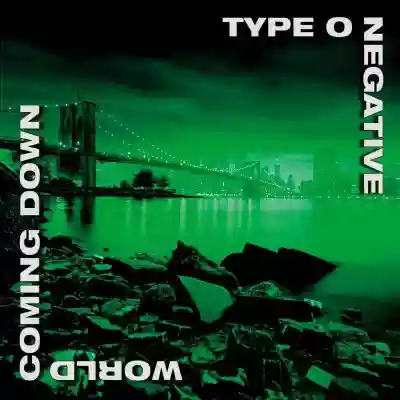
And indeed, while all the works of Type O Negative fully reflect the lacerating darkness infested in the soul of their anti-ideologue leader, there is one in particular where his inner disarray resigns to portray all the desolation of a mephitic existential irreversibility. "World Coming Down" emerged at the death of the old millennium, discoloring a particularly ominous slice of the Mastermind's life, making him consider it the nadir of his career. No critical autosuggestion was ever more false; it is from sincerely annihilated inspirations that the most fruitful pathos flourishes luxuriantly: stripped with commanding humility from the most hypocritical paper-mâché of sentimental marketing, it exhibits in all its depth the genuine weaknesses of the perceiver.
And so Skip it, simulating an artificial cd glitch, preludes to the first real track of the platter: White Slavery, a colossal bastion in which Steele's (self)destructive vein lashes out with all the darkest essence of his soul (The summer snow, but it’s not cold. Once it’s tested, thus infected. I’ve lost myself again. I’ve lost myself again it’s a nightmare but it’s clear.
Loading comments slowly
Summary by Bot
This review delves into Type O Negative's album 'World Coming Down,' highlighting its deep existential themes and Peter Steele's intense personal struggles. The album is praised for its raw emotional honesty and artistic humility. Recognized as one of Steele’s darkest and most genuine works, it stands out as a powerful expression of inner turmoil and desolation. The reviewer refutes Steele's own low appraisal of the album, calling it a profound and illuminating masterpiece.Tracklist Lyrics Videos
Type O Negative
Type O Negative were an American band from Brooklyn, New York, known for blending doom heaviness with gothic atmosphere, melody, and dark humor. Frontman Peter Steele (vocals/bass) was central to their image and lyrical voice; the band’s catalog spans the early ferocity of Slow, Deep and Hard to the more melodic and atmospheric October Rust and the bleak World Coming Down.16 Reviews
Other reviews
By Senmayan
Peter Steel’s lyrics are no longer ironic but truly filled with suffering and depression, and the music reflects all of that.
For me, it’s a small masterpiece, probably the most sincere and least self-celebratory work of Type.
