
 •
Rating:
•
Rating:
THE REVIEW
The epitaph of the psychedelic season.
John Richard Adler traverses the entire second half of the sixties moving from unfinished seminal projects like 'In Crowd' and 'Fairies' to perfectly executed ones like 'Tomorrow' and 'Aquarian Age', to mad collaborations with 'The Deviants' or 'Pretty Things' (for the essential “S.F. Sorrow”)… but it's in 1969 that Twink crafts his small solo masterpiece, helped by a handful of trusted friends… Mick Farren and Paul Rundolph (The Deviants), John Povey (Pretty Things), Junior Wood (Tomorrow), and Steve “Peregrin” Took (Tyrannosaurus Rex).
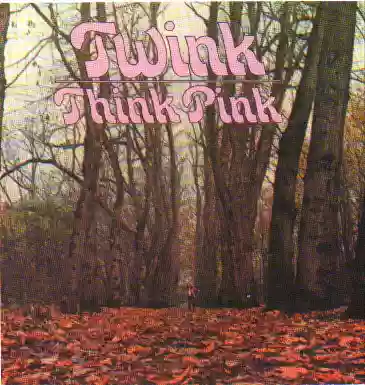
“Think Pink” is released at the beginning of 1970 and is the ideal watershed between the way of conceiving the rock verb in the two decades. The overwhelming warmth of the season of love begins to wane into the raw visionary hard, in a mix of apparent contrasts, amalgamated in a soft and abrasive blend. The dream slowly turns into a nightmare and a crystalline testimony to this is “10,000 Words In A Cardboard Box”, where the colorful lysergic flavor gradually loses its intensity, torn by the metallic aftertaste that pastes and thickens your tongue, sublimated by the piercing patterns drawn by the guitars; for the revisitation of a track that just a few months earlier was a flower hit of 'Aquarian Age'. Alongside this authentic gem, everything is profoundly melancholic in this work, where the protagonist seems to want to paint dark future scenarios through the progressive loss of innocence, moving from the frantic noise of “Tiptoe On The Highest Hill” to the morbid progressive sexuality of “Fluid” or from the icy incursions into Eastern mysticism of “Dawn Of Magic” to the irreverent childish parody of vaudeville operetta applied to rock, a typically British exercise, of “Three Little Piggies”.
But the best moments are in the central triptych of the album, where in “Mexican Grass War” they abandon themselves to a mystical-tribal experience, raped by sharp guitars, grated deep into the soul… a black soul that explodes in the power-blues of the instrumental “Rock And Roll The Joint” and explores its most intimate and disturbing side, in the sophisticated folk of “Suicide”; or in the free-form of the initial “The Coming Of The Other One”, ecstatic omen of malevolent future developments. Twink's frenetic artistic freedom will lead him, only a year later, to give life to the anarchic project of the 'Pink Fairies', then to immediately distance himself… disappearing into nothingness and reappearing at the end of the 80s in a collaboration with Bevis Frond. But it's in 1970 that he writes the final word on the collective lysergic experience, with one of the most interesting and underrated pages of the British rock psych period, remaining, however, engulfed in the darkness of the obscure presences that were advancing.
The Bologna-based Akarma takes care of bringing it back to light, with a beautiful re-edition on 180-gram vinyl.
Loading comments slowly
Summary by Bot
Think Pink by Twink is hailed as a psychedelic season epitaph, blending late-60s rock traditions with emerging harder and progressive sounds. The album features contributions from key collaborators and explores themes of innocence lost and mysticism. Standout tracks include 'Mexican Grass War' and '10,000 Words In A Cardboard Box'. This 1970 release, now beautifully reissued on vinyl by Akarma, remains an underrated cornerstone of British psychedelic rock.Tracklist Videos
Twink
Twink (John Charles Edward Alder) is an English drummer and singer central to the UK psychedelic scene, known for work with Tomorrow, The Pretty Things (including S.F. Sorrow), and The Deviants. His 1970 solo debut Think Pink is a cult cornerstone, and he co-founded the Pink Fairies soon after.03 Reviews
Other reviews
By Sanjuro
Each track has its own immense dignity that often degenerates into cathartic noise: this is music for interstellar group evaporations.
'Think Pink' is so important that it should embrace in every psychedelic discotheque, crazy and sparkling works like the Gong’s flying teapot trilogy or Barrett’s solo works.
