
 •
Rating:
•
Rating:
THE REVIEW
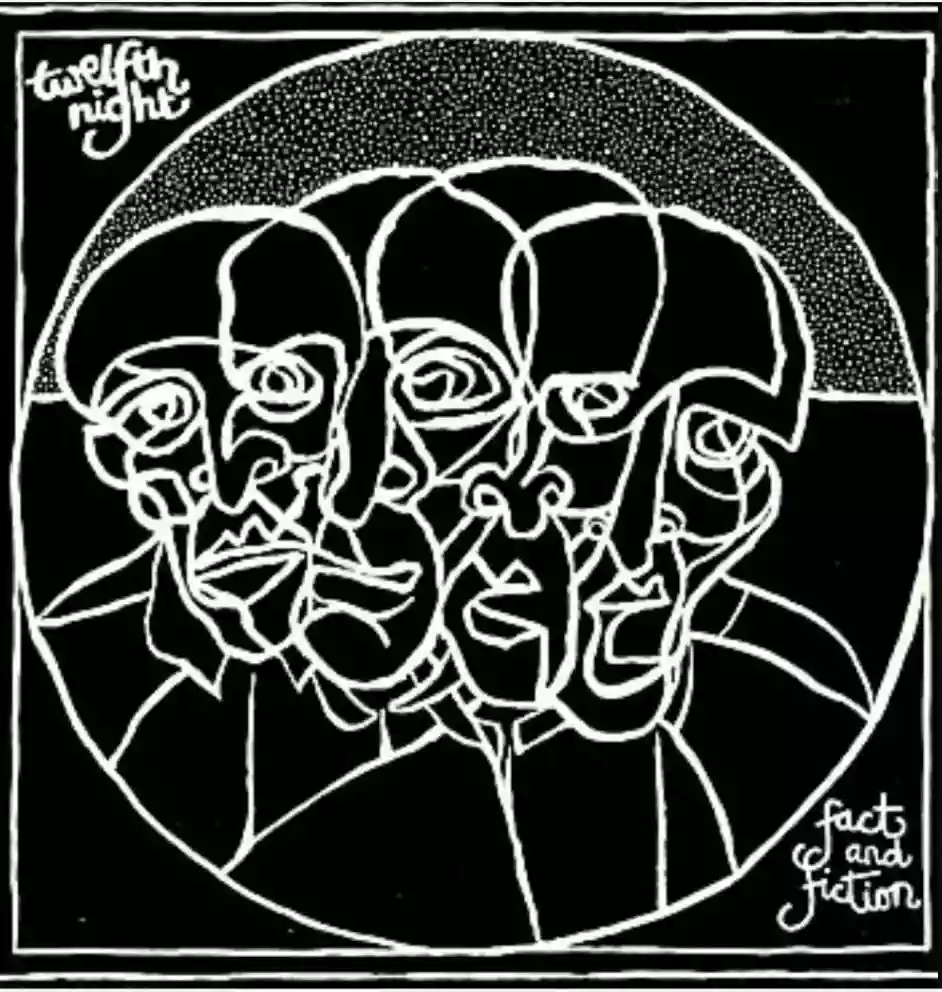
Being born too late to enjoy the golden years of progressive (at the time, I was more devoted to listening to the Zecchino d'Oro than Genesis or Yes...) could have been partially compensated by having personally experienced the birth of the New Prog, the movement that briefly and ephemerally bestowed new glory on the musical genre we love so much. Unfortunately, at that time, even though I was 12, musically speaking I was on Mars or thereabouts, and I missed that too, discovering Marillion only later, at the time of Season's End. However, more than once, I have found myself imagining what it must have been like for a prog enthusiast to slowly discover the existence of new bands proposing that musical genre so full of charm and suggestion; bands with strange names producing records difficult to find (and for that reason even more coveted...), with enchanting titles and dreamlike covers...
The Twelfth Night were the first in chronological order to inaugurate the New Prog, and were probably also the most unfortunate, not achieving success proportional to their artistic value (even among enthusiasts, they are generally always cited after Marillion, Pendragon, IQ, and Pallas...). Having never listened to anything from this band before, I approached this "Fact And Fiction" with great curiosity and with the feeling of embarking on a sort of journey back in time. But let's start with a bit of history. Twelfth Night was formed in 1978 as an entirely instrumental band with guitarist Andy Revell as the charismatic figure characterizing the group. Initially, the band did not include a keyboardist and consisted only of Revell, Brian Devoil on drums, and Clive Mitten on bass. After several demo tapes and a brief stint with a singer, they recorded their first LP, the instrumental "Live At The Target." Subsequently, the group was joined by an extraordinary character, Geoff Mann, a true 360-degree artist: poet, painter, extraordinary singer from a vocal point of view, and incredibly charismatic on stage. Mann, together with Mitten, became the band's main composer, and his first effort within the group was the demo "Smiling At Grief." In 1982, the LP "Fact And Fiction" was released, which is the only studio album with Mann, as the talented singer decided to leave the band to better pursue his religious vocation (he would later be ordained as a priest) and to continue a parallel solo career (which produced 4 albums, while the band, with new singer Andy Sears, released only 2 more). Unfortunately, Mann died of cancer in February 1993, and "Fact And Fiction" is the album which, along with the farewell live "Live And Let Live," imprinted his name in fiery letters in the hearts of many progressive enthusiasts.
Indeed, it is impossible to remain indifferent in front of the wonderful opener "We Are Sane," a true classic of New Prog, in which Geoff Mann's voice, here at its highest levels of theatricality and expressiveness, stands as the absolute protagonist, giving the song a hallucinatory and sinister atmosphere of great effect. Such wonder is immediately followed by the equally extraordinary "Human Being," a one-two punch that takes your breath away. The beautiful melody characterizing the piece is exalted by Mann's hoarse and anguished voice and a gritty arrangement masterfully conducted by Mitten's bass work and Revell’s guitar solos. The finale, with its obsessively repeated refrain, is so full of pathos that it cannot be described with words. "This City" is a shorter track characterized by a very beautiful guitar riff with a clean and echo-rich sound in the style of David Gilmour of "The Wall" and flows into the short instrumental "World Without End," which closed the A-side of the original vinyl. The title track is a piece decidedly more oriented towards pop, somewhat in the style of Depeche Mode, although it remains quite charming and works as a sort of "breather" amidst compositions of much greater artistic depth. "The Poet Sniffs A Flower" is the second instrumental on the album and presents a beautiful synth melody that unfolds with a delicate acoustic guitar accompaniment, later becoming more intense with a finale dominated by an aggressive electric guitar solo. "Creepshow," with its over 10 minutes of duration, is another of the album’s highlights, once again graced by Mann, whose spectral and tormented voice interprets the track in a highly theatrical manner, infusing it with a feeling and charm rarely found in other singers’ vocal interpretations. Of course, the other musicians are no less impressive, carving out their own spaces and contributing to making the piece a true masterpiece. The original track list closes with "Love Song," a ballad of great sweetness and suggestion, definitively framing one of the most beautiful new prog albums ever produced.
What to say about the bonus tracks? Surely after such beautiful tracks, the album could have ended without leaving any shadow of regret, but it is a pleasure to have the opportunity to listen to an alternate version of "Human Being," much faster than the one included in the LP and which compensates for a lesser overall pathos with an added dose of grit and fierceness. "East Of Eden" is interesting, a fast-paced track more skewed towards the pop side that the band performed during an appearance on the David Essex Show, while a "new wave-ized" version of the Beatles' "Eleanor Rigby" leaves one rather perplexed and perhaps deserved a much different treatment. The other 4 tracks are demo versions of songs that were later discarded from the album's final track list (except "Leader," which is a primitive version of the title track), and among them, "Fistful Of Bubbles," aptly defined by the surviving band members as "their best unfinished song," deserves a mention of merit.
How to conclude this review? Surely by highlighting how, beyond any superlative that can be used to describe this album, this time we are truly in front of one of those simply "indispensable" albums for progressive, as well as a fundamental record for fully understanding that particular phenomenon that was the English New Prog (and among the genre's classics, I would immediately place it after "Script For a Jester's Tear" by Marillion or perhaps even on par with it). In short, you must understand that it's an album of such beauty that it would be a crime to leave it out of your collection and it will enchant you, leaving you, at the end of each listen, only with the desire to start it again. For this reason, it might be wise to make some space next to "Script For a Jester's Tear," "The Jewel," "Tales From The Lush Attic," and "The Sentinel" and rush to fill it with the immense Twelfth Night!
Loading comments slowly
Summary by Bot
This review praises Twelfth Night's 'Fact and Fiction' as a seminal New Prog album blending theatrical vocals and intricate instrumentation. The author highlights the unique charisma of Geoff Mann and the album’s essential place alongside other genre classics. With detailed track analysis, the review conveys deep admiration for the band’s artistry and legacy. Bonus tracks add intriguing additional layers, making the album indispensable for prog fans.Tracklist Lyrics
Twelfth Night
Twelfth Night are an English neo‑progressive rock band formed in 1978. Starting as an instrumental trio (Andy Revell, Clive Mitten, Brian Devoil), they rose with vocalist Geoff Mann, releasing Live at the Target, Smiling at Grief and the landmark Fact and Fiction (1982). Mann left soon after; he was later ordained and died in 1993. The group continued with Andy Sears and has reunited in later years.03 Reviews
Other reviews
By TommyVercetti
"Twelfth Night attempts to almost entirely eliminate the genre’s stereotypes, being effectively prog more in intention and ideas than in the choice of sounds."
"Creepshow is an apotheosis of the leader’s ideologies, featuring a text worthy of the imperfect and the macabre festival."
