
 •
Rating:
•
Rating:
THE REVIEW
The new prog was a more varied genre than it might appear at a cursory glance.
Pendragon had adopted a literal yet fascinating approach, Marillion had refined the early Genesis's insights, Pallas were captivated by the more "hard" side of the movement. Often in the pot of '80s progressive music, another group is chosen to be included (perhaps mistakenly): Twelfth Night.
Unlike those mentioned above, Geoff Mann's great group attempted to almost entirely eliminate the genre's stereotypes, being effectively prog more in intention and ideas than in the choice of sounds.
It’s then not surprising the essential (and never intrusive) use of keyboards, relegated to the background compared to the bass and guitar.
In a certain sense, the Twelfth Night can be assimilated to new wave and dark for the sound blend, to new prog for the musical environments attended (the same as Marillion, Pendragon, and Iq) and for the refinement of sounds.
The debut album is a live (a unique case): Live at the Target, where the group has the opportunity to showcase their instrumental qualities, based mainly on guitars and a dark and romantic approach.
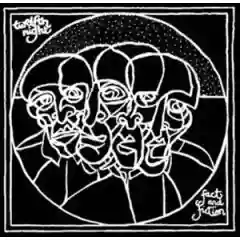
However, it's with the arrival of the unusual vocalist that Twelfth Night takes off, and Fact and Fiction, their masterpiece, is released. The themes of the album feed on fears related to the Cold War, and they expand them, the lyrics climb onto lyrical virtuosity that encloses madness, alienation (at times you feel Orwell's influence), the fear of being alone, and the rejection of capitalist ideology.
Significant then is "We Are Sane", which opens with the mad and changing voice of Geoff Mann, surrounded by an apocalyptic soundscape: a clock ticks away the time while echoes of death and desolation are heard. The text is fascinating and captivating, while the histrionic Mann leads the track onto changing scenarios, yet permeated by that cosmic pessimism that will never abandon the group.
"Human Being" ups the ante, with even more hallucinatory and "insane" singing, while the musicians seem to indulge in a bit more instrumental finesse (even though the track is shorter).
With "This City" it maintains the same spirit, but here the vocals are more subdued, resigned (the abstracted shapes of the people's thoughts/different shops and pubs/all the cheap facades).
The beautiful instrumental "World Without End" is a faint reason for relief: the atmospheres remain dark, but here Twelfth Night seems to want to remind us that they are still tied to progressive, albeit done in their own way. The interlude also contains some delicate and dreamy elements, which we will not find again throughout the album.
However, the group plays with us, almost teasing us (in the kindest sense), shuffling the deck.
Here is then, after a hint at prog, a shift towards new wave (with drums at the forefront): the title track. Everything, however, appears more stereotypical, and it markedly deviates from what was done before. The track is enjoyable and easy to listen to, but it becomes infatuated with the '80s pop disease.
"The Poet Sniffs a Flower" is a beautiful and engaging instrumental, with relaxed and interesting atmospheres. The group maintains commendable cohesiveness, even when everything gains vigor, with a more lively and frenetic second part. The guitars are then in the foreground, but do not exceed in excessive virtuosity.
The masterpiece within the masterpiece is "Creepshow".
An apotheosis of the leader's ideologies, it features a text worthy of the imperfect and the macabre festival (in this aspect it recalls something from films like Freaks). The real freak shows are those who pay to see such a chilling spectacle, those who use human disabilities for show. Here Mann is particularly inspired and vicious: listen to the hallucinated and angry scream halfway through the track.
The second part also presents delightful instrumental cues, but it is the vocalist who sets the pace, leading the track towards courageous insights (the long talk section might seem boring, but it is fundamental in the context of this track).
The album closes with the resigned "Love Song". Everything is more delicate, and the anger seems to have ended: the chorus repeated numerous times leads us to the end of the journey, and it does so in the best possible way.
Unfortunately, the magnificent idyll created by the group will break soon after: Mann will leave the group at the end of the tour, leaving an unfillable void for the fate of Twelfth. Andy Sears (the new singer) will not know how to repeat the feats of his predecessor, and the group will disband soon after.
The final word on Twelfth Night will be set by a tragic event: Geoff Mann dies in 1993, struck down by cancer.
Loading comments slowly
Summary by Bot
Twelfth Night's Fact and Fiction stands out in the 80s progressive rock scene by rejecting genre stereotypes and blending new wave and dark influences. Geoff Mann's vocals and the album's Cold War-themed lyrics create a haunting and powerful atmosphere. Tracks like 'We Are Sane' and 'Creepshow' showcase the band's lyrical and instrumental depth. Unfortunately, the band’s momentum ended after Mann's departure and his subsequent death in 1993, marking Fact and Fiction as their defining masterpiece.Tracklist Lyrics
Twelfth Night
Twelfth Night are an English neo‑progressive rock band formed in 1978. Starting as an instrumental trio (Andy Revell, Clive Mitten, Brian Devoil), they rose with vocalist Geoff Mann, releasing Live at the Target, Smiling at Grief and the landmark Fact and Fiction (1982). Mann left soon after; he was later ordained and died in 1993. The group continued with Andy Sears and has reunited in later years.03 Reviews
Other reviews
By Jesterhoax1
It’s an album of such beauty that it would be a crime to leave it out of your collection.
Geoff Mann's voice... stands as the absolute protagonist, giving the song a hallucinatory and sinister atmosphere of great effect.
