
 •
Rating:
•
Rating:
THE REVIEW
1973 is undoubtedly one of the most prolific years in the entire history of music, not only concerning pop and rock. One of those years that, in terms of prolificity, should be cloned; books and books wouldn't suffice to emphasize its importance.
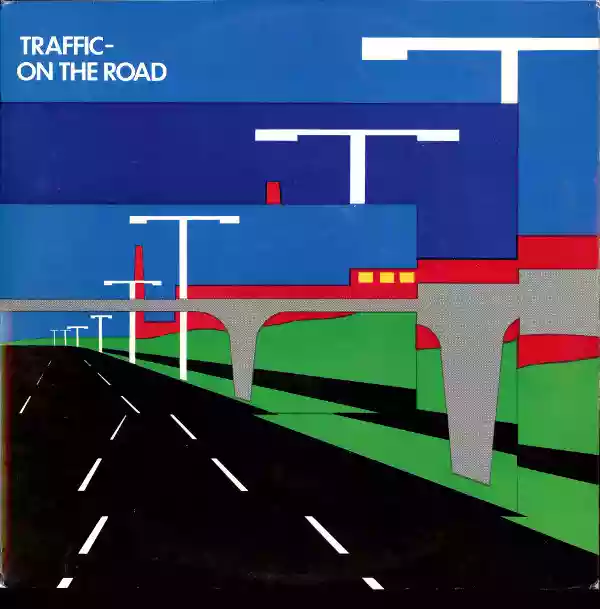
The Traffic, led by the evergreen Steve Winwood, greet the new year with the release of "Shoot Out at The Fantasy Factory", an album undoubtedly of a certain artistic depth, though perhaps it occasionally feels the weight of its two predecessors, which are truly difficult to match. The ensuing world tour sees the band performing almost everywhere, and a couple of evenings in Germany in April '73 are selected for the recording of a live album, the aforementioned "On The Road". The very first characteristic of the record, like almost all live releases of the decade we're discussing, is the astonishing length of the tracks, where pure, raw improvisation reigns supreme—sometimes highly successful, other times objectively a bit less. Upon its release, the album was enthusiastically received by fans but much less so by critics, who considered the lack of conciseness in the tracks the major weakness of the record.
The tracklist consists of only six tracks that nonetheless make up a double LP, with almost all tracks drawn from the 1970-1973 triennium, that is from "John Barleycorn" onwards. We find, in fact, the monumental medley "Glad/Freedom Rider" opening the album, consuming the first side of the record, highlighting the other founder, Jim Capaldi, and the monstrous Chris Wood on sax. The second side pays tribute to the new album of the time, with "Tragic Magic" and the unsurpassable "(Sometimes I Feel So) Uninspired" delivering us a Winwood in a state of grace, certainly one of the album's peaks. The second LP is the one that surely drives the fans into a frenzy, at least those present during those evenings of German spring, gifting us with a superb version of the classic "Light Up or Leave Me Alone", greeted enthusiastically within seconds of the intro. The rendering of the track is superb, unlike "Shoot Out at the Fantasy Factory" that, although excellently executed, adds little or nothing to the studio version. The sixth and final massive track of the platter is the long and incredible "The Low Spark of High Heeled Boys", already very extended in its studio version, beyond ten minutes, here even more so (17:47) with the endless central jam where all band members find fertile ground, shining brightly.
Surely a great live album, albeit not recorded very well, that testifies to the state of grace of Traffic up to that period, and perhaps not beyond. Additionally, certainly for the more nostalgic, including the writer, a testimony of a musically historic, unreachable, and unrepeatable period, of a way of doing and conceiving music that is now practically non-existent, that world dominated by suites and long instrumental jams that, despite suffering from considerable prolixity, definitely warranted the price of admission.
Loading comments slowly
Summary by Bot
Traffic's 1973 live album 'On the Road' showcases the band's improvisational prowess during a prolific era of music. Fans embraced its lengthy jams, though critics critiqued its lack of conciseness. Featuring classic tracks like 'Glad/Freedom Rider' and 'The Low Spark of High Heeled Boys,' the album captures the band's phase of peak creativity. Despite imperfect recording quality, the record stands as a historic testimony to a bygone era of expansive rock suites and instrumental exploration.Tracklist Lyrics
Traffic
Traffic are a British rock band formed in 1967 by Steve Winwood, Jim Capaldi, Chris Wood and Dave Mason. Blending psychedelia, soul, jazz and folk, they issued landmark albums including Mr. Fantasy, John Barleycorn Must Die and The Low Spark of High Heeled Boys, disbanded in 1974, and reunited in 1994 for Far From Home. The group was inducted into the Rock and Roll Hall of Fame in 2004.10 Reviews
Other reviews
By andisceppard
They are playing - all together - as if they want to tell you something.
It’s not an unforgettable voice. It’s an almost subdued voice. That sings to you softly. Almost as if to give you a pat on the shoulder.
