
 •
Rating:
•
Rating:
THE REVIEW
After 'Toto', the debut album of the eponymous group dated 1978, and the immediate following success with the album 'Toto IV', the band led by Lukather and Paich faced a period of difficulties, partly due to situations involving Bobby Kimball and Fergie Frederiksen at the center of controversies regarding their drug use.
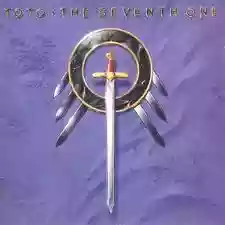
In 1988, 'The Seventh One' was released, bringing quite a few changes to the American group: on one side, the debut of Joseph Williams as the lead vocalist, and on the other, the semi-definitive departure of Steve Porcaro, who would still continue to work with Paich and co., albeit behind the scenes. Personally, I consider it the best album by the band after 'Toto IV' and 'Toto', as well as a record that will not only echo rock frequencies but also softer genres. It is important to highlight the various ballads included in the album, such as 'Anna', 'Stop Loving You', and 'You Got Me'. Songs that contrast with other significant tracks of the album. First among these is '''Pamela''': a song that is influenced by rock and, at the same time, tries to get as close as possible to the famous 'Rosanna', the jewel of 'Toto IV'. Apart from women, I would also highlight two other very beautiful pieces: 'Mushanga' features a splendid groove by the late Jeff Porcaro. 'Straight for the Heart' is not a masterpiece, but it remains a catchy song because, let's face it, a band with people like Lukather, Porcaro J., and David Paich would never limit themselves to composing mediocre songs. 'Stay Away' and 'Only the Children' are also good level songs, but I intend to focus the entire review on the piece which, in my humble opinion, turns out to be the best of the entire album. 'Home of the Brave' is a wonderful song. It rightfully enters the band's 'top 10' and also has excellent chances of breaking into the 'top 5'. Once again, David Paich contributes enormously to the beauty of this piece with fantastic melodies. The same work is done by Steve Lukather, who always and anyway adds his touch. However, the true soul of the piece is represented by the great Jeff Porcaro, who, once again, manages to transform a secondary instrument into something indispensable. In this track, Jeff gives it all: Paradiddles, double Paradiddles, and more. I should probably thank him because it is his drumming that greatly excites me while listening to this piece.
In summary, it is an album that will achieve significant commercial success and at the same time, manage to keep itself well away from the shameless, filthy, and lurid pop that would start devastating music from that period onwards.
Loading comments slowly
Summary by Bot
Toto's The Seventh One marks a strong comeback featuring Joseph Williams as the new lead vocalist and the semi-departure of Steve Porcaro. The album balances rock energy with softer ballads such as 'Anna' and 'Stop Loving You.' Highlights include Jeff Porcaro's exceptional drumming on 'Home of the Brave,' regarded as one of the band's best. Overall, it stands as a quality record, avoiding the crude pop trends of the late 80s.Tracklist Lyrics Videos
Toto
Toto is an American rock band formed in Los Angeles, known for polished pop-rock/AOR craftsmanship, high-level musicianship, and major hits such as “Africa” and “Rosanna.”21 Reviews
Other reviews
By pier_paolo_farina
The songwriting in several instances is excellent, the then-singer Joseph Williams more than convincing.
The concluding trio of songs soar and deserve a place in any good music collection.
