
 •
Rating:
•
Rating:
THE REVIEW
This album was thrown back at me on the fly, that is, tossed behind accompanied by a "What the hell are you listening to?", by a friend to whom I had lent it along with "Rain Dogs" and "Swordfishtrombones", which suffered the same inglorious fate. I'm not talking about some clueless teen who screams for any Cremonini, nor about an old Sanremo fan who gets excited over the pathetic high notes of a failed tenor like Al Bano, but rather a person musically capable of understanding and willing. So where’s the rub? I believe it's in the hedonistic approach my friend took towards Tom Waits, also confused by certain comparisons due to the common hoarseness between the Ogre of Pomona (California) and the Lawyer of Asti (Piedmont), that is, Paolo Conte. After hearing so often that Paolo Conte is the Italian Tom Waits and vice versa, she must have thought she could comfortably sit back and enjoy elegant jazz, somewhat exotic but respectful of tradition like that of the Lawyer, and instead, she was faced with a brilliant yet crazy musician, who mangles jazz (and blues, and anything else he finds), tearing it into spectral musical shreds with which he then reconstructs his toxic-alcoholic nightmares. Tales of murky life, those of America's misfits, somewhat akin to Bruce Springsteen's, except here they aren't seen as popular heroes but are mercilessly portrayed in all their nakedness, in their miseries and most vile vices.
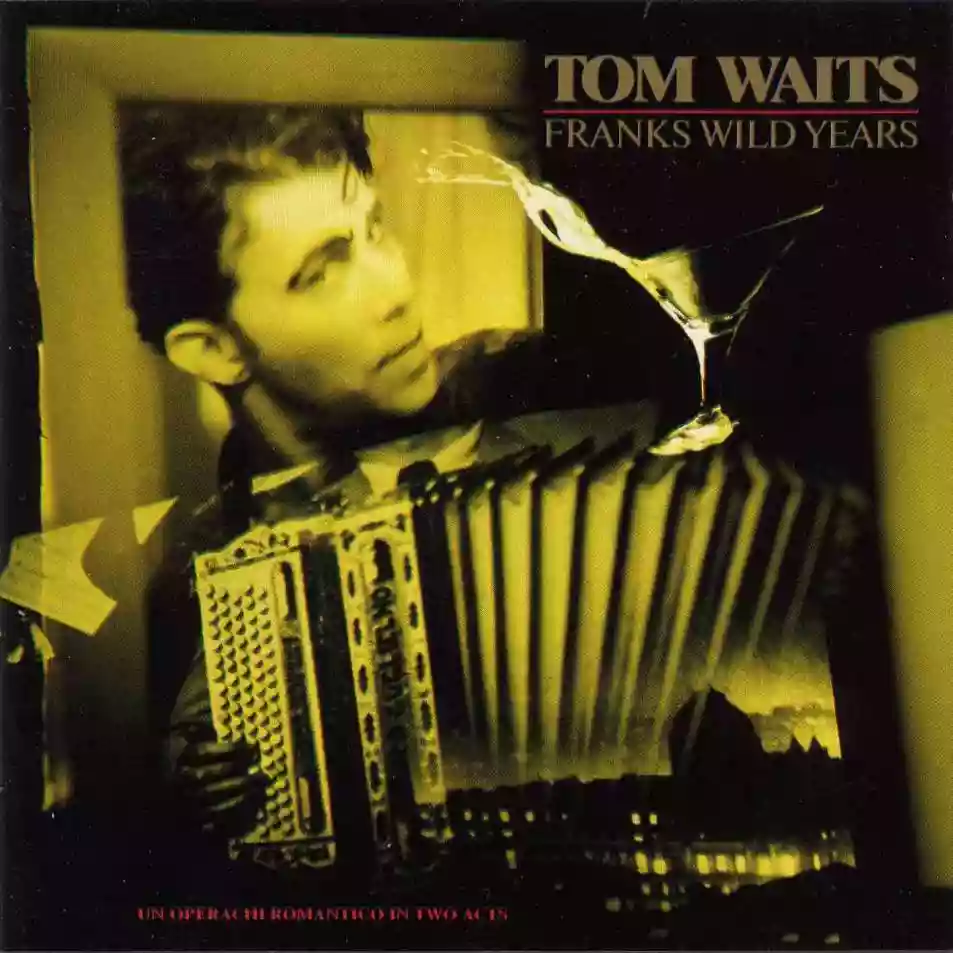
Tom Waits doesn’t do anything to please: you have to sweat it out, suffer with him, and this tough "Franks Wild Years", taken from the musical of the same name, is certainly no exception. Take the rumba of "Straight To The Top": it shakes you up like horses crossing a wooden bridge. You can't stand there contemplating: the bridge trembles, you get dizzy and feel like running away. Then perhaps you find it again in "Vegas" version, paired with "I'll Take New York" like a caricature of Frank Sinatra and the crooners, but by then the poison of unease has entered your system. Or "Hang On St. Christopher": lashes of percussion scattered here and there, a blaring horn, distorted guitar, and bass that rolls on its own, and over it all, straight from the bowels of hell, Tom Waits' voice. There's nothing for aesthetes, but the rhythm nails you down, and then just a few listens reveal that all that chaos is only apparent. Just like "Temptation": while the rhythm of congas, maracas, and other devilries jostles you, how can you notice that the Ogre’s falsetto is really awkward, as are his stomach-ache-inclined muezzin moans? The dark melancholy of accordions, a Waits classic, is exalted in the twilight "Blow Wind Blow", where the bells of a Glockenspiel draw a mournful carillon of notes that hark back even to certain adagios of Mahler’s symphonies, even though the tune is clearly much more elementary. Accordion superstar even in "Innocent When You Dream", so singable and so dragged as to seem the ideal soundtrack for a solemn bender, but one of the sad kind. "Yesterday Is Here" nearly entirely covers an apparently folk motif with dark colors, vaguely reminiscent of "The House Of The Rising Sun".
Towards the middle of the album, you enter a kind of tunnel of horrors where shreds of waltzes, marches, warped blues, and others appear in all their misery, the edge of cacophony is repeatedly touched, and yet you remain in a kind of vigilant twilight state, from which you are torn by the angry snarls of "Way Down In The Hole". Only towards the end does Tom Waits begin to speak a language accessible even to hedonists, and he brings out two masterpieces of melancholy like "Cold Cold Ground", with its poignant accordion reminiscent of an old French song, and "Train Song", where the hoarse desperation of the voice seeks (and does not find) solace in dialogue with the piano and a few sweet caresses from the familiar accordion. But by this point, aesthetes like my friend have already fled, frightened by the ghosts they heard earlier.
Pity for them: they remind me of those who don’t eat Prato biscuits because they are ugly.
Loading comments slowly
Summary by Bot
This review presents Tom Waits' album Franks Wild Years as a bold and challenging work, full of chaotic yet meticulously crafted music. It portrays raw stories of American misfits, contrasting with smoother jazz traditions. The album demands attention and emotional investment, rewarding listeners with deep melancholy and innovative soundscapes. Despite its difficulty, it stands as a masterpiece in Waits' discography.Tracklist Lyrics Videos
Tom Waits
Thomas Alan Waits (born 1949) is an American singer-songwriter, composer and actor known for his gravelly voice and eclectic blending of blues, jazz, rock and experimental music.51 Reviews
Other reviews
By RinaldiACHTUNG
There’s nothing sober about this album, and its beauty is also its peculiarity.
These roughly 55 minutes of music don’t bore and flow without tiring as the tracks (or most of them) are short in duration.
