
 •
Rating:
•
Rating:
THE REVIEW
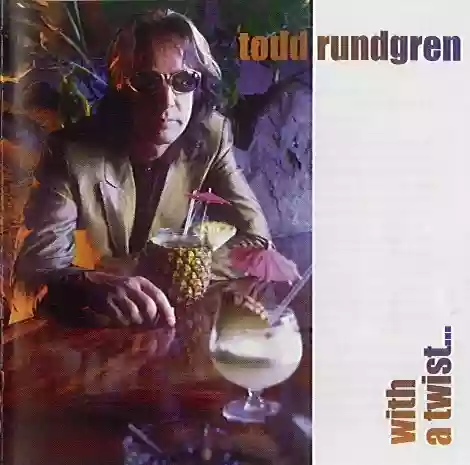
After the forays under the name of TR-i, Todd Rundgren reclaims his name and artistic identity, that wizard of yesteryear... More specifically, he reclaims exactly his greatest hits, tracks that have marked his career... However, this is not just another collection, but a revival in bossa nova style. Bossa nova? I ask myself, couldn't he have done it a cappella (considering his album from the '80s!), with a string quartet, with a small jazz ensemble, a version of remixes (which will come later), one with the Berlin Philharmonic Orchestra? Why bossa nova? Because, as he specifies on the back cover of the CD, <<(...) it's a music devoid of the histrionics that mask your true feelings>>. A music, therefore, with which to come out without shame, with which to place the sheet music of the heart on a pedestal.
As a casual lover of Marisa Monte, João Gilberto, and certain flamenco chill, now that I reflect on it a little, apart from the thrill of feeling at the equator every time I listen to certain sounds, I somewhat agree with him: what's better?, revealing oneself with all one's weaknesses accompanied by a tear-jerking soul, with a heartfelt ballad, or immersed in a paradise of warm, placid water, to the notes of a relaxed and gentle rhythm?
Having said that, Rundgren's bossa nova bears little resemblance to the traditional kind, and few are indeed the songs presented to us in a "reassuring" and warm almost guitar-and-voice version. Such is the case with "Love Is The Answer" and the concluding "I Want You" and "A Dream Goes On Forever". Conversely, in "Never Neverland" tradition is respected thanks to a piano style we love and an effective whistle. "Can We Still Be Friends", although not as captivating as the original, persuades with its execution choices. The exact opposite fate befalls other tracks like "I Saw The Light", but this applies to almost all the tracks: bossa nova is not just about anticipating the vocals a few moments before the first beat... Specifically, in "I Saw The Light" there's also a note about the metric of the lyrics: there's nothing to be done, every musical style has its language, and if a lengthy verse in Portuguese fits well in this (which is its) "musical habitat," the same cannot be said for an equally long one in English.
For the rest of the album, instead of "simple" bossa nova, one encounters sophisticated chill ("Influenza" and "Hello, It's Me") or enchanting lounge (always entirely acoustic, eh!) where, more than from the usual excellent performer Rundgren is, you'd expect the voice of Sade in tracks like "Fidelity" and "Mated".
Whether purer or less pure arrangements were chosen, whether more or less representative tracks of his career were selected, more or less suitable for the new guise, this remains a more than good work, destined to grow slowly, to seduce with its fake simplicity. As he further writes on the back of the CD, "How else to revive the material for myself as much for others".
Since it has to be done inevitably, how to do it in the best way (or least worst)? What better way than this? How Else?
Loading comments slowly
Summary by Bot
Todd Rundgren revisits his iconic hits on 'With A Twist...' with a unique bossa nova twist, blending warm, acoustic tones with chill and lounge elements. While some tracks like 'Love Is The Answer' embrace a traditional feel, others experiment with sophisticated styles. The approach may divide fans, as the English lyrics sometimes clash with bossa nova's natural flow. Overall, it’s a thoughtful, well-executed reinvention that grows on the listener over time.Tracklist Lyrics Videos
Todd Rundgren
Todd Rundgren is an American singer-songwriter, multi-instrumentalist, and record producer known for studio experimentation, eclectic songwriting across pop/rock/soul, and work both solo and with the band Utopia.25 Reviews
