
 •
Rating:
•
Rating:
THE REVIEW
What has always been defined as a medley is nothing more than a track composed of multiple songs, which are "stitched" one to another, so that the listener, while perceiving the change in music, the end of a song, does not feel that instant void that marks the "break" between one song and the next. Widely used in the past, especially in live performances, it is often adopted as a system to mainly bring back old hit songs quickly, giving them a quick but brief outing, like an Eskimo with an old and faithful sled dog, or a retiree on Sunday with his vintage roadster... Predominantly, therefore, made up of patchworks of already published songs, medleys are almost never made up of complete songs: they are more about snippets, choruses, specials, 'squares' of songs...
Many are the records from the sixties and seventies that, although not featuring medleys, hardly had any breaks between tracks, and indeed, any real division would have compromised the beauty of the work... Yet, if you read the tracklists of those albums, the song titles were not next to each other separated by a slash, but rather regularly one below the other, aligned and covered, in chronological order... Yet there were medleys there too... In prog-rock albums, in the famous suites, composed of various chapters I, II, III and so on, there was almost never a break between chapter and chapter, paragraph and paragraph, subparagraph and subparagraph... And in psychedelic music? How many parts of "Shine On You Crazy Diamond" are attached to each other? And in the early Queen records? How many and which are the 'unions' between one track and another, in the name of a chic and imaginative continuity of intent and suggestion?
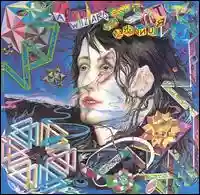
Obviously, though, there was a man who, in the seventies, took all these rules, and... No, he didn't destroy them, as the rather awkward construction of my sentence implied, but he fortified them by making them his own... Yet, he extremeized them, bringing them to a point of no return and incomprehension, creating a confusing and wonderful mess that was impossible to reorder and clean. And he, of course, is Todd Rundgren, who, after the crazy, incomprehensible and misunderstood but beautiful (perhaps because incomprehensible and misunderstood) "Something/Anything?", restarts under the banner of chaos, his least common denominator, in this "A Wizard, A True Star", naturally from the following year, but was there really a need to say it?
Here there's a medley titled "When The Shit Hits The Fan/Sunset Blvd" which isn't a medley, but a single song, a bright and finally simple, and I emphasize simple, pop rock in Who style. Then there's a mega-medley of already published songs that aren't his, American songbook classics, the doo-wop (smoothed by Todd) "I'm So Proud" and "Ooh Baby Baby", to which "La La Means I Love You" is added, a hit also sung by his muse-fetish Laura Nyro, a track made even more effective by his splendid falsetto, and the southern blues without bass, guitars, or brass "Cool Jerk", only crazed screams, piano, and snare. And then there's "Just Another Onionhead/ Da Da Dali" (just another onion head?), where his pianistic pop soul is accompanied by a circus march with a barrel organ and a monkey doing somersaults. Obviously, the track, having become "Da Da Dali", goes mad, only to then return to the old themes.
And more than anything, there's a record whose first six tracks have no breaks from one to the next: the first is an intro, a kind of anthem and a track that will be reprised (with a different but similar title) later on; the second is an excerpt from the Peter Pan musical and is played as if Neverland were on the Moon (but how does Todd play the piano so well with those astronaut gloves?); the third is an instrumental and plasticky bouncing toy on his usual splendid piano, from which one can already infer his enormous production potential; the fourth, a jarring rock with no connection between the rhythm of the singing and that of the music; the fifth, a mad rock blues all bass guitar, with shrill falsetto screams like those of the third-grade substitute teacher who ripped my stickers, and analog ducklings that you squeeze and they go 'quack-quack'. Obviously, to finish beautifully, the "fake non-medley" opens with an incomprehensible series of animal-like screams (they sound like macaques) titled "Dogfight Giggle" (and what do dogs have to do with macaques?). Good music, but what's there to understand?
I've only examined the medleys and I'm already running out of clarity... And thinking about how many styles, influences, "smudges," digressions, Todd's "escapades," within a single song, first toward one style, then toward another, leads one to conclude that all his songs are medleys... So it is for "Zen Archer", which starts like a falsetto waltz, has a campfire Californian sing-along chorus, progresses worthy of the most famous Supertramp songs, and enjoys excellent moments dedicated to layered vocalizations where the atmosphere becomes subdued and the air rarefied... Or for the final "Just One Victory", which starts as a piece of gospel, shifts to his pop, and becomes a ballad...
The multiplicity of styles, the non-homogeneity, re-emerge in "Hungry For Love", rhythm and charleston, where Laura Nyro has transformed into Liza Minnelli, in the instrumental (and almost devoid of ideas) "Flamingo", or even in "La Feel Internacionale", similar but different version of the intro, akin to the prologue of a rock musical (how is it that someone like Todd didn't write even one?), where the little wizard actually does nothing but anticipate the debut album - naturally from the year after - of his second band, Utopia.
Luckily, there's something more linear, like in the old-fashioned soul pop of "You Don't Have To Camp Around", only a minute long, or like the pleasant, 'tested,' perhaps not very inspiring but valid "Sometimes I Don't Know What To Feel" (and you can imagine me!), in the piano and vocals of "I Don't Want To Tie You Down" and in the engaging power pop in Who style, all guitars and choruses, of "Is It My Name?". An honorable mention for the excellent "Does Anybody Love You?". It's when he acts like the kid with long hair but with the air of a good boy, 'in love' with the girl who gets good grades in school, that Todd seems nicest to me, but perhaps it is the simplicity of those melodies that makes me favor him...
This record is not any less crazy than "Something/Anything?" (a title with the same perfect form as a medley title, even with the slash in the middle), but it's simply not as good. A little less good. However, by now, Todd Rundgren is a wizard, a true star (he even says so himself on the record, and who knows if the record label imposed this title on him), and so, like every artist recognized for their brilliance, he is almost so free to express himself that he has become a prisoner of his too much freedom, wandering between one shore and the other of his sea of notes, at the mercy of the current, every possible current. Luckily, from the following year on, the "squaring" of a band, the value of a "crew" will at least force him to maintain a unique compositional style, or reduce the field to fewer genres, to stay on course...
Sometimes, after all, having a single direction doesn't necessarily imply predictability, stagnation, tiredness, or resting on laurels... Sometimes a direction needs to be taken, period... And then the solo activity won't decrease much... And there he could still have fun... Who was it that said there's no favorable wind for those who don't know where they are going? Whoever it was, they weren't entirely wrong.
Loading comments slowly
Summary by Bot
This review delves into Todd Rundgren’s 1973 album 'A Wizard, A True Star,' highlighting its ambitious use of medleys and diverse styles. The album’s chaotic and layered approach challenges traditional song boundaries, creating a confusing yet captivating listening experience. Though slightly less acclaimed than its predecessor 'Something/Anything?,' it confirms Rundgren’s status as a musical innovator. The review praises moments of straightforward pop among the album’s complex arrangements, emphasizing Rundgren’s immense creative freedom.Tracklist Lyrics Videos
03 Tic Tic Tic It Wears Off (01:14)
08 Flamingo (02:35)
10 Just Another Onionhead / Dada Dali (02:24)
11 When the Shit Hits the Fan / Sunset Blvd. (04:03)
13 Sometimes I Don't Know What to Feel (04:16)
14 Does Anybody Love You? (01:31)
16 Hungry For Love (02:18)
17 I Don't Want to Tie You Down (01:56)
18 Is it My Name? (04:01)
Todd Rundgren
Todd Rundgren is an American singer-songwriter, multi-instrumentalist, and record producer known for studio experimentation, eclectic songwriting across pop/rock/soul, and work both solo and with the band Utopia.25 Reviews
