
 •
Rating:
•
Rating: THE REVIEW
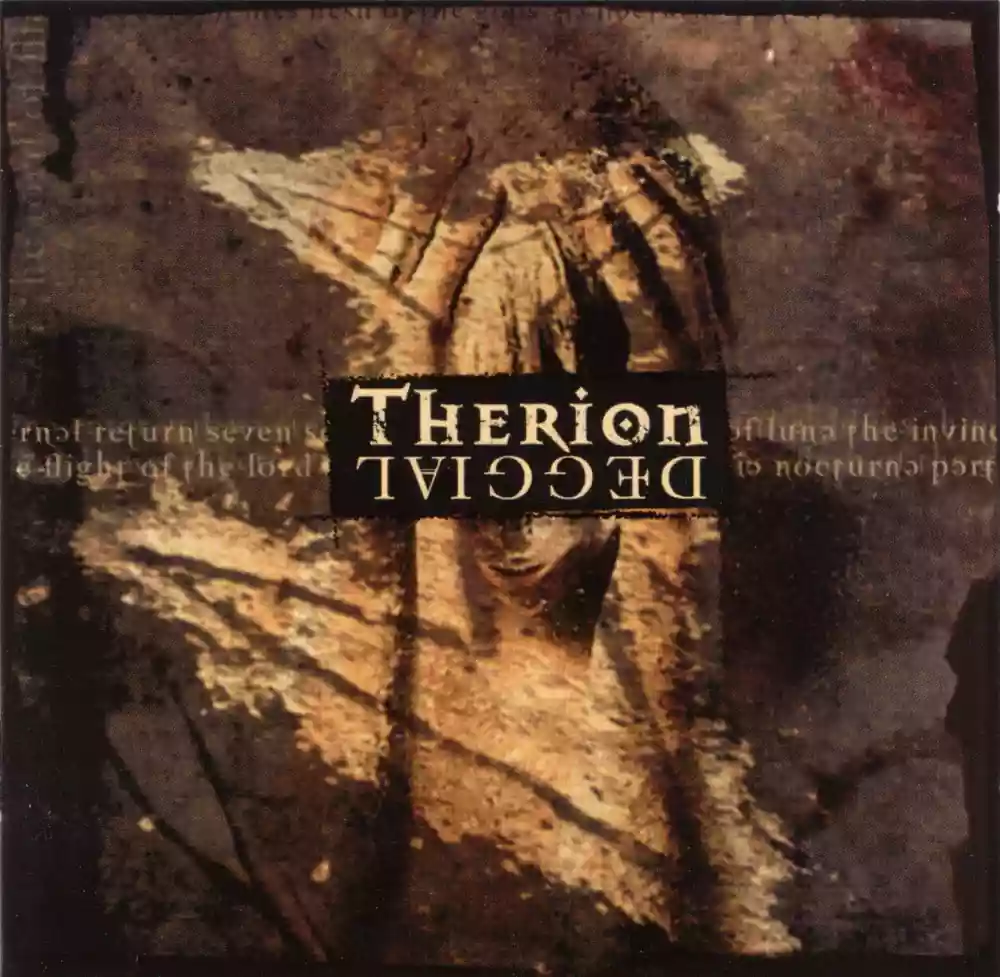
This album, when it was released, was considered by many as the continuation of Therion's golden era.
The group's previous works were mostly experiments (very successful ones, we might add) of that symphonic incarnation with distinct gothic traits, which would later well represent the future Therion (read: today's Therion, although with many differences and nuances).
If "Theli" had indeed laid the foundations of the band's classic and inimitable style, "Vovin" pushed it to the extreme, leaving behind the Death Metal tendencies of their early career to focus more on symphonism, the epic nature of the tracks, and the extraordinary intelligence of the topics addressed in the lyrics. These were the work of the intellectual and occultist Thomas Karlsson, drawing from a mystical hermetic tradition, heir to the Rosicrucianism and the Golden Dawn, without disdaining ancient mystery cults, starting from the Egyptians and Mesopotamian cultures, up to Jewish mysticism and Odinism. Finally, "Deggial," if you will, is nothing but the summary, the synthesis, using inappropriate words, of that enormous class that has led the band to be acclaimed worldwide.
In this enormous and astonishing circus that without much restraint blends ancient myths, robust yet refined Heavy Metal, gothicism, and exquisite melodic taste, the Therion will find their way into that baroque and pompous attitude that later will bring them much fortune, but that in the eyes of detractors will always be the weapon to accuse the band of the most varied things: being verbose, boring, repetitive, self-indulgent with their own ego. All these things might indeed be true. To some extent, they are, but they undoubtedly pair with the ethereal charm that their songs have always radiated, and with this album, beyond every concept already mentioned, everything is reaffirmed, indeed underscored in an irrefutable manner.
Ten songs, plus a remake of an opera piece ("O Fortuna", originally part of the famous Carmina Burana by the German composer Carl Orff), which establish an extremely volatile and eclectic style, enhanced by the enormous symphonic and operatic baggage that the band incorporates as a backbone in almost every track. Thus, alongside pure, unreachable dreamlike gems, where it feels like sailing in a magical constellation, such as in "The Invisible" or "Enter Vril-Ya", there is a mix of influences that Therion honors without much veils, as in "Eternal Return" (the reference to Iron Maiden is very clear, so much so that after the beautiful gothic prologue unfolds, it almost feels like listening to one of their hits), or as in "Flesh of the Gods", a slightly more generic, yet always marked reference to a certain NWOBHM style (by the way, the song features Hansi Kürsch on vocals, known to many as the voice of Blind Guardian).
However, to be honest, we must admit that the best tracks feature the more intimate and perhaps more recognizable side of Therion themselves. Thus, "Deggial" starts with a Progressive base and evolves from its core to the end into a thrilling and incandescent charge of well-crafted Heavy music, which, in its geometry, cannot fail to fascinate the listener. But even "Via Nocturna part I, II" does not miss the target of laying bare the extraordinary versatility of the band, which here gives free rein to lyrical and symphonic musings, initially featuring a poignant and epic passage of violins, organs, and strings (all original and not sampled, as the band, in this album, used a real small orchestra, a prelude to what they will do on "Lemuria" and "Sirius B"), and then heightens the tragic and romantic sense of the song, through a vibrated, almost hypnotic cadence that the deep guitars provide abundantly and unabashedly.
A dream, more powerful than any artificial paradise, larger than any imagination, more imposing and astonishing precisely because it is partially or only halfway understandable. Everyone, by attentively listening to this album (and only attentively, let's clarify: Therion is not a band for car stereo), can derive their subjective impression. Certainly different from person to person, and perhaps in this, more than in the magical and esoteric references of the compositions, lies the great charm of music, which does not represent a fixed point, but rather a mixture of impressions and emotions that conform, from time to time, to the desires and will of everyone.
If this isn't genius, then please tell me what it is, because I really wouldn't know how to explain it otherwise.
Loading comments slowly
Summary by Bot
Therion's 'Deggial' is praised as a synthesis of the band's golden era, merging symphonic metal with gothic and operatic elements. The album features intelligent, occult-inspired lyrics and original orchestral arrangements. Standout tracks showcase the band's versatility and musical depth, reaffirming their unique style despite some criticisms. This album represents a powerful and complex listening experience for dedicated fans.Tracklist Lyrics Videos
Therion
Therion are a Swedish metal band often described in these reviews as evolving from early, raw death metal into a symphonic/operatic heavy metal style with choirs and orchestral elements, frequently built around esoteric, mythological, and philosophical themes.17 Reviews
