
 •
Rating:
•
Rating:
THE REVIEW
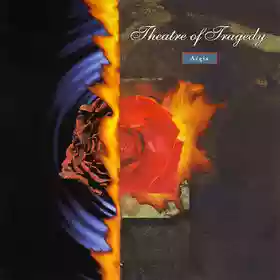
Theatre of Tragedy are undoubtedly one of the bands that have sparked the most debate, for better or worse, among critics and fans over the years. In particular, after their debut album and the subsequent "Velvet Darkness They Fear," it became clear their desire not to continue down the path of the "usual" gothic style of the late '90s but to explore new sounds that partly draw from this musical genre and partly deviate completely. Thus, we can consider "Aégis," the band's third work, as a sort of "bridge" or even better, a "point of union" between the early Theatre of Tragedy and those from the early 2000s onward; the preference for one period or another is subjective. Beyond the desire to label the musical genre expressed in "Aégis," what strikes the most about this work is the atmosphere it evokes thanks to the "clean" yet at the same time pathos-filled melodies. Therefore, I don't want to dwell too much on the mere (and often banal) classification of gothic, gothic rock, and various definitions; suffice it to say that in "Aégis," you will find the classic structure of gothic, that is, a clean female voice and a distorted male voice but far from the usual growl typical of the genre, all accompanied by non-aggressive melodies that are often seductive and enveloping in their progression.
The opening track, the splendid "Cassandra," is a kind of sound manifesto of everything we will find throughout the album: the ethereal voice, almost siren-like, of a particularly inspired Liv Kristine; the hypnotic, I'd say robotic, voice of Raymond Rohonyl (who practically abandons the growl) that intertwines perfectly with Liv's; almost like two actors, well immersed in the atmospheres of Greco-Roman mythology that pervade the entire album, created thanks to a wise use of keyboards that push the guitars into the background. I don't want to bore you with an analysis of every track, I'll just express my personal preference for the already mentioned "Cassandra," "Venus" (where Liv Kristine delivers a spine-chilling performance), and "Poppaea" (in which the overlapping of the two voices creates a catchy yet sophisticated rhythm). A special mention also to the lyrics, which, still in homage to antiquity, are written in archaic English.
In conclusion, "Aégis" remains for me an indispensable album in my collection, and I consider it a true "gem" in the metal landscape. Its main asset is its "modernity": when listening to it, you wouldn't think that it's a work from ten years ago. Indeed, from my point of view, I consider it much more valid compared to many current gothic albums or supposedly so... Perhaps it won't be particularly loved by fans of extreme metal, but the direction indicated by Theatre of Tragedy was courageous, and personally, I consider it the band's highest quality product.
Loading comments slowly
Summary by Bot
Theatre of Tragedy's Aégis is praised as a pivotal gothic metal album blending ethereal female vocals with hypnotic male vocals. It bridges the band's early gothic style with their later evolution, enriched by Greco-Roman mythological themes and archaic English lyrics. Standout tracks include 'Cassandra,' 'Venus,' and 'Poppaea.' The album's modern sound remains fresh even years after release, earning it a lasting place as a metal gem.Tracklist Lyrics Videos
Theatre of Tragedy
Theatre of Tragedy were a Norwegian band formed in Stavanger in 1994, widely associated with early gothic/doom metal and the “beauty and the beast” vocal contrast. Their catalogue is frequently discussed for its major stylistic shifts, from doom-tinged gothic metal into more electronic and industrial/pop-leaning territory, and later releases featuring a new female vocalist after Liv Kristine’s departure.13 Reviews
Other reviews
By sly
The fans, perhaps puzzled by the change, did not understand the excellent level of inspiration the group achieved on Aegis.
"Siren" wins the title of the best piece of the album, especially thanks to the beautiful keyboards and the chorus.
