
 •
Rating:
•
Rating:
THE REVIEW
And then came, in the mid-'60s, garage rock to give meaning to the Marshalls, to redeem the basement rats who spent entire days breaking strings, to give new life to nostalgic veterans of handcrafted rock, to the new "do it yourself" crowd, and primarily to justify, indeed, to legitimize the concept that dirty, sparse, and raw is beautiful. Let's make it lo-fi! The Sonics, The Chocolate Watchband, 13th Floor Elevators, The Stooges, and many other bands were pioneers of a genre that still fascinates and creates legions of followers worldwide.
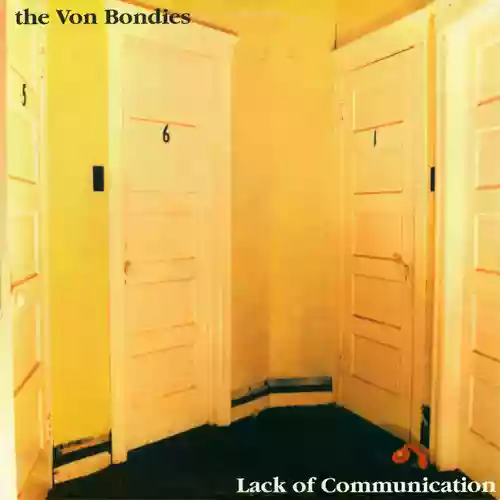
The Von Bondies could not remain indifferent to such magnificence. Recklessness and fervor have accompanied, since their debut, this brash Detroit quartet that, in apparent anachronism, in the past '00s decade released "Lack of Communication" (Sympathy for the Record Industry, 2001), an old-school garage rock that defies trends, genres, tendencies, and fearlessly does not shy away from comparisons with their illustrious, admirable predecessors and fellow citizens MC5.
Formed in 1997 as The Baby Killers, they later became The Von Bondies ["It's a composite name that refers to and pays homage to the man who invented radar, the man who invented the switch, and the woman who stole my car last week..." (Jason Stollsteimer)].
Adopted and produced by Jack White (The White Stripes), "Lack Of Communication," as the title suggests, is a bitter reflection on the alienation of the human race, day by day more incapable of maintaining social relationships, affectionate bonds with their peers, devoted to the cult of the most selfish hedonism and narcissism. Concepts that resonate in the title track and are reaffirmed in "Shallow Grave": "You buried me in a shallow grave, one with no name, you poisoned my rivers just to try to tame me…" also highlighting the ecological aspect and complaint. Stollsteimer spits words and chords of anger supported by Marcie Bolen's rhythm guitar. "Going Down," a superb garage track heavily inspired by the San Diego sound of Gravedigger Five and Morlocks, unfolds in just under two minutes of pure old-school energy. The record flows slowly on the notes of the enchanting blues noir "Cass and Henry," a moment of glory for Don Blum who strikes bass drum, snare, and cymbals well and hard with excellent rolls and vibratos, accompanying the tragicomic story of a love gone to waste with an attempted suicide. The same script for "Nite Train" and "Cryin'," ("Yeah crying, yeah sleeping, yeah kicking, yeah keeping, all this pain inside of me") with intense and poignant lyrics despite the brisk pace of the track. "In The Act" is one of the most beautiful and intense moments of the work. Opened by a classical guitar arpeggio, paced by Blum's pedal, the bass gives way to the double bass, and when Stollsteimer utters "That's about when I told her to rearrange her life" amid a troubled scuffle of family dissensions and misunderstandings, culminating with a drink thrown in the face, a spectral slide guitar kicks in that plucks all the strings of the soul. "Please Please Man" pushes with the grit that characterizes the entire LP (a desperate plea against abandonment) and the final track "Sound Of Terror" with exquisite psychobilly sounds reminiscent of the Cramps, shares its nine minutes and eighteen seconds with a pastoral, delightful ghost track sung entirely by bassist Carrie Ann Smith (dating Jack White) and accompanied by a Hammond that gifts a surreal retro atmosphere.
In July 2011, the band officially bid farewell to the music scene with four albums, several EPs, a European tour supporting the White Stripes, a quarrel ending in a furious brawl between White and Stollsteimer, and a quirky Teutonic name etched in the pages of the Detroit 2.0 music scene.
Loading comments slowly
Summary by Bot
The Von Bondies' 'Lack of Communication' channels the spirit of 60s garage rock through a raw, lo-fi approach rooted in Detroit's punk scene. Produced by Jack White, the album explores themes of social alienation and emotional turmoil with gritty instrumentation and intense lyrics. Standout tracks showcase blues noir and psychobilly influences. The review appreciates the band’s fearless homage to their predecessors and their place in early 2000s indie rock history.Tracklist Lyrics Videos
The Von Bondies
Detroit quartet formed in 1997 (initially as The Baby Killers). Early album Lack of Communication (2001) was produced by Jack White. Pawn Shoppe Heart (2004) received strong praise for its raw, high-energy garage sound. The band officially disbanded in July 2011.02 Reviews
