 •
Rating:
•
Rating:
THE REVIEW
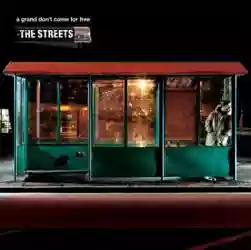
The figure of Mike Skinner, a character who emerged forcefully in Great Britain two years ago when he achieved overwhelming success with his debut album "Original Pirate Material" to the point of being dubbed the "English Eminem," is open to many interpretations and/or evaluations. In England, his status as a "working class" superstar is currently undisputed, while abroad, there is a certain skepticism from the public and the media towards this guy born in 1980 (my contemporary, and I like him already just for this) who ironically has very little "glamour": he doesn't come from the streets, doesn't act like a diva, keeps his distance from all the labels that inevitably come up when a white guy is rhyming words, doesn't threaten to kick famous artists' asses, doesn't get photographed with models, and doesn't frequent clubs. Despite everything, at home, he is revered and has earned awards, cover stories, and praise even from the most discerning press.
By listening to the debut album and this "A Grand Don't Come For Free" that I am reviewing, I found the answer to several doubts I had about him: first of all, Skinner has talent, but it’s almost obvious that outside of England, the impact of his music is necessarily much more stifled.
This little hero of garage has devised a magic formula seemingly designed to enchant an entire people: deeply personal lyrics that concern a vast young crowd ranging from at least 17 to 25-26 years old, direct and with honest and often harsh language (as in the tradition of street hip hop) but which leads to total identification between the listener and the singer.
We are not in America, there are no enriched rappers talking about champagne, luxury cars, or wild parties, nor sycophantic mythomaniacs inventing turbulent pasts and senseless battles against some other musician: Skinner spits reality, the weight of facts. His is a world of city days, rainy and monotonous, clumsy approaches with drugs, beers at the pub, soccer matches, unreachable girls or made such even though, in the end, they're just normal fast-food clerks, little money circulating and hopes constantly put to the test by a life that appears cynical and hostile.
In The Streets' songs, there is disenchantment, well hidden by Skinner's amusing "tomfoolery," capable of making irony on himself like few others on the music scene (he plays the fool but is even a graduate), of those who never had many chances from the beginning, in a country that seems to march towards progress without ever stopping to think about those who cannot keep up with its frantic pace.
Thus, in "A Grand Don't Come For Free," Skinner expresses himself by playing with bases now sparse, now epic (the final, heart-rending "Empty Cans" is an example), telling stories of ecstasy ("Blinding By The Lights"), of comical approaches with girls (the irresistible single "Fit But You Know It," almost a new "Parklife"), with lyrical honesty that baffles and disarms the listener ("Dry Your Eyes" truly touches the heart).
To understand his records, one needs to read the lyrics, understand the reason behind his ostentatious Cockney accent and the inflections of his voice: in short, one has to be quite attuned to the "perception" of Anglosaxon. I was fortunate to have grown up on bread and Britpop, and perhaps that is why I find, unlike Italian critics, this album a real masterpiece, more punk than punk, more pop than pop, more hip hop than hip hop. I might be naive, but I love feeling like I'm friends with the artists I listen to, and Skinner is. By the way, as I write this, I'm wearing a blue Fred Perry polo.
Loading comments slowly
Summary by Bot
The review praises Mike Skinner’s 'A Grand Don't Come For Free' as a groundbreaking British hip hop album that captures the struggles and humor of working-class youth. It highlights Skinner's honest and relatable lyrics, distinct Cockney accent, and storytelling ability. The album stands out for its lack of glamor and braggadocio, offering instead real-life stories and emotional depth. The reviewer considers this album a true masterpiece and appreciates the personal connection Skinner creates with listeners.Tracklist Lyrics Videos
The Streets
The Streets is the English music project led by Mike Skinner, known for UK garage and alternative hip hop with conversational, narrative lyrics and a strong British identity.04 Reviews
Other reviews
By NickGhostDrake
"Dry Your Eyes still buzzes in my head, though, a classic tearjerker song."
"I don’t know if you understood anything from all my stupid words: just know that I spent the night listening to Ron SexSmith... at least he doesn’t have any damn article in front."
