
 •
Rating:
•
Rating:
THE REVIEW
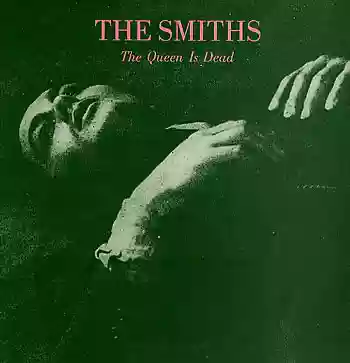
THE SMITHS The Queen is Dead
Apologies to the numerous fans, but I've never considered The Smiths among the essentials in the history of Rock.
They were a great singles band, and certainly "“This Charming Man” is among the most significant tracks of the 80s, in transporting the jingle-jangle sound of the sixties into the murky context of their decade. They certainly marked an era — socially more than anything else — and influenced several bands, (although the quality of the followers was often poor, especially in the brit-pop realm). However, I struggle to find in Morrissey and company's repertoire a single album with the organic completeness and expressive richness that would make it a cornerstone. A “Zen Arcade”, a “Murmur” or a “Daydream Nation”, just to stay in the 80s: something that etches its authors' name into legend.
I don't think “The Queen is Dead” is an exception, although it is often mentioned when someone enjoys drawing up lists of the best albums of all time. The first single released is, unsurprisingly, the best episode among the 10 present: “Bigmouth Strikes Again”, with its immortal guitar riff and Johnny Marr's Byrds-scented Rickenbacker leading the dance. Not that there aren't pleasant moments in the grooves of “The Queen is Dead”: the title track and “Vicar in a Tutu” — not transcendent in their Kinks-like echoes — are at least brilliant frescoes of Thatcher's England, and “Some Girls Are Bigger Than Others” is certainly among Marr's most inspired compositions, skillfully backed by an unusually concise and effective Morrissey in describing the harsh reality of life. Unfortunately, there are also several frankly inconclusive tracks that constitute the soft underbelly of the work. “Frankly, Mr. Shankly” and “Cemetry Gates” are harmless and annoying pop songs, while “Never Had No One Ever, “I Know It's Over”, and “The Boy with the Thorn in His Side” have seriousness equal to their stagnation. In these latter ones, old Moz takes the center stage, with a mannered lyricism (the cornerstone of the unbearable miserabilism that will punctuate his solo career), his soporific stories of teenage angst, and some irritating vocalizations. Of quite another breed is “There is a Light That Never Goes Out”, in which Morrissey's grandiloquence manages to live up to its own grandeur, crafting an epochal masterpiece of teenage angst (who remembers the splendid quote in Irvine Welsh's novel “Trainspotting”?), among bus crashes and exquisite arrangements orchestrated by Marr.
Paradoxically, the best album by the “Smiths” is perhaps just the epitaph “Strangeways, Here We Come”. The only one without memorable singles, but with a handful of compositions capable of broadening the stylistic spectrum of the band. It is no coincidence that the only thing Morrissey and Marr still agree on today is considering that the highest point of the “Signori Rossi” trajectory. Nothing extraordinary here either, but we already said it. Single bands sometimes remain so for life.
Loading comments slowly
Summary by Bot
The review acknowledges The Smiths as a great singles band with standout tracks like "This Charming Man" and "Bigmouth Strikes Again." While recognizing their social impact and some brilliant moments in The Queen Is Dead, the reviewer questions the album's overall completeness and enduring legacy. Several tracks are found uninspiring, especially Morrissey's vocal and lyrical approach on some songs. The review suggests that The Smiths were never more than a singles band and hints that their later album might surpass this one in style breadth.Tracklist Lyrics Videos
The Smiths
The Smiths were an English rock band formed in Manchester in 1982, best known for the songwriting partnership of vocalist Morrissey and guitarist Johnny Marr, alongside bassist Andy Rourke and drummer Mike Joyce.14 Reviews
Other reviews
By humax4
Rightly considered by many as the album of consecration.
Absolutely a must-have in one’s private collection of rock music.
By pinkoSpallino
The singer Morrissey had a very expressive and redundant voice, and he told stories with irony that reflected the decay of England during the Thatcher era.
The image of the couple dying in a crash on one of the classic double-decker buses is certainly one of the most famous in the history of English pop.
